Marketing in social media, or advertising on social platforms
Anyone using Facebook, Instagram or Pinterest can run their own social media marketing.
Social media marketing is a vast topic. The number of users on major and niche platforms keeps growing. Many of them wonder how to monetise their potential. We know how – and we present the simplest (and effective) ways to promote through affiliate marketing.
If you don’t have your own website, you can still drive traffic to online stores using social media by leveraging the power of affiliate links. We’ll show you how you can use liking, snapping and pinning as part of your affiliate activities.
Social media marketing – affiliate links are the foundation
Social media marketing – promoting products on TikTok
Over 90% of Polish internet users use social media at least once a month, and the most engaged users are young people, residents of villages and smaller towns, and women. The youngest generations (Alpha and Gen Z) spend the most time on YouTube and TikTok. People with higher education most often choose Facebook, YouTube and TikTok. YouTube, Facebook, TikTok and Twitch are the platforms most frequently used by people responsible for household purchases.
TikTok has huge advertising potential and confidently competes with the largest social platforms. Data shows that TikTok users watch videos for almost 20 hours per week.
Social media marketing – promoting products on Facebook
Facebook is still the most powerful social media platform in the world. Affiliate links, in turn, are the most natural and non-intrusive form of advertising you can use on Facebook.
You can share affiliate links on your timeline or send them in private messages. If you enjoy spending time online looking for interesting products and you’re planning to show them to your Facebook community, affiliate links will be the perfect solution for you.
If you don’t yet know how to create affiliate links, be sure to read: Why do bloggers and social media users love affiliate links?

Think about your fanpage in terms of products that are currently trending and available in advertisers’ offers. A fanpage with natural cosmetics, books, gadgets, gift ideas or interior design inspirations is just a drop in the ocean of possibilities. Their growing popularity is fully justified, because a quick and simple message goes hand in hand with a concrete product recommendation. The concise nature of the content helps internet users save time they would otherwise spend digging through countless online offers – and allows you to monetise the time you spend finding the right products.
You’ll find all the ways to use affiliate links on Facebook in our guide How to make money on Facebook.
Social media marketing – promoting products on Instagram
Although Instagram heavily limits where you can place affiliate links, it’s still worth mentioning it in the context of earning through affiliate programs. The platform allows you to place an affiliate link to a specific product or to the advertiser’s store homepage in the bio link field. Instead of leaving this field empty, find out which online store matches your visual messaging.
If your account has a clearly defined theme, find an equally well-defined affiliate program. If you share everyday moments from your life, choose a store whose assortment fits what’s currently happening with you. Maybe with the arrival of spring your Instagram fills up with outdoor yoga sessions and healthy meals? Then nothing stands in the way of putting a store with yoga mats or organic food products in your bio link.
While the space for free affiliate activity on Instagram is quite limited, its business features are developing at breakneck speed. A bio link in the form of an affiliate link is the only free option Instagram offers its users. There are, however, paid apps available, mainly dedicated to online store owners.
Social media marketing – promoting products on Pinterest
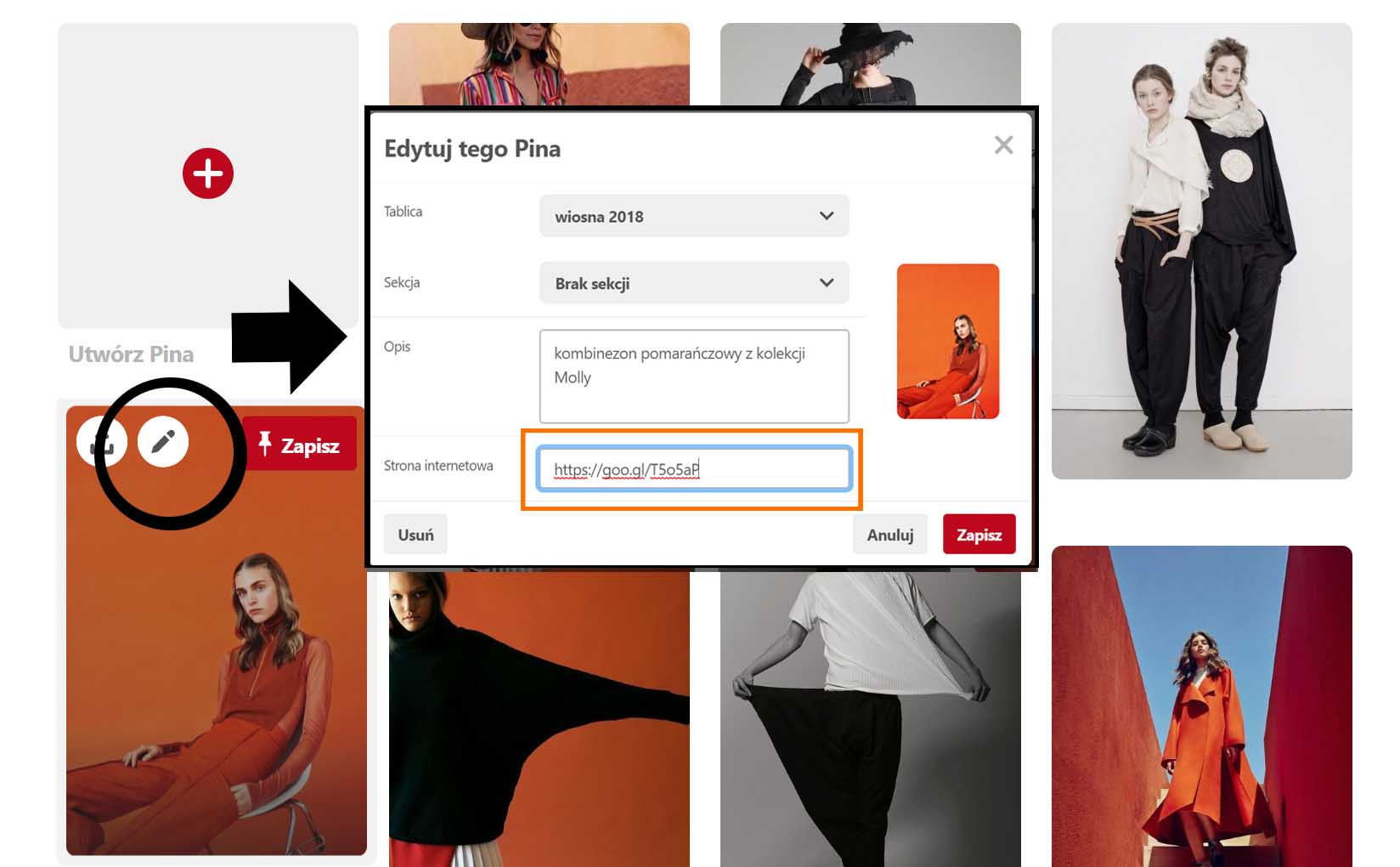
Affiliate marketing on Pinterest is not a complicated art – all you need to do is add an affiliate link to the description of each pin on your board so that users can immediately go to the relevant page. This is a very good solution because you can add as many pins as you like to a board, which means you can be sure that every user will find something for themselves.
Regardless of how you add an image to your board, you can always attach an active link to it or replace an existing one with an affiliate link. Just click the edit icon and paste your affiliate link.
Also remember to add a description and tags so that the pin is attractive and can be found using the right search phrases. When linking to different products from the same category, you can of course use affiliate links from many different stores instead of focusing on promoting just one.
Keep in mind that:
-
the content of your boards should reflect what you want to communicate through them
-
the best approach is to divide them into categories – the more specific, the better
-
instead of creating one general “interiors” board, break it down into categories such as lamps, rugs, posters, prints, sofas, tables, etc.
-
niche product categories tend to perform much better
To fully leverage the potential of these solutions, remember that the principle of contextual ad matching – usually mentioned in the context of blogs – is just as important when planning affiliate activities without your own website. The products you promote should align with your idea or be a direct answer to the problem you’re addressing.