fbpx

Earn money by recommending products through affiliate links

Generate revenue with the top advertisers in the market.

Start making money now

STEP 1

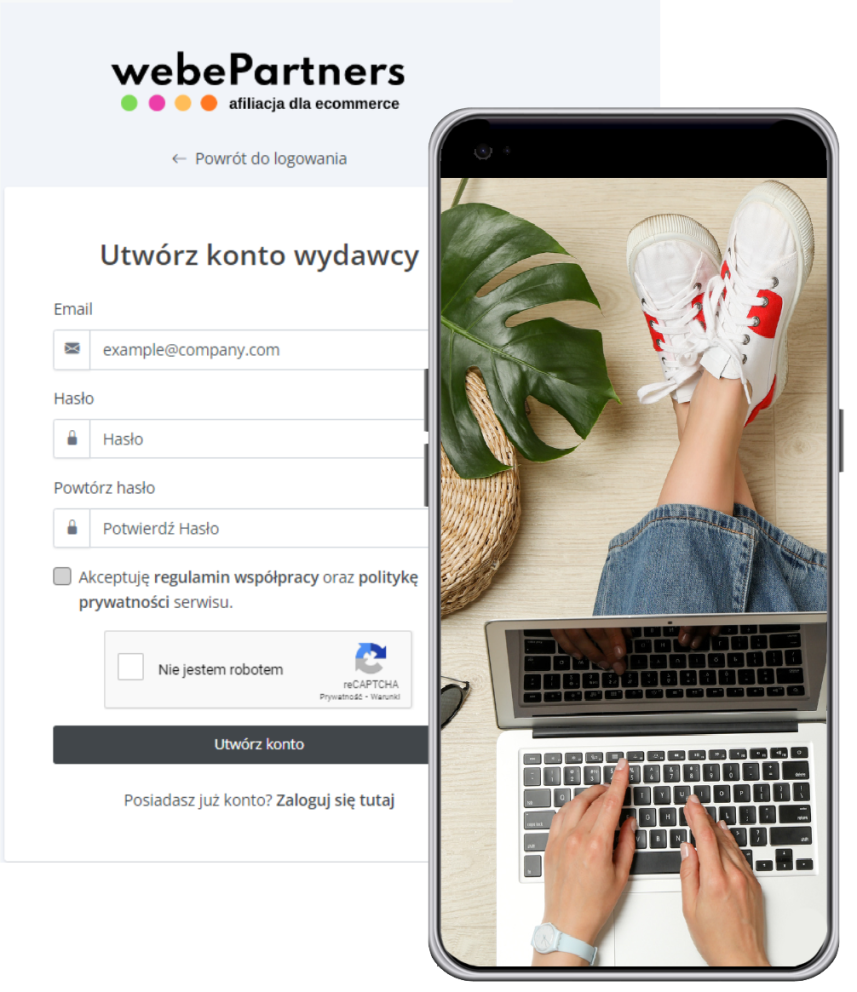
Register a publisher
account in 30 seconds
STEP 2

Join any of our
affiliate programmes
STEP 3

Download affiliate
links for products
STEP 4

Earn commissions on
transactions from your links

Strengths of affiliate marketing


No risk
Register a free account without any obligations. Decide for yourself if, when and with whom to start an affiliate relationship.

Advertiser database
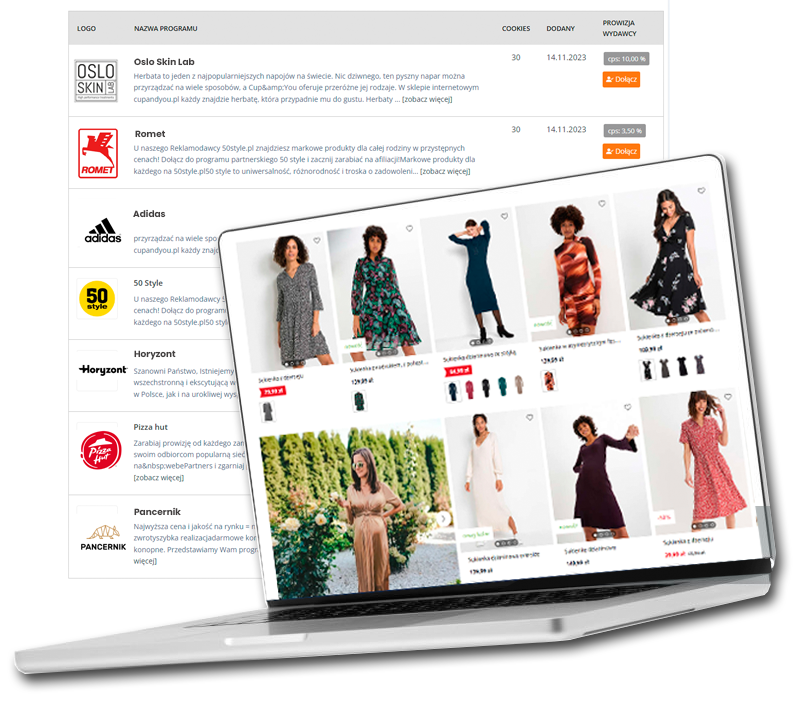
Hundreds of cooperation offers in one place. After registration, you get access to an extensive advertiser database.

Independence of action
You act independently, on your own terms. You decide for yourself what products you recommend on the internet and in what form.

Free tools
A publisher account and access to tools to support your activities, promotions and special campaigns are always free.

AFFILIATE ACADEMY FOR PUBLISHERS

An affiliate program is a cooperation model between the advertiser and publishers, in which publishers promote the advertiser’s products or services in exchange for a commission on sales. The advertiser launches the program to increase sales, while publishers join it to earn money by recommending the offer.

The advertiser defines the rules of the affiliate program. These usually include the commission rate, cookie lifespan, transaction validation period, promotion restrictions, and the types of publishers they want to work with. These terms determine how the activities are carried out and how the results are settled.

A publisher who joins an affiliate program retains independence in how they operate. They decide for themselves whether to promote the brand, which channels to use, which affiliate tools to rely on, how intensive their activities will be, and how long they will remain in the program.

One of the most important features of an affiliate program is the reduction of risk for both parties. The publisher does not face consequences for failing to achieve specific results, and the advertiser does not pay upfront for ineffective activities. This model also encourages quality-based competition, because the best advertisers attract publishers with attractive terms and transparent rules of cooperation.

Read more here: https://webepartners.pl/blog/programy-partnerskie-ranking/

To become a publisher in an affiliate program, you need to register an account on an affiliate platform and complete the basic information about your promotional channels. This usually includes an email address, password, and details about your website, social media profile, industry, and the ways you carry out affiliate activities.

After registration, the publisher gains access to the catalog of affiliate programs. They can browse available offers, analyze the terms of cooperation, and choose programs that match their niche, traffic, and promotion model. In many cases, joining a program is automatic, while in some cases it requires additional approval from the advertiser.

An important feature of affiliate marketing is the voluntary nature of participation. Registration itself does not oblige the publisher to actively promote offers or achieve specific results. The publisher decides which programs to join, when to start activities, and how to promote selected products or services.

The cooperation model based on Cost Per Sale (CPS) means that the publisher earns when their activities lead to a sale. A lack of results is not associated with contractual penalties or the obligation to meet pre-defined targets. As a result, affiliate marketing offers flexibility, the possibility to test different programs, and the ability to develop activities at one’s own pace.

Anyone who publishes content online and can recommend products or services באמצעות affiliate links can become a publisher in an affiliate network. You do not need to be a large portal or an influencer with a very large reach. Both small niche projects and large websites or advanced marketing systems can operate in affiliate marketing.

The most common groups of publishers include website owners, such as blogs, niche portals, content websites, comparison websites, product directories, rankings, and review sites. Discount and cashback websites are also active in affiliate marketing, supporting purchase decisions through promotions and partial refunds of spending.

Publishers can also be social media creators and influencers who run profiles on Instagram, TikTok, Facebook, Pinterest, or YouTube channels. Owners of mailing databases, who promote offers through newsletters and email campaigns, also join affiliate marketing.

Another group includes price comparison websites, product search engines, mobile apps, browser extensions, and recommendation widgets. Affiliate marketing also involves specialists in external marketing systems, such as CSS partners, retargeting partners, or media buyers.

An important feature of affiliate marketing is that it does not require a large reach at the start. Even a smaller publisher can earn money if they reach a well-matched audience and create content that addresses specific purchasing needs. In practice, affiliate marketing often works well in niches where users are looking for comparisons, recommendations, and expert opinions.

Niche websites and channels can be especially effective, because they attract audiences interested in a specific topic or problem. Such traffic usually converts better, and recommendations are perceived more as helpful guidance than as traditional advertising. As a result, affiliate marketing fits well into a monetization model based on knowledge, trust, and specialization.

A publisher in an affiliate network gains access to a ready-made infrastructure for earning through affiliate marketing. This means the ability to work with many advertisers, use affiliate programs, and rely on tools that support traffic monetization without having to build a technological infrastructure independently.

One of the most important benefits is access to a catalog of affiliate programs. The publisher can choose from many offers sorted by category, commission rates, and settlement models. Thanks to this, it is easier to match programs to their niche, traffic sources, and promotion method.

The affiliate network also provides affiliate tools that support sales. These include affiliate links, product widgets, banners, video materials, XML files, and other solutions that make it possible to promote advertisers’ offers and track the results of activities. The publisher also receives real-time statistics, which allow them to analyze traffic and generated sales.

Another important benefit is access to current promotions and discount codes. This makes it possible to create more attractive messages and better tailor content to the needs of the audience. The affiliate network may also provide information about special campaigns and promotions run by advertisers.

An important element is also simplified settlements. The publisher can participate in many affiliate programs, while commissions are settled collectively in one place. Depending on the cooperation model, on-demand commission payouts and individual rate negotiations may also be possible.

Below is a shorter, more “quotable” version:

A publisher in an affiliate network gains access to many affiliate programs, affiliate tools, sales statistics, promotions, and simplified settlements. Thanks to this, they can earn money from their own traffic within one system, without having to build their own technological infrastructure.

Cost Per Sale (CPS) is a settlement model in affiliate marketing in which the publisher receives a commission for sales generated for the advertiser. In practice, this means that the advertiser pays only when the partner’s promotional activities lead to a purchase in an online store or service.

In e-commerce, the Cost Per Sale model is one of the most commonly used forms of affiliate settlement. From a business perspective, it involves sharing part of the sales margin. The advertiser pays the publisher an agreed commission for acquiring a customer and finalizing the transaction, while the publisher earns by effectively recommending products or services.

In the CPS model, the publisher retains independence in how they operate. They decide which brands to promote, which products to recommend, which affiliate tools to use, and how to carry out their marketing activities. They are not obliged to achieve a pre-defined level of sales, but operate within the rules set by the affiliate network and the terms of the affiliate program.

An important element of the model is the terms of the affiliate program, which are defined by the advertiser. These include the commission rate, cookie lifespan, transaction validation period, promotion restrictions, and additional brand-related rules. The publisher reviews these terms before joining the program and accepts them if they want to promote the offer.

One of the most important features of the Cost Per Sale model is the voluntary nature of the cooperation. The advertiser does not pay for the publisher’s mere presence in the program, but for an actual sales result. The publisher, on the other hand, can increase, limit, or stop their promotional activities at any time, depending on the profitability of the cooperation. As a result, the CPS model combines performance-based payment, flexibility, and reduced risk for both parties.

Read more here: https://webepartners.pl/blog/cps-cpl-cpc-modele-sprzedazy/

Affiliate tools are solutions available within an affiliate system that enable the publisher to promote the advertiser’s offer, direct traffic to the store or website, and measure the results of their activities. Thanks to them, sales can be assigned to a specific publisher and commissions can be settled correctly.

The most important tool is the affiliate link. This is a special URL containing the publisher’s and program’s identifier, which allows the system to connect a click with a later transaction. In practice, publishers also use deep links, meaning links that lead directly to a specific product, category, or subpage, which often shortens the purchase path and increases conversion.

Affiliate tools also include advertising creatives, such as banners, graphics, and video materials. These are prepared by the advertiser and made available to the publisher in the affiliate system so they can be used on a website, in social media, or in other promotion channels.

Another important element is the product feed (XML). It contains up-to-date product data, such as the name, price, availability, image, category, and link to the offer. A product feed makes it possible to create rankings, comparisons, product listings, promotional sections, and other dynamic content that is updated automatically.

Another example is product widgets, which are ready-made components that can be embedded on a website. They present selected products in an organized format, usually with the name, image, and price, while the links within them are automatically marked as affiliate links.

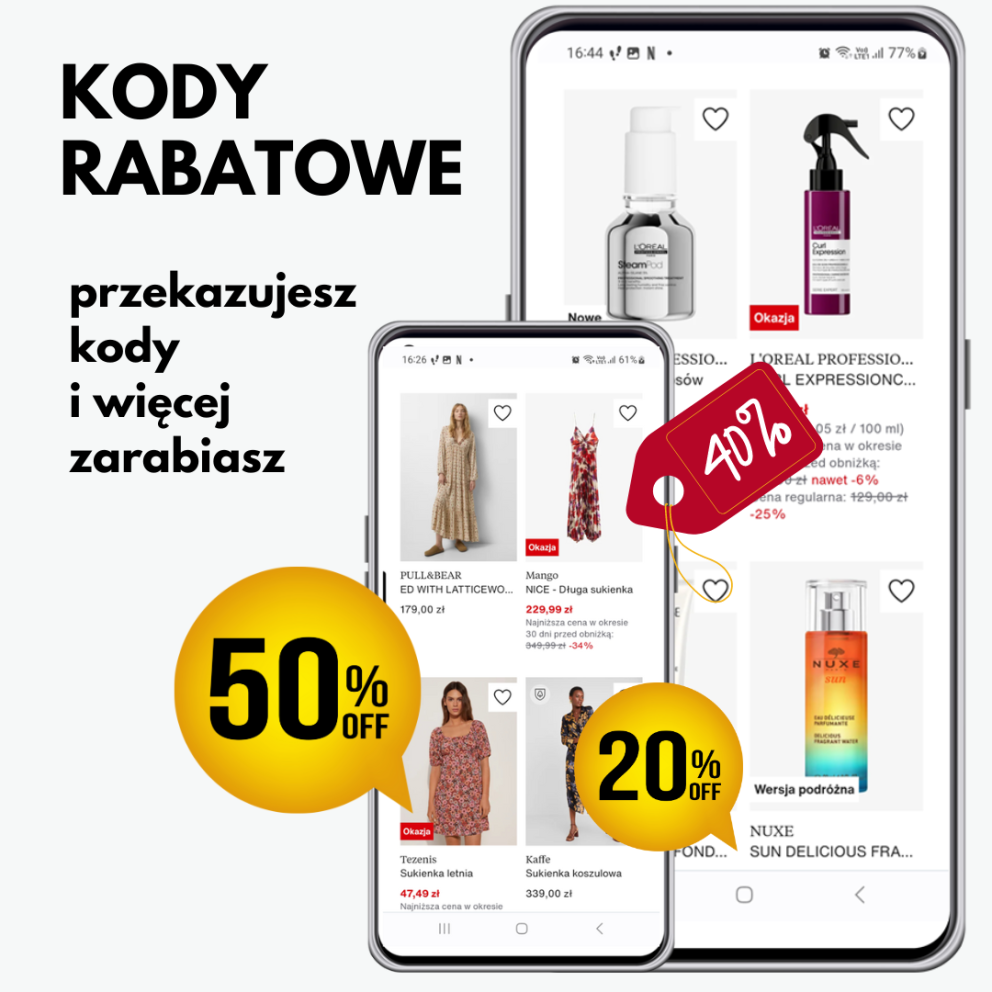
Another important tool is promotions and discount codes. They help increase the effectiveness of affiliate activities because they give the user an additional incentive to buy. Thanks to them, publishers can promote special offers, discounts, and dedicated campaigns prepared by advertisers.

Read more here: https://webepartners.pl/kategoria/narzedzia/

Earning money through affiliate links involves promoting products or services using special links that assign sales to a specific publisher. When a user clicks such a link and makes a purchase, the publisher receives a sales commission.

An affiliate link is a unique URL containing the publisher’s identifier. Thanks to this, the affiliate system can track clicks, assign transactions to the correct partner, and properly settle the generated sales.

In practice, a publisher earns money when they place an affiliate link in their content and effectively direct their audience to the advertiser’s offer. The link can be added directly in the text or attached to a graphic, video material, or another element of the publication.

Affiliate links can be used across many online channels, including websites, blogs, niche portals, social media, YouTube, newsletters, price comparison websites, discount websites, cashback websites, and paid marketing systems. Thanks to this, affiliate marketing offers great flexibility in the way promotions are carried out.

The effectiveness of earning money from affiliate links depends on the quality of traffic, how well the offer matches the audience, and the trust the publisher has built around their content. The better the affiliate link is embedded in a valuable context, the greater the chance of a click and a purchase.

Read more here: https://webepartners.pl/blog/linki-afiliacyjne-3/

To earn money through affiliate links, you need to place them in content and channels that genuinely influence your audience’s purchasing decisions. A link alone does not generate revenue automatically. Earnings appear when a user clicks the link, goes to the advertiser’s store, and makes a purchase within the transaction attribution period.

One of the most effective ways to do this is through content marketing. Affiliate links work well in product reviews, rankings, buying guides, brand comparisons, and articles that answer specific user questions. In such materials, the affiliate link appears naturally at the point where the audience wants to move from information to purchase. In this way, the content builds trust, and the link becomes a monetization tool.

Another important element of effectiveness is link optimization and performance analysis. More advanced publishers tag links with additional identifiers to check which traffic sources, article sections, calls to action, or content formats generate the most clicks and sales. This makes it possible to plan publications better and increase the effectiveness of affiliate activities.

Affiliate links also work well in a long-tail model, especially in SEO content. An article, guide, or ranking can attract search engine traffic for many months and continuously generate clicks and commissions. Thanks to this, content created once can work long term as a source of affiliate sales.

The second important area is social media. Affiliate links can be used wherever the platform allows a clickable URL to be added. This may include profiles, descriptions, stories, comments, posts, pins, newsletters, or product recommendation sections. In practice, the content builds interest, and the affiliate link directs the user to the place of purchase.

Effective earnings from affiliate links are also possible in structures focused directly on sales. These include comparison websites, product catalogs, discount code pages, listings based on product feeds, or landing pages with offer comparisons. In such projects, the affiliate link is the central element of the user journey leading to the advertiser’s store.

The most important factor is matching the offer to the audience and the publication context. An affiliate link works best when it is part of a valuable recommendation, responds to a specific user need, and leads to an offer aligned with their purchase intent.

Affiliate links in social media

An affiliate link works wherever a platform allows you to place a clickable URL, after which the user lands in a browser or in-app browser and can proceed to the store. The differences between platforms mainly come down to where the link is clickable and what possible limitations apply.

Instagram: an affiliate link works primarily in Stories as a link sticker and in the link placed in the bio/profile.

Read more here: https://webepartners.pl/blog/zarabianie-dzieki-instagram-stories/

Facebook: links can work in posts and video formats such as Reels, and the platform also has its own affiliate mechanisms for creators.

Read more here: https://webepartners.pl/blog/jak-zarabiac-na-facebooku/

TikTok: the safest place is the link in the profile (bio/website); the availability of this feature may depend on the type of account and meeting certain conditions, such as a minimum number of followers or a business account.

Read more here: https://webepartners.pl/blog/jak-zarabiac-na-tik-toku/

YouTube: affiliate links are typically placed in the video description and often in a pinned comment.

Read more here: https://webepartners.pl/blog/ile-mozna-zarobic-na-youtube-2/

Pinterest: links work directly in Pins and can lead straight to a product or page.

Read more here: https://webepartners.pl/blog/afiliacja-snapchacie-pinterescie/

X (Twitter): an affiliate link can be included in a post and in the profile; limitations mainly concern disclosure rules for commercial content if it is part of a paid collaboration.

LinkedIn: links work in posts, articles, comments, and in the profile; they work best in expert B2B content and recommendations of tools or services.

Snapchat: links work in formats that support adding links, depending on the feature and account type.

Reddit: the possibility of using affiliate links depends on the rules of a given subreddit; explicit disclosure is often required, and overtly promotional content may be limited.

Discord/Telegram/WhatsApp: technically, links are clickable in messages and posts, but performance depends on the context and community culture; they work best as recommendations within a discussion, not as mass link posting.

Affiliate links on YouTube

Affiliate links also work very well in social and direct channels. Creators on YouTube place them in video descriptions (“you can find the gear from this review here”), on Instagram and TikTok in the bio, stories with links, pinned posts, or link-in-bio tools, and in newsletters as “recommended products,” “check the offer” sections, or CTAs leading to specific store pages. The structure is always the same: the content builds context, trust, and need, while the affiliate link is the “exit” from that content to the place of purchase. Every click means potential commission if the user makes a purchase within the cookie validity period.

Read more here: https://webepartners.pl/blog/zarobki-na-youtube/

Affiliate links in sales-driven activities (discount websites, mailing)

The second type of activity is creating strictly sales-oriented structures, meaning websites whose main goal is to generate clicks on affiliate links: price comparison websites, product catalogs, listings based on product feeds, discount coupon pages, or landing pages such as “all the best offers for X in one place.” In such projects, the entire UX is built around helping the user filter, compare, and ultimately click “go to store,” and each of those buttons is an affiliate link to the relevant advertiser. The better the match between the offer, price, discount code, and presentation, the more of those clicks end in a transaction.


Product widgets in affiliate programs are ready-made modules that display selected products in the form of visually appealing tiles or lists, which the publisher can embed on their website. Each product in the widget contains an affiliate link, so a click can be assigned to a specific publisher and the sale can be settled under a commission-based model.

Widgets are usually created in a generator available in the affiliate system after joining the affiliate program. They can have different layouts, for example horizontal or vertical, and are most often responsive, which means they automatically adapt to the screen of a computer, tablet, or phone.

Their main function is the presentation of products in a more natural and attractive form than a traditional advertising banner. Thanks to this, a widget can fit better into the page layout and more effectively encourage the user to click. After clicking, the user is redirected to the advertiser’s store, and if they make a purchase, the publisher may receive a sales commission.

Product widgets are often used by bloggers, niche websites, comparison engines, and product search engines. They make it possible to present anywhere from a few to many products at the same time, even from different affiliate programs, as long as they match the website’s content and the user’s intent.

To implement a widget, the publisher generates its code in the affiliate system and then places it in their website’s code. Once embedded, the widget works automatically and can update the product display according to the configuration or product data.

Read more here: https://webepartners.pl/blog/widget-narzedzie-do-zarabiania/

Advertisers in an affiliate network dedicated to e-commerce are online stores that want to increase product sales through affiliate marketing. That is why they provide databases of their products in the form of a product feed, so that publishers can promote them on their websites.

A product feed will not work for everyone. To use it in affiliate marketing, you need to have at least basic knowledge of website creation. This is necessary to present the products from these files in the right way. With the right skills, you can connect feeds with your own database and significantly increase the attractiveness of your website.

Product feeds work best in price comparison websites, product search engines, and other services presenting product listings, where users can leave reviews. It is worth remembering that by showing users specific products with up-to-date prices and product data, we help save their time and money. This, in turn, may lead in the future to greater credibility and stronger user loyalty.

Read more here: https://webepartners.pl/blog/plik-xml-co-to-jest/

Earning money through discount codes in affiliate marketing involves promoting advertisers’ special offers together with an affiliate link. When a user uses the discount code and makes a purchase, the publisher may receive a sales commission.

This model is most commonly used by discount websites, which publish current promotions and codes from many stores. However, it is not a solution only for large portals. Discount codes can also be used by smaller publishers who promote offers on their websites, blogs, in newsletters, or on social media.

In practice, the advertiser makes the discount code available in the affiliate program through the affiliate network. The publisher publishes it in their channels and combines it with an affiliate link so that the system can assign the transaction to the correct partner. Thanks to this, the user receives a discount, the store increases sales, and the publisher earns a commission.

Discount codes are effective because they strengthen the purchase decision. They give the audience a specific price benefit, and publishers help increase the number of clicks and conversions. For this reason, affiliate marketing based on discount codes works well both in large promotional websites and in smaller channels that build engagement around recommended offers.

Flat Fee is a settlement model based on a fixed rate that the advertiser agrees to pay for promotional activities carried out by the online creator (publisher). The actual number of views, clicks, or sales generated by users does not matter here, because the advertiser pays for brand promotion and image-related benefits.

At webePartners, every publisher has the opportunity and the ability to create their own offer in the Flat Fee model, regardless of the basic Cost Per Sale model offered in affiliate programs. In the dedicated Flat Fee cooperation module, the publisher can carry out promotional activities for selected brands and settle them according to the offer they have created.

Read more here: https://webepartners.pl/blog/flat-fee-i-barter-wiecej-mozliwosci-zarabiania-w-webepartners/

Barter cooperation is a form of marketing collaboration in which a brand provides a creator with a product or service in exchange for promotional activities. Instead of monetary compensation, the influencer or publisher receives a specific non-cash benefit, which serves as payment for a post, review, or other promotional activity.

The barter model is especially popular in influencer marketing and social media. It is used by both large brands and smaller online creators, because it makes it possible to start cooperation without a full media budget on the advertiser’s side. For the brand, it is a way to test a partner, while for the creator it is an opportunity to gain their first projects and build a portfolio of commercial collaborations.

In practice, barter means that the advertiser provides a product, service, or other benefit, and the creator promotes the brand within an agreed scope. This may include, for example, social media posts, stories, video materials, reviews, or other forms of publication. The scope of cooperation depends on the arrangements between the parties.

For creators, barter cooperation can be a starting point for further commercial activities. It allows them to gain experience, build credibility, and increase their attractiveness to future brands. For advertisers, barter is a way to test the quality of cooperation before moving to paid models, such as a fixed fee for publication or a commission on sales.

Read more here: https://webepartners.pl/blog/wspolpraca-barterowa-co-to-jest-i-jak-z-niej-skorzystac/

Find out more