Affiliate Program in 2025 for Ecommerce – Best Practices for Commission-Based Advertising
By joining an affiliate network and launching an affiliate program for an online store, the advertiser gains access to software that makes it easy to manage the program and account for ads on a Cost Per Sale basis. They can track the traffic and sales generated by publishers in the program. The affiliate platform records transactions and calculates the commissions owed to publishers. Both advertisers and publishers have access to detailed statistics that help optimize collaboration and increase sales.
Affiliate Programs — How Commission-Based Promotion Works
The best settlement model for an e-commerce affiliate program is CPA (Cost Per Action)—and especially its CPS (Cost Per Sale) variant, i.e., commission on completed sales. A publisher earns a commission only when a customer makes a purchase as a result of the publisher’s promotional efforts. This is ideal for online stores because the advertiser pays solely for actual sales outcomes. From the publishers’ perspective, it’s also beneficial: it gives them operational independence and the freedom to test a wide range of affiliate tactics and tools.

The advertiser (the store or brand owner) always defines the terms of an affiliate program. As the party bearing the costs and responsibility for the product or service, the advertiser sets the detailed rules of cooperation with affiliate partners. Key elements the advertiser determines:
-
Commission structure — percentage or flat-rate payouts for a sale, lead, or other action.
-
Cooperation rules — cookie duration (typically 30–90 days, sometimes longer) and publisher approval criteria.
-
Marketing assets — optionally provides banners, creatives, videos, copy, and discount codes.
The advertiser has ultimate responsibility for defining the affiliate program’s conditions, which gives them full control over costs, promotional quality, brand image, and the overall profitability of the initiative.
Affiliate Program — Case Study
Publishers—such as bloggers, YouTubers, influencers, and niche, coupon, or product-comparison sites—promote a store’s products using active affiliate links that enable transaction tracking. When a user clicks an affiliate link and subsequently makes a purchase in the store, the publisher receives a pre-agreed percentage of the sale value.
Affiliate marketing benefits every party involved. For advertisers, it drives incremental sales; for publishers, it provides a way to monetize their online presence without investing in their own store or production.
Publisher Network in an Affiliate Program
Launching an affiliate program for an online store is quick and straightforward with today’s technology. However, the program’s success largely depends on building a robust network of publishers and maintaining strong relationships with them.

Practically any entity with its own channels to reach an audience—and a desire to promote an advertiser’s products or services in exchange for commission—can join an affiliate program:
Website owners and bloggers
Topical sites, niche blogs, content portals, and industry platforms with engaged audiences.
Influencers and online creators
People active on YouTube, Instagram, TikTok, or Facebook who can credibly recommend products to their communities.
PPC specialists and traffic arbitrageurs
Experts at acquiring paid traffic (Google Ads, Facebook Ads, Native Ads) who earn from the spread between campaign costs and affiliate commissions.
Email list owners
Organizations with large, high-quality subscriber bases ready for newsletter marketing or promotional mailings.
Cashback and coupon platforms
Sites offering discount codes, cashback, or loyalty programs that attract deal-seeking shoppers.
Price comparison engines and offer aggregators
Services that help consumers compare offers (e.g., price comparators and financial comparison sites).
Content-marketing outlets and online magazines
Digital media publishing professional articles, reviews, and product tests.
Podcasts and audio channels
Industry, lifestyle, or niche podcasts where hosts can promote products via audio endorsements.
In essence, any entity with a marketing channel can become an affiliate publisher. What’s crucial is that the advertiser clearly defines partner selection criteria to optimize traffic quality and sales outcomes. Advertisers should carefully vet partners, paying close attention to traffic quality and topical relevance. It’s worth considering collaborations with niche but highly engaged communities that can drive significant sales potential even at relatively low traffic volumes.
Minimum requirements for a publisher:
-
An owned promotional channel (website, social media, newsletter)
-
Topical alignment with the advertiser’s products
-
Compliance with ethical standards and the advertiser’s rules (no spam, false information, or aggressive advertising practices)
Growing an Affiliate Program with webePartners
The effectiveness of an online store’s affiliate program increases over time. The best programs evolve over years—take Amazon’s affiliate program, for example—which has operated for over 30 years with very strong results.
Every advertiser who launches an affiliate program on the webePartners platform receives the essential affiliate technology stack as well as access to a publisher base. Publishers can apply to join the program on their own, and the advertiser can also proactively invite selected publishers to their program from the dashboard, under the Affiliate Marketplace tab.
The network of publishers can be treated as an extension of the online store’s sales team. Therefore, the advertiser should take care of proper recruitment of publishers, using all possible media outside the affiliate platform.
It is good practice to inform about the affiliate program wherever possible: in mailings, on the blog, or on social media platforms. It is important that information about the possibility of joining the program also appears on the store’s website.
Every store customer is a potential publisher for the affiliate program. Each of us often recommends a product that we personally use and are satisfied with. Customers of an online store will do this even more willingly if they can earn money in the process.
Recipe for effective cooperation with publishers
High advertiser involvement in developing the program and relationships with publishers translates into greater motivation to recommend and better results from publishers. When it comes to the advertiser’s involvement, first and foremost it means a quick response to publishers’ requests to join the program. The next step in building a strong relationship with the publisher network is avoiding delays in verifying orders and paying out commissions.
Communication most certainly supports effective cooperation. Advertisers should keep their publishers up to date about special occasions, sales, discount codes, or free shipping in the online store. Thanks to arguments in the form of special offers, publishers gain greater possibilities to encourage their audiences to make purchases in the store.
How publishers operate in an affiliate program — examples
We have selected several creative examples of publishers’ activities from around the world. Let’s start with the Smart Passive Income book club by Pat Flynn.

Aby zapisać się do klubu, wystarczy jedynie adres mailowy. Osoba, która postanowi do niego dołączyć, otrzyma dostęp do wielu ciekawych i ekskluzywnych treści oraz specjalnych promocji (oczywiście w ramach afiliacji). Poza tym Patt nie dzieli się swoimi opiniami od razu, co tworzy wrażenie pewnej ekskluzywności. Z tego powodu użytkownicy na pewno będą rozważać dołączenie, aby poczuć się wyjątkowo. Sam pomysłodawca klubu, dzięki takim działaniom, zwiększa swoją bazę mailingową. I chociaż czytelnik może już nigdy nie wrócić do klubu, to Patt dalej będzie mógł kontaktować się z nim mailowo, a dzięki regularnemu wysyłaniu książkowych sugestii, zapewnia sobie stały kontakt z odbiorcami (zarówno tymi aktywnymi, jak i nieaktywnymi). Proces ten z pewnością został zautomatyzowany za pomocą autonewslettera, pracę wykonał zatem tylko raz, a może zarabiać na niej bezustannie. Z kolei, cykliczność wiadomości doskonale cementuje jego relację z czytelnikami, dzięki czemu program afiliacyjny (lub programy), które promuje w swoim serwisie, gwarantują mu stały zysk.
Affiliate marketing — Michael Hyatt’s approach
Another good tactic is to share a post that solves a common problem. Michael Hyatt promised to show how to set up a blog in 20 minutes with no prior preparation. The popularity of blogging isn’t declining; however, aspiring bloggers are often blocked by technical issues—such as configuration or choosing the right platform. That’s why Michael created a dedicated guide, which turned out to be a bull’s-eye.
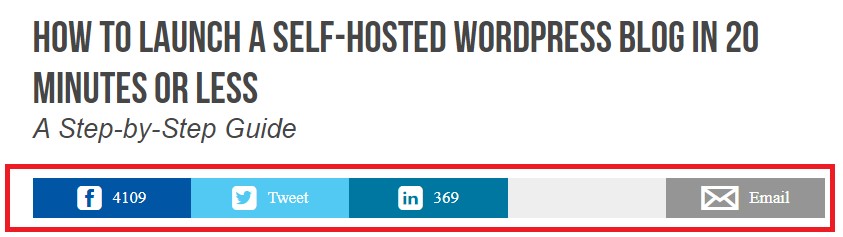
He indeed describes everything carefully and clearly, step by step, so that the entire process fits into those 20 minutes. The solution proposed by Michael Hyatt is the Bluehost hosting network, whose servers will host the new blogs. Thus, everyone is satisfied: the network has gained new customers, readers can easily set up their dream site, and the affiliate program the author of the post joined pays him an appropriate commission.
Affiliate Program — tempting via websites
Websites are also an example of affiliation. Some sites were created solely to lure customers and lead them to their partners’ pages. This is how portals that often prepare various product rankings make money. For example, Money Crashers—an English-language finance blog. Let’s look at the article below. Here’s a ranking of the best bank promotions. The author describes 25 financial products that are advantageous for us, providing, of course, precise links directing to the offer, and even the partner’s logo.
A reader may not even realize they’ve suddenly fallen into a classic sales funnel. They think they’re reading a guide and are convinced of its credibility, as well as that the products listed are worth recommending. And of course, that may be the case! The author created a subjective ranking, so you can’t expect them to have considered every promotion available on the market. Naturally, each offer has been properly linked so that the affiliate program can collect commissions. 😉
Affiliate programs on price comparison websites around the world
In Poland, combining affiliation with price comparison is nothing new. Nothing catches a customer’s attention like price, which is definitely one of the most important determinants of purchasing. In our country, it’s most popular to compare within just one field. Around the world, this idea is much more developed—for example, the site Gocompare.com offers the option to compare as many as nine categories!
A great solution is that they focus—apart from insuring vans, but that’s an exception—on matters of everyday life. When it comes time to buy insurance, the site lets us do it without leaving home. Naturally, as an intermediary, they receive an appropriate commission from each sale.
Affiliate program — advanced tools tab
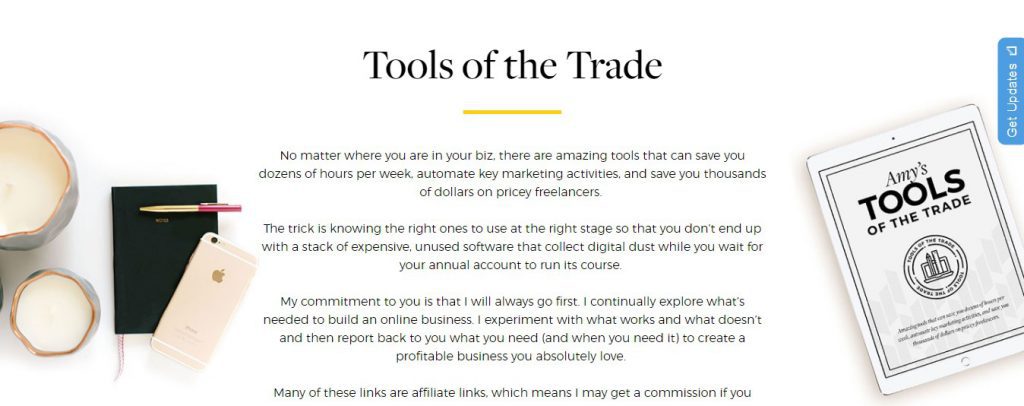
However, Amy didn’t make it here because of the site’s aesthetic qualities, but rather thanks to the way she earns from the affiliate program. The simple yet brilliant solution she offers consists in organizing categories on the page. Instead of throwing everything into one bag and hoping the reader will find what interests them, Amy decided to lead them by the hand. She divided the tools into those that:
1] Can be used when we are starting out in online marketing
2] We are growing our business
3] We are scaling our company on a large scale
With each subsequent category, the advice becomes increasingly specialized. In the first one, for example, we won’t find tools for communicating with our team, because a beginner business won’t have one. That’s why such content appears only in the third tab, when we’re thinking about scaling our business. Each recommendation, of course, leads through an affiliate link.
Affiliate marketing and SEO — a great duo
Let’s deal with the final example. In the West, good SEO—i.e., organic search—is often the lever used to support affiliation. This approach isn’t yet popular in Poland, but Western users have been using it for some time. Thanks to SEO, you can be unknown to anyone yet enjoy strong support from search engines and earn decent money as a result. Let this be illustrated by the case of Luqman Khan and how he promoted Amazon’s affiliate program.
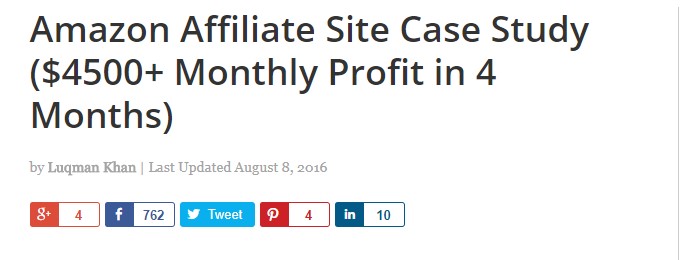
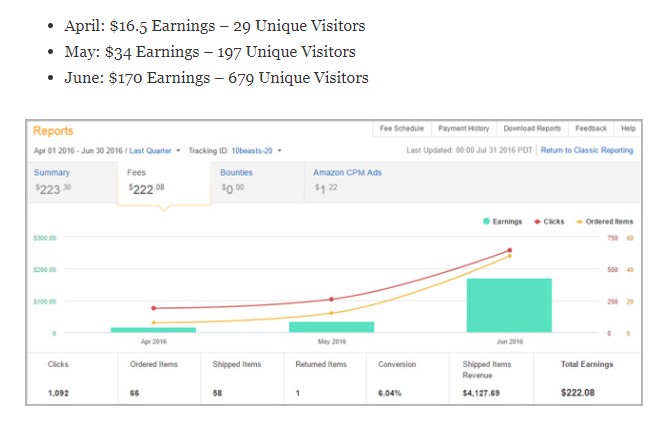
Luqman was fully aware that SEO takes time and he did not give up. He did everything to get links to his site from as many pages as possible that search engines considered trustworthy. These efforts brought truly impressive results: after four months, from just under one thousand unique users per month he reached over thirteen!
Blogging, contrary to appearances, is not among the easiest pursuits. It requires enormous commitment, consistency, and ingenuity in creating content and in maintaining positive relationships with readers. SEO can work very well with an affiliate program. If someone is concerned solely with monetizing their online activity, it is worth devoting more time to exploring the principles of positioning web pages in the Google search engine.
Recipe for effective cooperation with publishers
High advertiser engagement in developing the program and relationships with publishers translates into greater motivation to recommend and better results from publishers. When it comes to the advertiser’s involvement, the first priority is responding quickly to publishers’ requests to join the program. The next step in building a strong relationship with the publisher network is avoiding delays in order verification and commission payouts.
Communication most certainly supports effective cooperation. Advertisers should keep their publishers continuously informed about special occasions, sales, discount codes, or free shipping in the online store. With such selling points in the form of special offers, publishers gain greater ability to encourage their audiences to make purchases in the store.
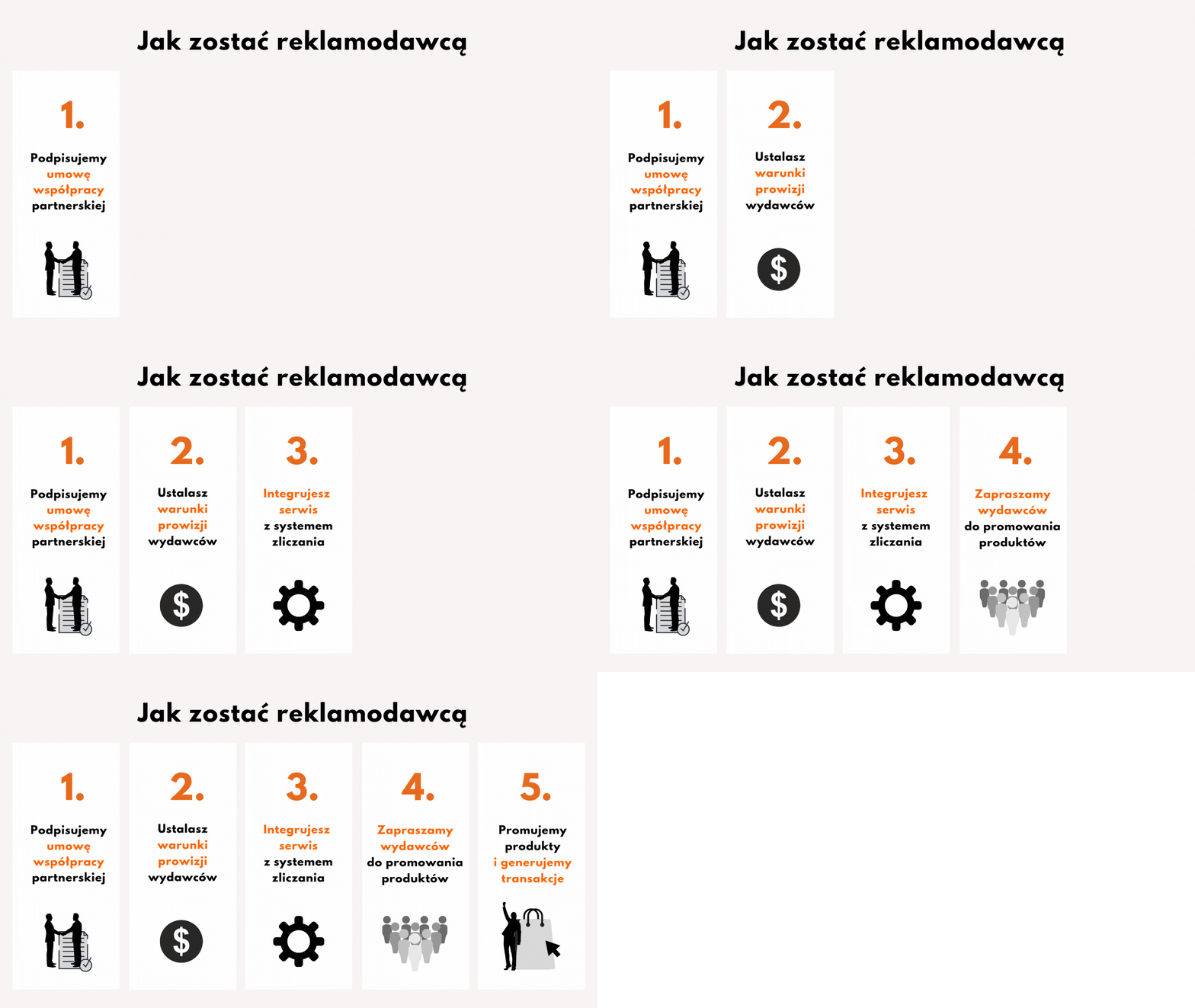
To become an advertiser in an affiliate network, you must:
-
Sign a cooperation agreement.
The advertiser signs a cooperation agreement with the affiliate network, which describes in detail the method of working with publishers and with the network, as well as the settlement rules. It is very important for the advertiser to become thoroughly familiar with the possibilities offered by running a partner program, as well as the obligations that result from it. -
Set the terms of your partner program.
The advertiser independently specifies the commission that a publisher will receive for delivered actions. It is worth thinking the terms through carefully, as they are set with a view to long-term cooperation. Reducing the offered commission rate always has a very negative impact on the program’s development and causes some publishers to leave. Therefore, it is always better to leave yourself room to increase the commission and improve cooperation terms rather than the other way around. -
Integrate your store/service with the sales-tracking system and provide an XML feed.
For cooperation with publishers to be tracked by the affiliate network and for commissions to be calculated correctly, the advertiser integrates their store/service with the sales-tracking system according to the specifications provided by the network. The next step is to provide a dynamically generated XML file with the online store’s offer. Thanks to this, publishers can use the affiliate tools to which they have free access in the affiliate system. These tools enable and help publishers to effectively promote the advertiser’s products.
That’s it as far as the requirements for the advertiser before launching a partner program. When the program goes live, publishers are informed about it and invited to join. The advertiser then works closely with the affiliate network in the process of building their publisher network.
Affiliate Program — a bit of history
The history of affiliate marketing began in the United States. The first affiliate program was created in the mid-1990s by Amazon, one of the largest online stores in the world. Jeff Bezos, the company’s founder and CEO, decided to test new possibilities in his marketing strategy—namely, paying for product recommendations. Interestingly, Bezos was inspired by… family tragedies! The Amazon CEO met a woman who wanted to sell… books about divorces on her website. He decided to hook her site up to his and, in return, collect a commission on copies sold. It was a complete novelty, so many people initially viewed Amazon’s idea with distrust. However, it quickly turned out to be a very simple and effective solution—after all, affiliates didn’t have to do anything more than place product links on their sites, and the commissions motivated them to keep going. In this way, affiliation became one of the pillars of online marketing in the U.S., where over 80% of brands use it!
At the beginning of 2021, the value of the e-commerce market in Poland exceeded 100 billion PLN and is still growing. The number of online stores in Poland has been steadily increasing for several years. The last three years have seen growth of over 20% annually, which places Poland among the fastest-growing e-commerce markets in Europe.
Out of more than 50,000 online stores operating in Poland, only 5% use affiliate marketing. In most cases, advertisers are not taking advantage of the enormous potential of this promotional channel, even though the biggest advantage of an affiliate program in an online store is paying only for results in the form of sales.
Is an affiliate program still a novelty in Polish e-commerce?
In Poland, the affiliate market has been operating for many years, yet we can still learn creative solutions from the West. That’s why it’s worth tracking the latest trends, observing, and drawing inspiration that can help the program you promote achieve even better results! Affiliation requires originality and ingenuity—which can be found anywhere. You just have to look carefully.