Online Store – How to Build and Promote a Successful Business
Online Store – One of the Fastest-Growing Sectors in Business
Is it worth launching an online store? What should you sell? What should you know when building and promoting an online shop? Let’s explore the key questions and find the answers.
What is an online store?
An online store is simply a digital platform where physical or digital products, as well as services, are sold. It can operate independently—like Renee or Parktel—or as an extension of a brick-and-mortar business. The latter model is used by major brands that started offline, such as Lidl, Media Expert, Stradivarius, and H&M, which now rely heavily on e-commerce.
Online store – How to choose a niche and decide what to sell
Selecting a product niche for an online store is often not an easy task. Many entrepreneurs already have a product idea and a vision of how to sell it. However, some want to launch an online business without knowing the specific product they should offer.
Is there a magic formula that guarantees success? Not exactly—but there are some helpful guidelines worth following when launching your e-commerce venture.
If you’re still unsure whether investing in e-commerce is the right move, we recommend reading the article: E-commerce – Is It Worth the Investment?
Niche products in an online store
If you have a niche product—it could be a huge advantage! Many people are hesitant to launch products that seem suitable only for a small group. Of course, if you’re planning to launch, for example, software designed solely for one industry, it’s crucial to do thorough market research—analyzing competitors and understanding customer needs.
Sometimes a product is niche simply because it lacks sufficient demand. But often, unique or hard-to-find items can succeed precisely because they’re not widely available.
A great example of a successful niche business is Dopiletero—a brand that creates small, handmade books designed for expressing love and emotions. At first glance, this might seem like an unnecessary trinket, yet it quickly won over customers’ hearts by being a unique, thoughtful gift idea.
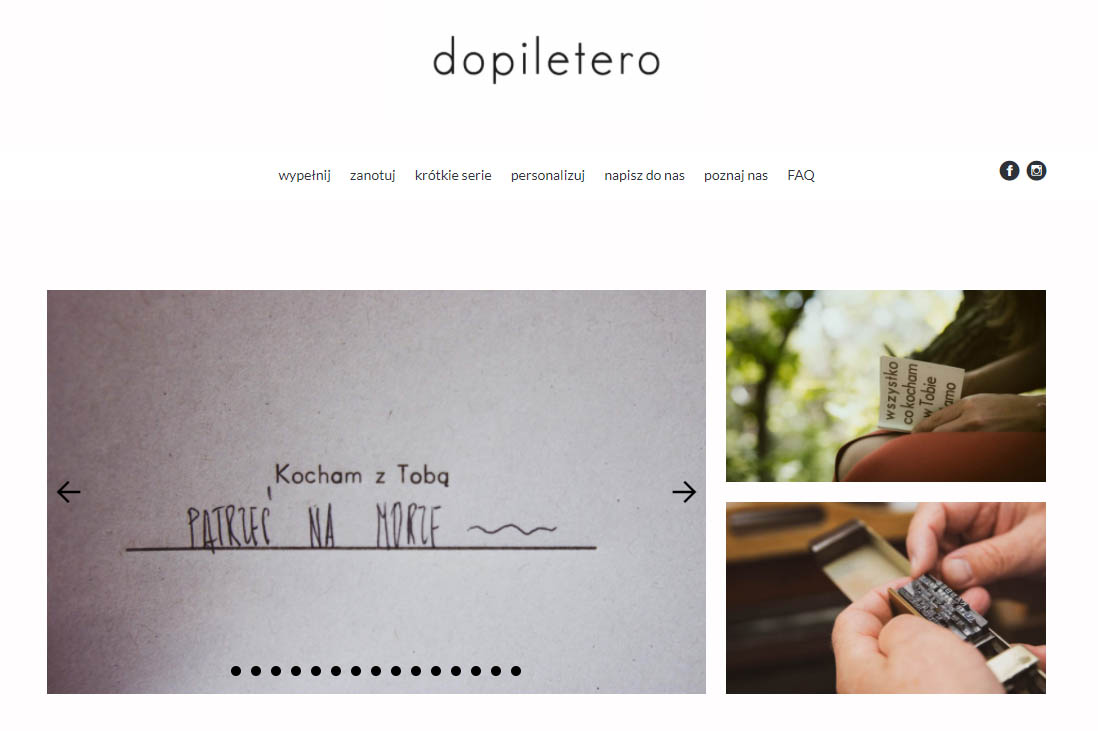
Unique or handmade products are a powerful path to success for an online store.
Popular products – Stand out in a crowded market
Operating within a competitive industry requires finding ways to differentiate yourself. Selling clothing, shoes, bags, food, or cosmetics is undoubtedly profitable—but it’s also challenging.Why? The primary reason is the high level of competition. These segments of the market are already densely populated, both offline and online, and many of the players have well-established positions. To succeed in such an environment, a new online store must focus not just on product quality, but also on branding, unique value propositions, customer experience, and innovative marketing strategies.
This doesn’t mean, of course, that opening an online shop selling lingerie or dresses is pointless. Quite the opposite—it absolutely makes sense, but you’ll need to find a way to stand out and persuade customers to choose your offer.
Some strategies include:
-
Offering attractive prices
-
Providing a customer-friendly return policy
-
Free online consultations with a stylist
-
Unique and thoughtful product packaging
One brand that mastered this approach is Renee, previously just a typical online shoe store. What made customers take notice?
Their product packaging—beautiful, seasonally themed boxes that customers could reuse for home storage, plus fun stickers and a note indicating who packed the order. A simple idea, but incredibly effective. Renee elevated the customer experience with personalization and attention to detail. Each order feels special. This kind of customer care is highly valued—especially by influencers and content creators, who eagerly showcase their unboxings on blogs, YouTube, and social media. Customers naturally become brand ambassadors, promoting Renee organically.
Another great example is Zalando, a brand known to everyone, which attracts customers through a generous 100-day return window and a very simple, free return process.
By combining product quality with customer-centric policies and creative branding, both niche and mainstream online stores can build lasting success.
How to promote online shop
Afiliate marketing advertising without unnecessary costs for online stores
Affiliate marketing in e-commerce is often referred to as performance marketing, because it guarantees that the advertiser only pays for actions that bring measurable results—in this case, online sales. This advertising model involves a collaboration between an advertiser (a company selling products or services) and publishers who promote the advertiser’s offer in exchange for a pre-agreed commission.
How does affiliate cooperation work?

To implement affiliate marketing, the advertiser—typically an online store—launches an affiliate program that publishers can join. A publisher promotes selected products from the e-commerce store and earns commission based on sales generated through their content. The store only pays when a user actually clicks an affiliate link, banner, or widget, places an order, and doesn’t return the product.
The advertiser does not pay for the display of ads, mentions in posts, or banners—they only pay for confirmed sales. This makes affiliate marketing a highly cost-effective solution. Additionally, it creates a win-win relationship:
-
The customer buys a product recommended by someone they trust
-
The publisher earns commission
-
The store gains a sale without paying in advance for advertising
For more on how to develop an affiliate program and collaborate effectively with publishers, see the article: Online Earning – 10 Steps to Increase Sales in Your Online Store.
Social Media Channels for Online Stores
Consistent brand communication aligned with your core values and customer needs is essential. One of the simplest ways to do this is by using social media profiles to stay connected with users. Each industry has its own specifics, so choosing the right platform depends on your product range and brand philosophy. For some, this might mean LinkedIn and Facebook; for others, Instagram and TikTok; and for yet another group, YouTube and Pinterest. When selecting one or several platforms, you’ll need to carefully analyze your own goals, customer behavior, and competitors’ activity. What kind of content should you post on social media? Here are some ideas:
-
Educational posts related to your niche
-
Information about promotions, new collections, or sales
-
Behind-the-scenes content
-
Team introductions
Such content builds trust and helps foster a deeper connection with your audience.
Online Store – Company Blog
A blog is a powerful tool for sharing your vision with customers and establishing yourself as an expert in your niche. When customers perceive you as knowledgeable about your products, they’re more likely to trust your recommendations and make a purchase. A successful expert blog should include:
-
Valuable, informative content related to your products
-
Interesting insights and personal opinions
-
Tips and advice for customers
This builds loyalty and increases customer engagement, which ultimately leads to higher sales.
Online Store – SEO (Search Engine Optimization)
SEO involves optimizing your store so that it appears at the top of Google search results when users type in keywords like “black leather handbag.” This might seem like an optional effort, but it’s one of the most effective sources of traffic and conversions. SEO is a long-term strategy that requires time and consistency—it can take several weeks or months to see results. To do SEO well, you’ll need:
-
Analytical tools
-
Search-optimized content
-
A technical understanding of on-page and off-page tactics
If SEO seems too complex to handle on your own, consider hiring freelancers or agencies to manage it for you.
Paid Advertising for Online Stores
Marketing often comes with necessary costs, especially in highly competitive industries where organic reach is nearly impossible to achieve. If you want to create effective ads that help you grow your online store, consider using:
-
Facebook Ads
-
Google Ads
-
LinkedIn Ads
-
TikTok Ads
-
Influencer partnerships
-
Affiliate networks
Each of these channels can enhance your visibility and increase your sales, depending on your audience and marketing strategy.
Features of a Well-Functioning Online Store
A well-functioning online store should have several elements that must not be forgotten. Below, we have included a list of the 7 most important aspects.
1. Online Store – Intuitiveness and Responsiveness Are Key
A lot is being said now about the use of UX principles in e-commerce. This is a very reasonable direction, because no website, whether it is an online store, a portal, or a blog, will gain user recognition if it is not functional and easy to use. Especially in the case of online stores, it is necessary that the Customer can easily navigate the site and find the things that interest them. Therefore, an absolute must-have is a well-constructed menu, well-thought-out categories, and a search engine optimized for the assortment. Also make sure the site is responsive. The loading time of both the homepage and all subpages or search results is very important. Nowadays, Customers do not have much time, so they value using such online stores that enable them to quickly find what they need and place an order.
2. Good Product Photos Are a Must in an Online Store
Product photography is one of the most dynamically developing areas of marketing. No wonder, because as it turns out, well-made product photos can effectively convince the Customer to make a purchase. Of course, as in every field, the trends here are also changing rapidly. What does this mean? First of all, it used to be important to show all the details of the product. In the case of clothing, these were, for example, buttons, stitching, or decorative elements, and when it came to furniture, it was the perfectly rendered color of the legs or the texture of the upholstery. Today, Customers also pay attention to details, but they are much more interested in the arrangement. So if you are engaged in selling furniture or home decorations, it is worth, in addition to showing the product itself, to also indicate the space in which it plays the main role. The WestWing brand is a great example of this type of exposure of its assortment. The same applies to clothing. People are now interested in how a specific cut fits different body types. This is why it is worth showing your products on models of diverse looks and shapes. Additionally, it is worth using the video format, as this allows the customer to see how a particular item “behaves” in motion. A perfect example of ideal clothing display is the brand Asos.
3. Online Store – Unique Product Descriptions
Unique product descriptions also play a huge role. It is not only about website positioning, although in large part that is why they are included, but also about catching the Customer’s attention. A well-presented product encourages the customer to check it out and place an order, which is why it is worth spending some time to make sure the description is reliable, substantive, and specific, but at the same time amusing and interesting. In the case of clothing, it is also important to include the model’s height and/or weight and the size they are wearing, so that the consumer can relate this to themselves.
4. A Fast Ordering Process and Various Payment Methods Are Essential
For some time now, one of the most frequently mentioned reasons for choosing a particular store has been the ordering process. It must, of course, be efficient, but this depends mainly on the aforementioned responsiveness of the site. When it comes to the ordering process itself, you must ensure that it requires the Customer to provide only the necessary data. Additionally, the user should have the ability to easily click to indicate that they need a VAT invoice, want to enter different shipping information, or add a message to the store. In addition, various shipping and payment methods are important. A traditional bank transfer, Blik, and fast payments with at least one operator are essential. It is also worth providing the option to pay with PayPal. Currently, two additional options are also popular. The ability to purchase a product in convenient installments (in the case of more expensive items, mainly electronics or furniture) and so-called PayPo. This solution allows customers to purchase the product and use it or return it without paying the required amount immediately. It is enough to provide your payment card, and the funds will be withdrawn from the account only after 30 days. In terms of shipping, at least three options should be available: cash on delivery courier, shipping to a parcel locker or other pickup point, and courier shipping.
5. Online Store – Graphics and Marketing
Marketing and a well-designed graphic layout of the website are two inseparable methods that allow you to attract new Customers to your online store. When starting a business of this type, you must, right at the beginning, designate a budget that you will allocate to advertising activities and branding. At first, it does not have to be large, but over time, it will need to be gradually increased in order to reach increasingly larger groups of consumers.
6. Transparency Encourages Customers
Consumers do not like online stores where certain information, such as the terms and conditions, return and complaint policy, delivery costs, or contact details to the store, is hidden. Therefore, it is necessary that this information is placed in one visible location, for example, in the form of an FAQ or separate tabs.
7. High Quality Is Essential
There is no doubt that even with a unique product, excellent customer service, or outstanding packaging, you will not gain consumer approval unless your product is 100% refined and meets their expectations.
Online Store – on a Dedicated Platform, Open-Source, or Custom Software
There are 3 main types of e-commerce platforms:
-
SaaS (Software as a Service) or licensed – usage requires paying a monthly fee or purchasing a license that is periodically renewed.
-
Open-Source platforms – free platforms that often gather a large community around them.
-
Dedicated platforms – the online store’s code is written from scratch by one or a group of developers.
The Built With service (Source: https://trends.builtwith.com/shop/country/Poland) presents information regarding the popularity of selected technologies. The chart below shows which e-commerce platforms make up the largest segment of the market in Poland.
It is therefore clearly visible that PrestaShop comes in first place. A slightly smaller, but still significant market share is also held by Shoper, and WooCommerce occupies third place.
In addition, platforms such as:
-
OpenCart
-
osCommerce
-
Magento
-
Shoplo
-
IAI Shop
-
SOTE
have appeared.
The distribution of platforms in Poland is to some extent unique, as globally, the most popular platforms are Shopify, WooCommerce, and OpenCart.
Online Store in SaaS (Software as a Service) or Licensed Version
In the SaaS model, software for online stores is offered as a service, usually paid for on a monthly basis. At the same time, it is the most comprehensive solution, allowing you to hand over the technical aspects of the store to experts.
Subscription costs for SaaS start from several dozen PLN per month. The price includes practically everything an online store needs – a sales platform, technical support from experts, as well as all useful tools. As part of the subscription, we receive integrations with online payment systems, couriers, wholesalers, price comparison websites, and auction platforms (e.g. Allegro, Amazon, eBay), enabling multi-channel sales development. The package often includes domains and hosting, to which free graphics and essential marketing tools are added. It is very easy to add products, change prices, and introduce promotions. Most of these platforms also allow you to tailor the store for SEO, which is very important if you want to appear in organic search results. A novice entrepreneur often needs support at every stage of developing their business, and that is exactly what can be expected with the SaaS solution.
Setting up an online store on a ready-made platform also has its drawbacks. The main one is the fact that the store is never fully yours. Of course, it is available, but only as long as you pay the fixed subscription. A delay or temporary decision to stop making payments means your e-commerce disappears from the Internet, and even a short absence like that can cause significant losses for the business. Another drawback is that such platforms usually do not allow changes to be made to their “engines” exclusively for one online store. All adjustments are made only when the majority of users require them. This solution is also relatively expensive, considering the costs you have to incur over several years of use.
The most popular SaaS model platforms:
-
RedCart
-
Sky-Shop
-
cStore
-
Shoper
-
Shopify
-
Sky-Shop
-
IdoSell
Advantages of SaaS platforms:
-
simple operation and intuitiveness
-
the possibility to use a free trial period
-
fast configuration and implementation
-
lower initial cost
-
hosting (server) provided by the platform provider
-
technical support and updates from the provider
-
store engine updates included in the subscription price
-
integration with Google Analytics, ERP, payments, couriers, comparison sites
-
extras depending on the package price: landing pages, campaigns, coupons, etc.
-
compliance with legal standards is handled by the platform provider
Disadvantages of an online store on a SaaS platform:
-
you are not the owner of the store, you only rent it
-
if you don’t pay the subscription, you lose the store
-
limited number of templates and graphic customization options
-
additional graphic changes are very expensive
-
limited number of products in the store under the basic package
-
to access interesting add-ons, you must switch to increasingly expensive packages
-
not having access to the store’s code means you are dependent on the platform’s built-in features
Online store on an Open-Source platform
As a rule, Open-Source systems are free solutions that we can download and freely modify to suit our own online store. Does this mean we can have a store for free this way? Unfortunately not. Well-functioning online stores built on Open-Source require owners to add paid modules, IT support (and programmer time is highly valued), as well as graphic designers who must be paid to refine (often paid) graphical templates. So, an Open-Source system is a good starting base for creating your own online store, but it is not ready-made software that will allow us to “click together” our store independently without programming knowledge.
Here are the most popular Open Source e-commerce platforms and the market share of each platform according to wappalyzer.com in 2019:
-
WooCommerce – 360,000 stores, or 56.5%
-
Magento – 110,000 stores, or 17.27%
-
PrestaShop – 84,000 stores, or 13.19%
-
OpenCart – 72,000 stores, or 11.3%
-
osCommerce – 11,000 stores, or 1.74%
Advantages of Open-Source platforms:
-
free base script
-
frequent updates
-
access to the source code and the ability to edit it
-
you are the owner of the store, you can develop it and change its appearance
-
plenty of free add-ons and functionalities
-
flexible design, many free templates (+ many paid ones)
-
a very large number of free plugins (+ paid ones) – Google Analytics, Social Media, SEO, payments, couriers, auction sites, price comparison tools, newsletters, etc.
-
significant influence on store optimization and SEO correctness
Disadvantages of an online store on Open-Source platforms:
-
configuration and implementation – you have to pay specialists unless you can do it yourself
-
constant store administration is required
-
no automatic updates
-
you must take care of security – administration, backups, etc.
-
you pay for hosting yourself
-
you adjust the store to legal obligations yourself: regulations, contracts, privacy policy, data protection
Online store on custom software
When it comes to custom software for an online store, this is a great option for people who have at least some knowledge of e-commerce or who work with programmers and designers. There are many advantages to having an online store running on your own software. First of all, security, because you are the only person who owns the rights to it and ensures that it functions properly. When creating the store, you have influence over every aspect, from the design to all technical solutions and customer conveniences. Additionally, an online store in this form can be completely tailored to your needs, quickly adapting to changing technologies, user behavior (potential customers), and the development of the internet. In the case of e-commerce on dedicated platforms, ready-made solutions are often imposed and cannot be changed. By creating something from A to Z on your own, you have control over how every single element looks, even the smallest one. Thanks to this, the store is tailored to your consumers, and they appreciate its intuitiveness and ease of use.
Certainly, the downside of such a solution is the process of creating the store itself, which is relatively long and requires the involvement of specialists. Additionally, every malfunction must be fixed immediately, which requires ongoing programming support.