Influencer marketing – campaigns with influencers through affiliate marketing
Influencer marketing is a marketing strategy in which brands collaborate with influencers—people who have an impact on a specific audience—to promote their products, services, or ideas. Influencers have loyal communities on social media, blogs, podcasts, or YouTube, and they use their authenticity and the trust of their audience to build brand awareness and generate sales.
How to implement influencer marketing through affiliate marketing
On our affiliate platform, webePartners, we provide a dedicated module for implementing influencer marketing in e-commerce. Advertisers have access to a CREATORS’ OFFER CATALOG for promotional activities based on barter cooperation as well as the Flat Fee model (a pre-agreed fixed fee). The advertiser can choose the best offers and run influencer marketing activities with publishers according to the presented terms.
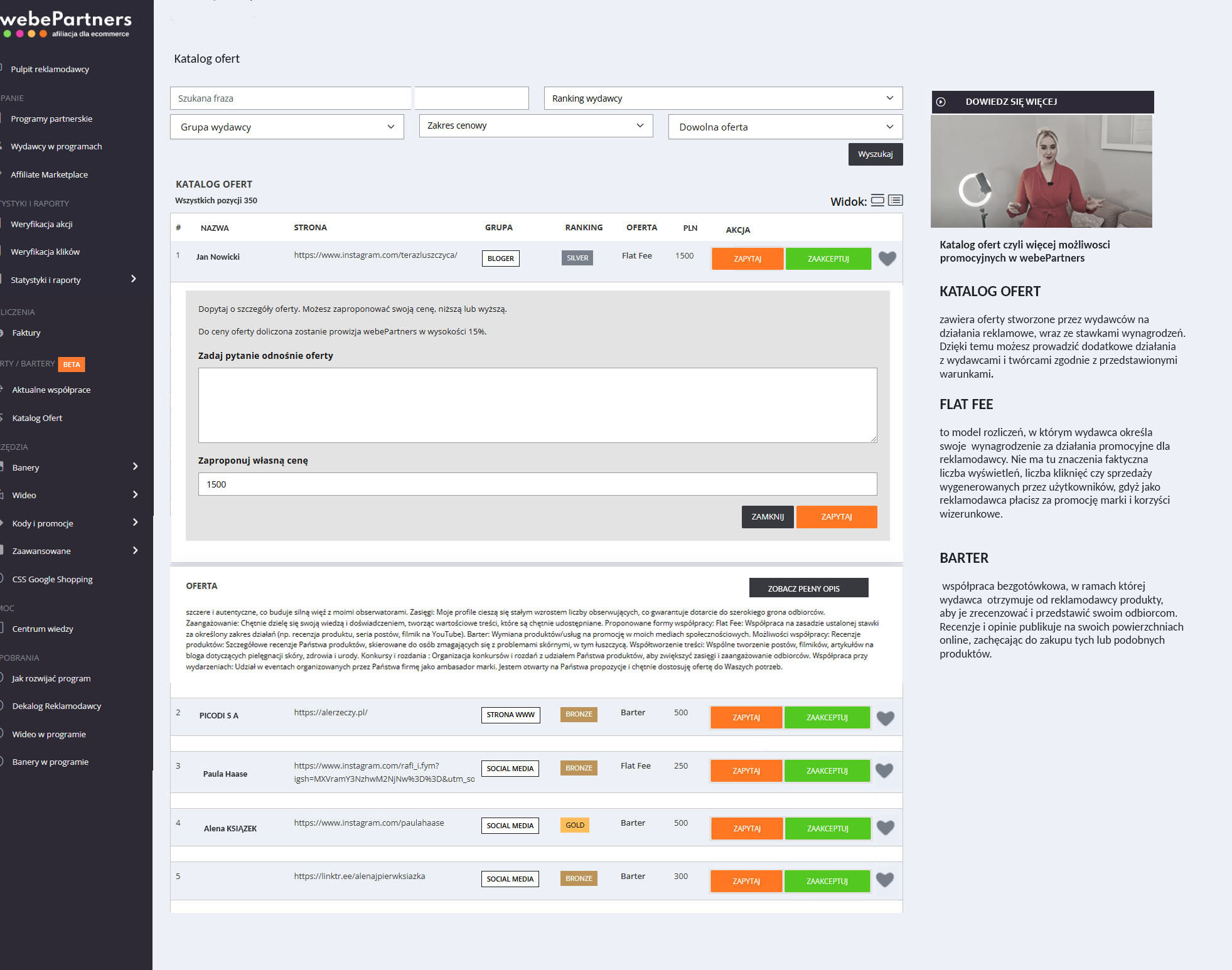
Regardless of the settlement model, the advertiser can measure the effectiveness of campaigns run with publishers in the same way as in the Cost Per Sale model. All the publisher needs to do in Flat Fee or barter collaborations is add affiliate links to their publications, and our tracking system will record all actions from that campaign in your advertiser panel.
How to start influencer marketing with publishers
-
Log in to your advertiser account in webePartners and go to INFLUENCER MARKETING >>>> Offer Catalog
-
Browse offers from publishers. You can sort them using the available filters
-
You can ask about any details and negotiate the rates proposed by the publisher
-
Once both sides approve the cooperation, the publisher receives the signal to execute the campaign
The psychology behind influencer marketing effectiveness
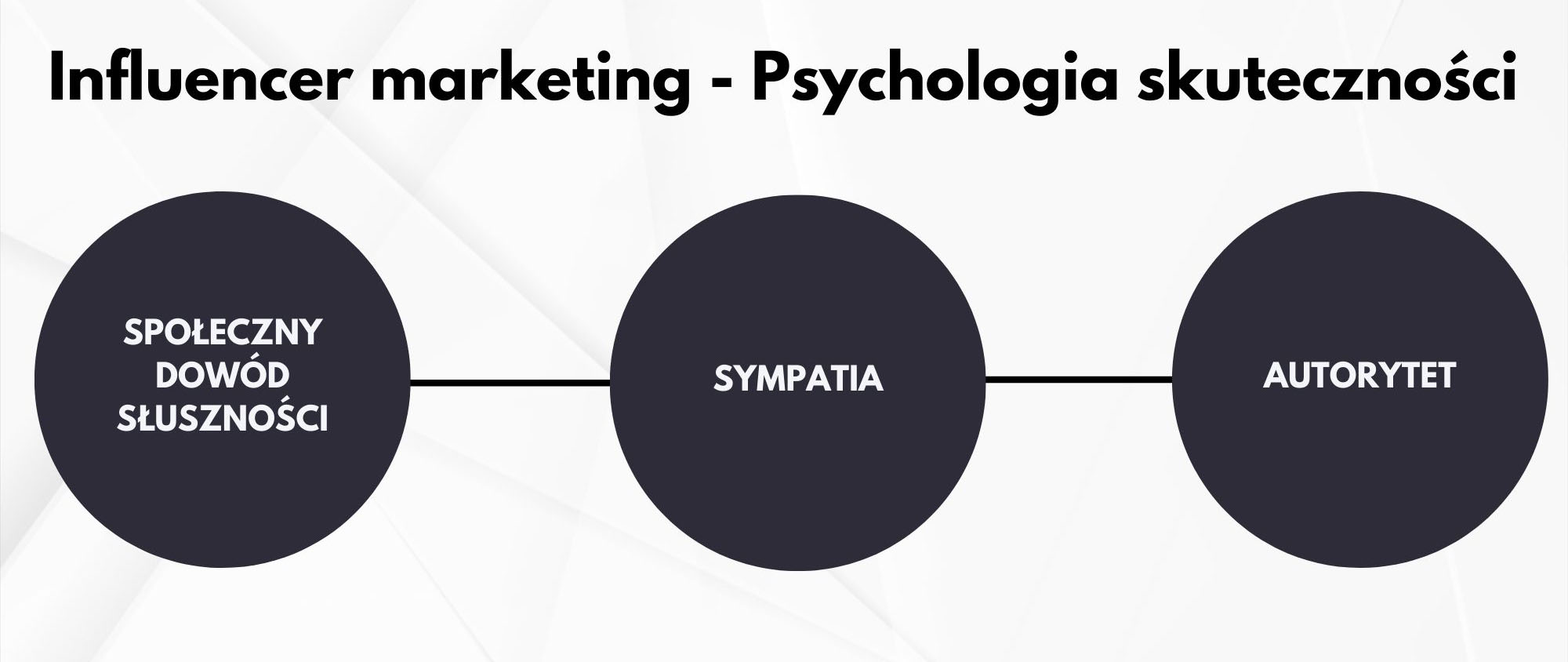
Influencer marketing is built on strong foundations drawn from the psychology of social behavior. These are principles of social influence described by psychologist Robert Cialdini, one of the most distinguished experts in this field.
One of the principles at work in influencer marketing is so-called social proof, which says that people make the same choices as the majority of the group. The views or decisions of others—especially those in the majority—therefore determine, in most cases, the decisions and opinions of the minority. So, for example, if we find positive opinions about a product online, we will be more inclined to buy it.
In influencer marketing, the point is that if an influencer convinces a larger part of their audience group to choose a product, the probability increases that the minority will also adopt that choice over time. Additionally, if many influencers—especially those we trust—recommend something, it becomes even more likely that we’ll decide to buy it.
The liking and sympathy principle
The liking and sympathy principle also works in influencer marketing. It says that we are more likely to comply with requests from people we know and like. Several factors contribute to this:
-
we notice similarities between ourselves and the other person
-
we have positive associations with them
-
we share a common goal, or the other person compliments us
-
the person appreciates us or is kind to us
Usually, the people we follow on social media are those who are similar to us in some way—or we simply like them. Often, even though we’ve never had direct contact with them, we feel as if we’ve known them for years. That’s precisely why we’re willing to buy products they recommend or use services they suggest. This aspect is why professional companies choose influencers very carefully—they know it helps them reach the right group of potential customers.
Another extremely important principle in influencer marketing is the authority principle. According to it, we are more likely to listen to guidance and recommendations from people we perceive as authorities in a given field. This means that if we trust the expertise and recommendations of a beauty influencer, we will be much more willing not only to buy cosmetic products she recommends, but also to reach for products created in collaboration between a well-known brand and that creator—or even products she has created on her own.
Influencer marketing in e-commerce
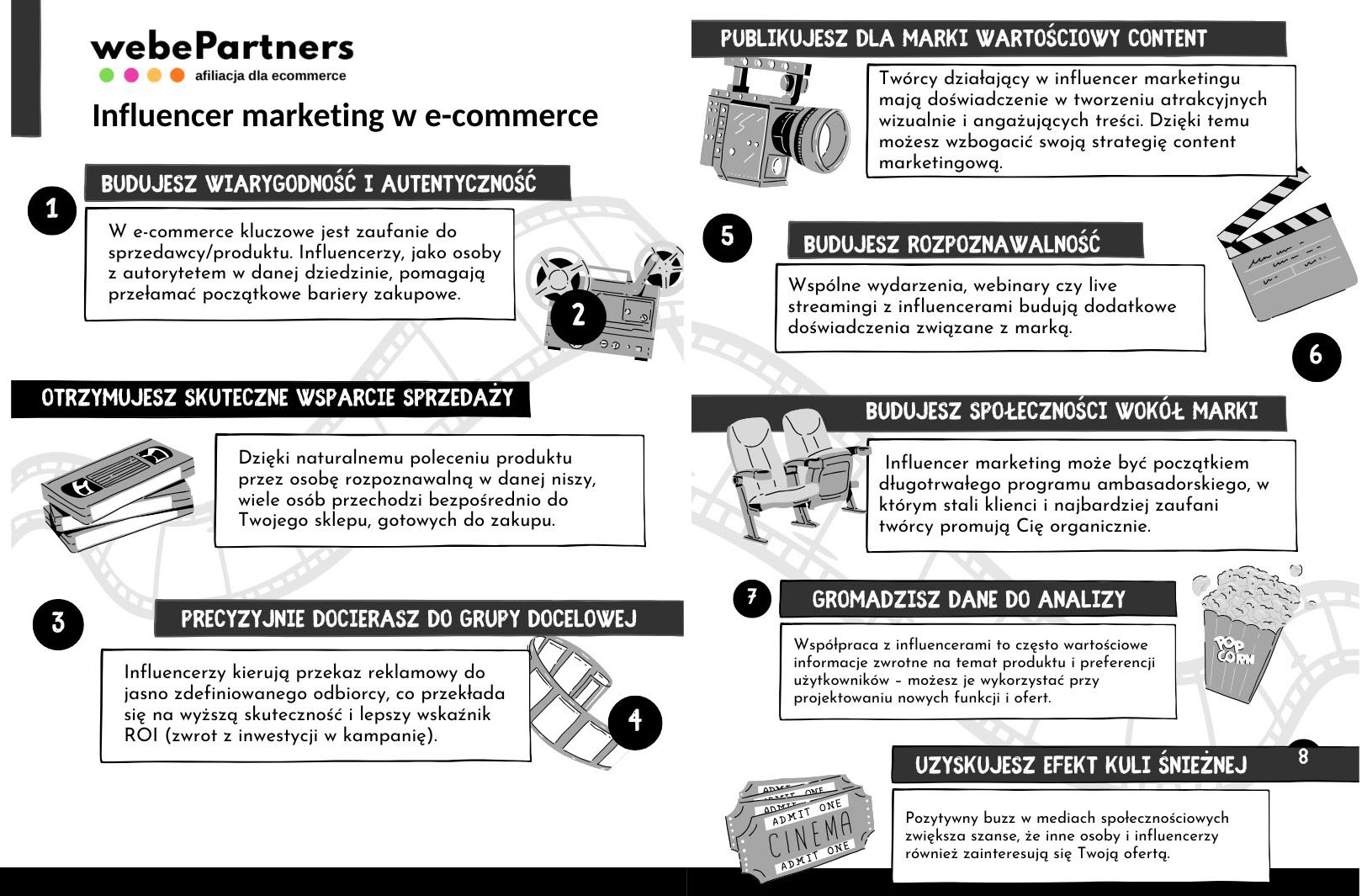
Below you’ll find the key reasons why influencer marketing is exceptionally beneficial for e-commerce.
1. You build credibility and authenticity
- Influencer–audience relationship: Influencers have a unique bond with their followers, built over years. As a result, their recommendations are perceived as more authentic than traditional advertising.
- Trust in opinions: In e-commerce, trust in the seller/product is crucial. Influencers, as authorities in a given field, help overcome initial purchase barriers.
2. You get effective sales support
- Conversions and sales: Thanks to a natural product recommendation from a recognizable person in a given niche, many people go directly to your store, ready to buy.
- Discount code and trackable link: Tools such as unique discount codes or affiliate links make it possible to effectively measure the sales performance of a given influencer marketing campaign.
- Customer base growth: Increased store visits are also an opportunity to gain new newsletter subscribers and run remarketing in the future.
3. You reach your target audience precisely
- Community segmentation: When implementing influencer marketing, you choose creators who operate in industries aligned with yours—so you can be confident your offer reaches people genuinely interested in the topic.
- Cost optimization: Influencers deliver advertising messages to a clearly defined audience, which translates into higher effectiveness and a better ROI (return on investment).
4. You achieve a higher level of engagement
- Community interactions: Influencer marketing campaigns often generate more comments, shares, and reactions than traditional ads.
- Greater willingness to engage in dialogue: Followers are more likely to ask questions and join discussions when they see someone they trust. This gives you a chance to respond quickly and deepen relationships with potential customers.
5. You publish valuable content for your brand
- Influencer ideas: Creators in influencer marketing have experience producing visually appealing and engaging content. This can enrich your content marketing strategy.
- Reuse of materials: Well-prepared content from an influencer can be reused on other channels (if you have the influencer’s permission), which further increases the value of the investment.
- Agility in testing: Influencer marketing lets you flexibly test different creatives and see what resonates with your audience.
6. You build brand awareness and reputation
- Brand positioning: Long-term cooperation with the right influencers can significantly strengthen your brand image as an expert in the industry.
- Snowball effect: Positive buzz on social media increases the chances that other people and influencers will also become interested in your offer.
- Unique contexts: Joint events, webinars, or live streams with influencers create additional brand-related experiences.
7. You create stability and future trends
- Building a community around the brand: Influencer marketing can be the start of a long-term ambassador program in which loyal customers and the most trusted creators promote you organically.
- Live commerce and new platforms: Technology development (e.g., live streams with instant purchasing, VR, metaverse) opens up further collaboration opportunities with influencers.
- Data for analysis: Working with influencers often provides valuable feedback about the product and user preferences—you can use it when designing new features and offers.
How do brands use influencer marketing?
As many as 69.9% of marketers search for influencers to collaborate with on their own using Google or social media. This means awareness of such people—and where to find them—is very high, and marketers know exactly where to look.
36.5% worked with 1–2 influencers in the past six months, 27% didn’t work with influencers at all, 16.2% worked with 3–5 influencers, and 9.5% worked with 21–50 influencers over a six-month period. So, as you can see, one company may offer cooperation to many creators—so don’t hesitate to reach out directly to brands whose products interest you.
The most frequently chosen social platforms by advertisers are Instagram (70.8%), Facebook (46.2%), web blogs (33.8%), YouTube (15.4%), and TikTok (6.2%). This is important for people who are just starting their online creator journey and don’t know which platform would be the best fit.
Summary
Influencer marketing in e-commerce combines the credibility of personal recommendations with the power of online reach. With well-chosen creators and proper measurement, this form of promotion delivers high returns and helps build a strong brand in the digital world. It’s worth using not only to increase sales right now, but also to develop long-term relationships with customers and strengthen your market position.