How to promote an online store without risk
An online store is an online service that enables buying and selling products over the Internet. Having your own online store means that you have your own website where you sell physical or digital products.
An online store is part of e-commerce, i.e. selling on the Internet.
Just having an online store does not mean that you will make money from it. On the contrary, many people operating in the e-commerce industry quickly столкykają się z reality that is not colorful at all. The online store market is huge and grows bigger every year.
E-commerce – is it worth developing it in Poland?
How to promote an online store – where to start
To promote a store – define the target group
The first issue you must define is the target group. Without this point, there is no sense in going further, because it is the foundation of the entire later strategy. The target group is also called the target, i.e. the people to whom you will direct your communication. You therefore have to ask yourself many questions about them. It is necessary to define, among others, their: age, gender, financial status, interests, needs, expectations, ways of making purchasing decisions, factors influencing purchasing decisions, preferred way of communication.
Create Personas and the brand DNA
It is worth supporting yourself by creating personas, i.e. “made-up people” who reflect your ideal customer. Such a dream-customer profile should be given a first and last name, photos should be added, and a full description of their preferences, behaviors, needs, and expectations should be created. Remember that within one business several personas may emerge, however you will have to adapt a different way of communication to each of them. You can describe personas yourself by hand or using a computer, or use various places on the internet that allow you to create such an image, e.g. makemypersona.com.
Brand DNA is another thing that needs to be developed carefully. What does it mean? You must know what and to whom you want to sell, what the character of your brand will be, what it will be associated with by customers, which aspects of sales will be most important to you. This is strongly related to the target group, because it is on the basis of the DNA that you will create the profile of your ideal customer.
Brand DNA using clothing companies as an example
Correctly defining the specifics of companies can be clearly seen in the clothing industry:
- Chanel is a luxury company that is associated with elegance, prestige, and timeless cuts. Since its products are expensive, it is not a brand for women earning the national average, and due to its clothing profile it is also not suitable for young people, even if they could afford its products.
- Zara, in turn, is a chain store, but perceived as one from a slightly higher shelf. Clothing and accessories there are at varied prices, but they cannot be considered very cheap. Usually the customers of this store are people aged 18–30, i.e. those who like nice, fashionable, interesting clothes, which often imitate clothing from top designers, and in addition they earn their own money, so they can afford an expense of around PLN 400 for a dress or a blazer.
- Sinsay, on the other hand, is a cheap clothing brand where you can buy items for just a few zlotys. It is aimed at young people who, with money saved from pocket money or with wages received in exchange for a holiday job, can fully equip their wardrobe.
Each of the above-mentioned companies knows its brand DNA perfectly, and thanks to that it knows to whom (which persona) to direct the message. Since it knows to whom it directs its products, it more accurately creates advertising and selects channels to reach the customer with it.
7 ways to promote an online store
How to effectively promote an online store without taking risk? There are many effective ways to promote a store, but practically each of them carries a smaller or greater risk of incurring costs without benefits in the form of sales profits. The only marketing channel that guarantees profit from the incurred costs is affiliate marketing. This does not mean, however, that it should be the only activity. Quite the opposite. Only simultaneous promotion of the store in several channels guarantees success. It is important, however, to skillfully choose for your business those that are most profitable and that work together, so that sales in the store grow.
How to promote a store – affiliate marketing
Affiliate marketing in e-commerce is called performance marketing because it gives the advertiser certainty that they will pay only for those actions that deliver measurable results in the form of sales in the online store. It is an advertising model in which the advertiser (a company selling products or services) enters into a marketing cooperation with publishers who promote its offer in exchange for a commission agreed in advance in the Cost Per Sale model.

The process of promoting a store consists in the fact that a publisher who has some space on the Internet, e.g. a blog, a social media profile, or a discount-code website, joins the advertiser’s affiliate program, i.e. the owner of the e-commerce. Then, on their platforms, they place affiliate links for their users. If users make purchases using the link, pay for the order, receive it, and do not return it—the store records a sale, and the publisher receives a commission for the completed transaction.
Advantages:
-
the advertiser pays only for the result (Cost Per Sale model)
-
no costs when there are no results in the form of sales
-
the advertiser determines the commission amount shared with the publisher
-
a win-win relationship, the advertiser benefits as well as the publisher
-
promotion on various websites simultaneously
-
promotion of the advertiser’s products through various affiliate and advertising tools
-
the possibility of cooperating with both small and large publishers in a performance model
Disadvantages:
-
to run affiliate activities well, you need to get involved in developing your affiliate program and respond efficiently to publishers’ needs
How to promote a store – Google Ads
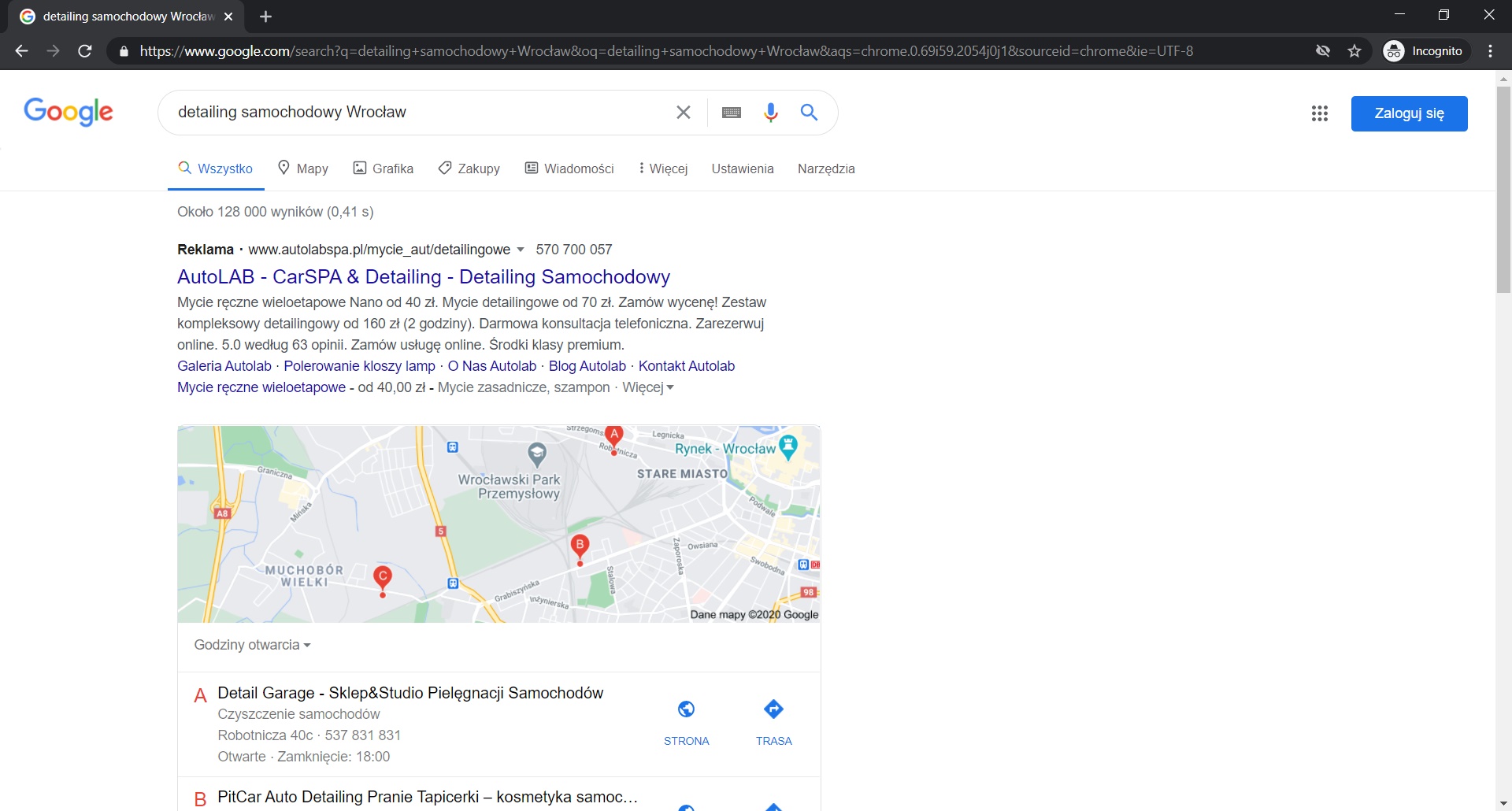
Google Ads is one of the most popular forms of online advertising. All promotional creatives that you see when typing phrases into Google (both those with images and purely text ones in search results), as well as those on various external portals that are Google partners, are precisely ads coming from the Google Ads panel. Promoting an online store through AdWords ads consists of paying a fee charged only for clicking on the ad.
Advantages:
-
you pay only for a click, i.e. going to the store
-
you can create various ad creatives (including those on YouTube)
-
you have access to rich statistics
-
the ability to track the conversion path
-
a large network of portals where your ad may appear
Disadvantages:
-
risk of “burning” the budget (clicking the ad and going to the store does not mean a purchase)
-
high competition on the market generates high cost-per-click rates
-
costs increase with high competition without a guarantee of higher sales
How to promote a store – Positioning
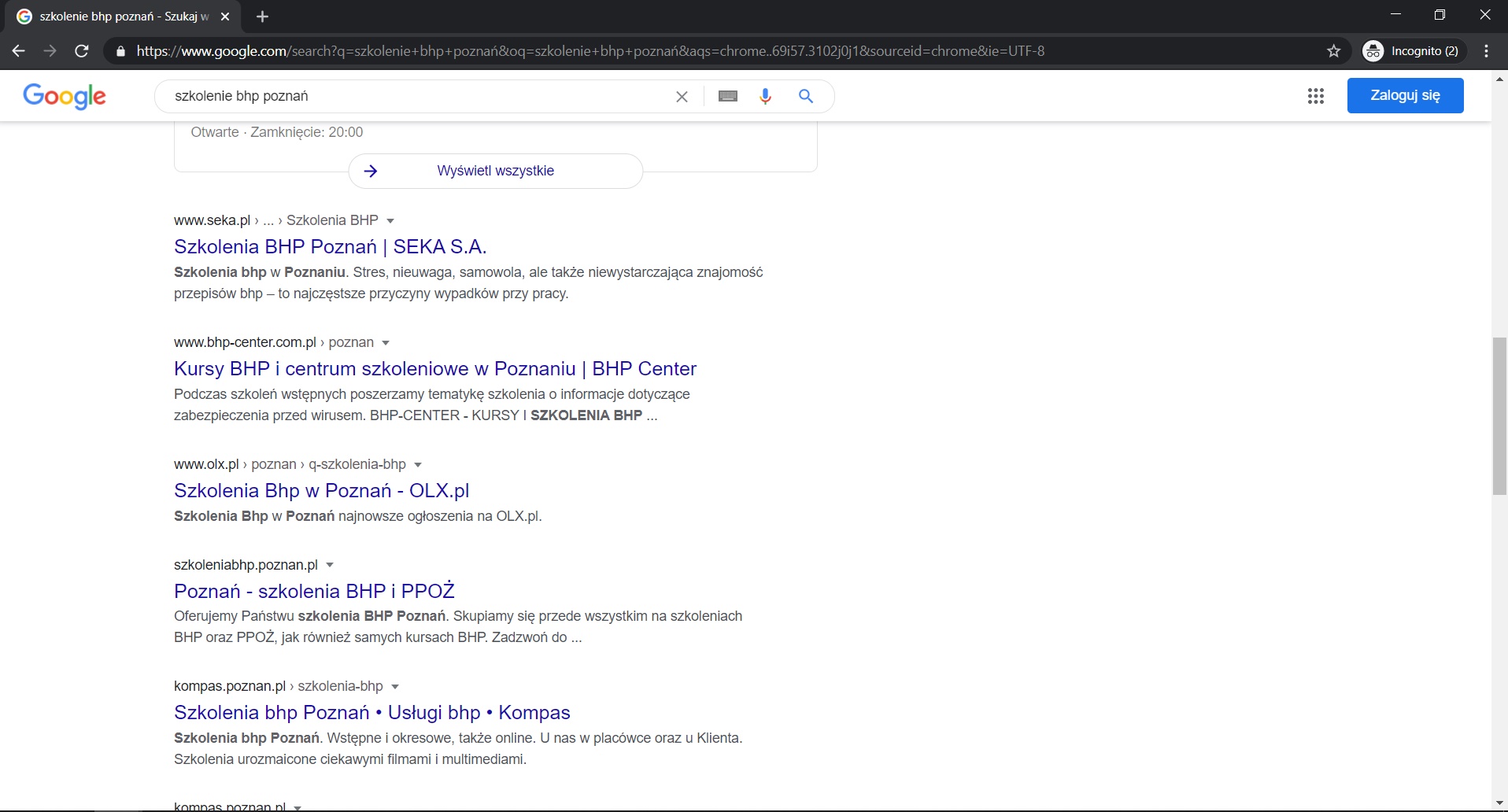
Positioning, also known as SEO (Search Engine Optimization), is comprehensive activity that leads to achieving high positions in Google search results. In addition, its task is to generate conversions in the form of purchases, although usually its impact is indirect. Positioning consists, among others, of linking in various content units on specific phrases to specific stores, products, or articles.
Advantages
- presence in organic search results (this is not possible to achieve with Google Ads)
- payments are made one-time or cyclically (subscription), but you do not pay for each sale, click, or acquired customer
- a long-lasting effect that often remains even after stopping the activities
- enriching the website content (due to the need to create new content units)
Disadvantages
- you have to wait from a few to even several months for noticeable results
- it requires a lot of time, commitment, and tracking trends
Social media – Facebook Ads
Social media are an ideal place to promote an online store. First of all, all profiles are a great place that allows you to build certain relationships with recipients for free. For example, a Facebook page often enables direct communication between the customer and the online store, and also serves an informational function, e.g. about new deliveries, opening hours, or the store’s assortment. Instagram, in turn, can serve as a place where customers can learn more about the store’s backstage, the people who create it, and individual products.
Are you wondering how to advertise an online store on Instagram or Facebook?
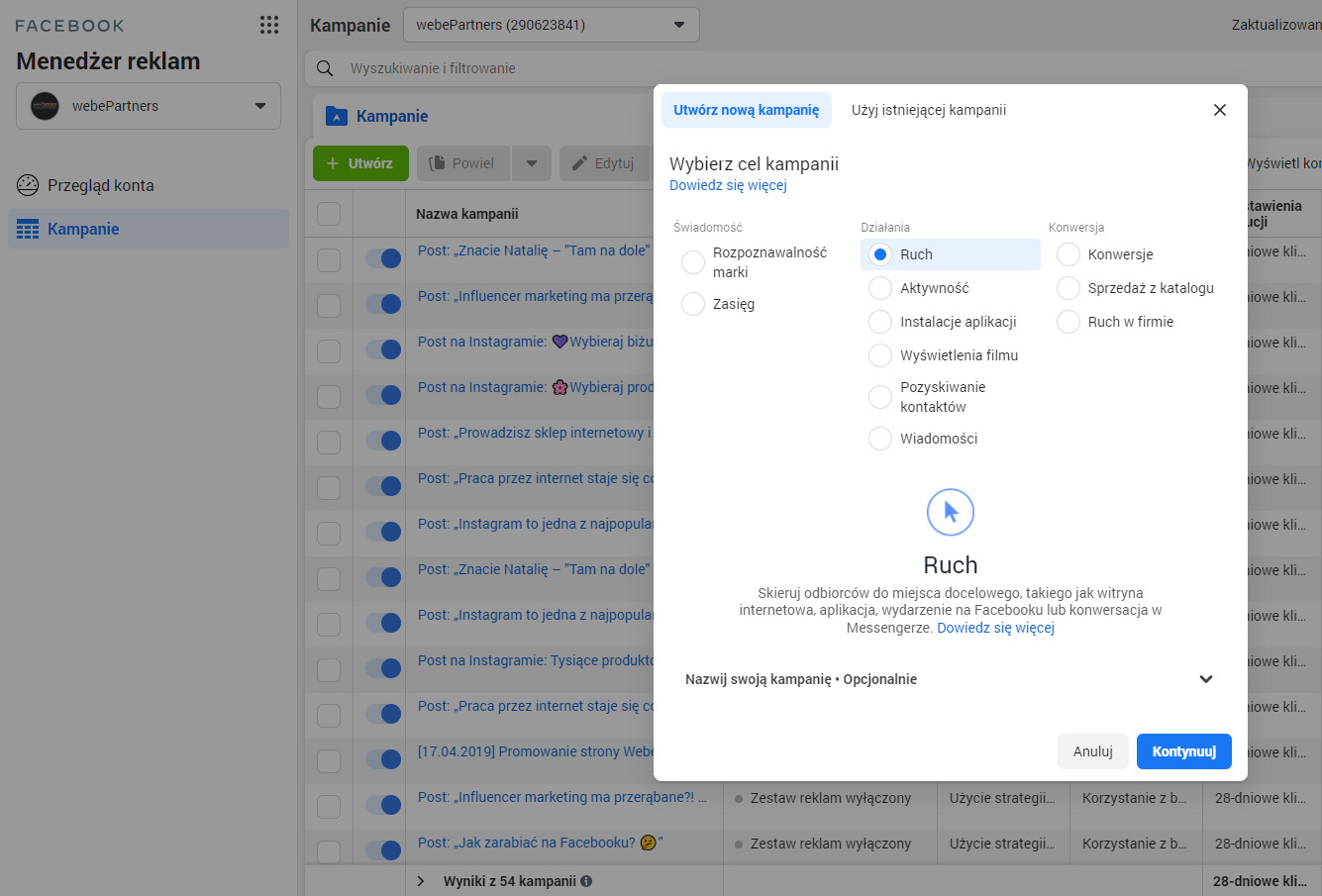
Well, both of these portals have one advertising system – Facebook Ads, on which they provide the possibility to create paid promotional creatives. You can choose the goal of your ad there, specify the target group, and prepare separate content for each of them. Of course, Facebook and Instagram are not the only social media portals (although the most popular) that you can use to promote or develop relationships with your customers. You also have at your disposal, for example, YouTube (ads managed by Google Ads), LinkedIn, Twitter, TikTok, or Snapchat.
Advantages:
-
a large number of users you can reach
-
low cost per click on the ad
-
you decide how you settle (per clicks or per impressions)
-
intuitive ad creator
-
ease of defining the target group
-
facilities for stores
Disadvantages:
- low organic reach (rather only paid sources reach the user)
- risk of receiving negative feedback on the ads
How to promote a store – Influencer Marketing
Influencer Marketing is any marketing activity that is based on cooperation between companies and influencers. Therefore, all sponsored videos on YouTube, photos marked as cooperation on Instagram with advertising, or InstaStories in which someone talks about products of a given brand due to a cooperation undertaken—this is influencer marketing.
Remember, however, that not every recommendation of something by a famous person has to be associated with the fact that it is sponsored content.
Of course, brands have been cooperating with influencers for a long time and it is natural, however creators often recommend something on their own, buy products themselves, or go to places with their own money, and recommend something because they considered it worthy of such a recommendation.
Advantages:
- reaching a specific target group,
- the size of the audience depends on which influencer you choose (there are those who have millions of subscribers, and also those who have a few thousand),
- building brand credibility,
- marketing built on relationships.
Disadvantages:
- relatively high cooperation costs,
- time-consuming (building a relationship, creating consistent content, and aligning joint activities takes a lot of time),
- risk of failure of activities in the case of a campaign inconsistent with the freelancer’s image.

E-mail marketing
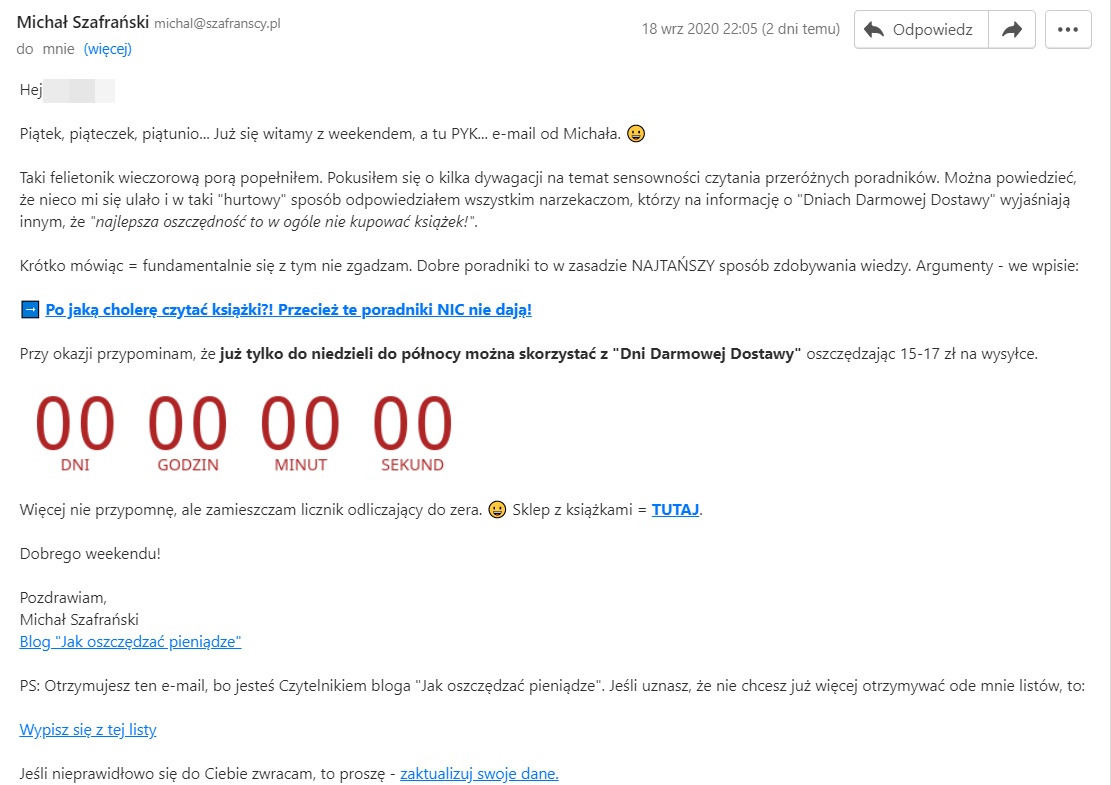
You have probably heard more than once that e-mail marketing is already a thing of the past. Indeed, it is somewhat less popular now, but that does not mean it is ineffective. A properly planned, sensible strategy that does not make users feel overwhelmed by an excess of information that is irrelevant to them can significantly contribute to promoting an online store.
It is worth building your email list not only because you can send a newsletter or information about a promotion. Imagine that you wake up one day and Facebook, Instagram, and all other social media are not working. What’s more, your website is down as well. What will you do in such a situation? Exactly! You will send an email to customers informing them that you are still operating and the problems are only temporary.
Your contacts on Facebook and Instagram belong to Mark Zuckerberg, so he can instantly deprive you of the ability to contact customers, and your website can be hacked. The same applies to other social media. So it is worth being secured.
Advantages:
-
your own, independent audience base
-
the ability to send personalized messages
-
the ability to encourage customers to return to the store
-
building relationships with customers
Disadvantages:
-
meeting all legal requirements (GIODO, RODO, etc.)
-
costs that must be incurred for using mailing software
How to promote a store – Content marketing
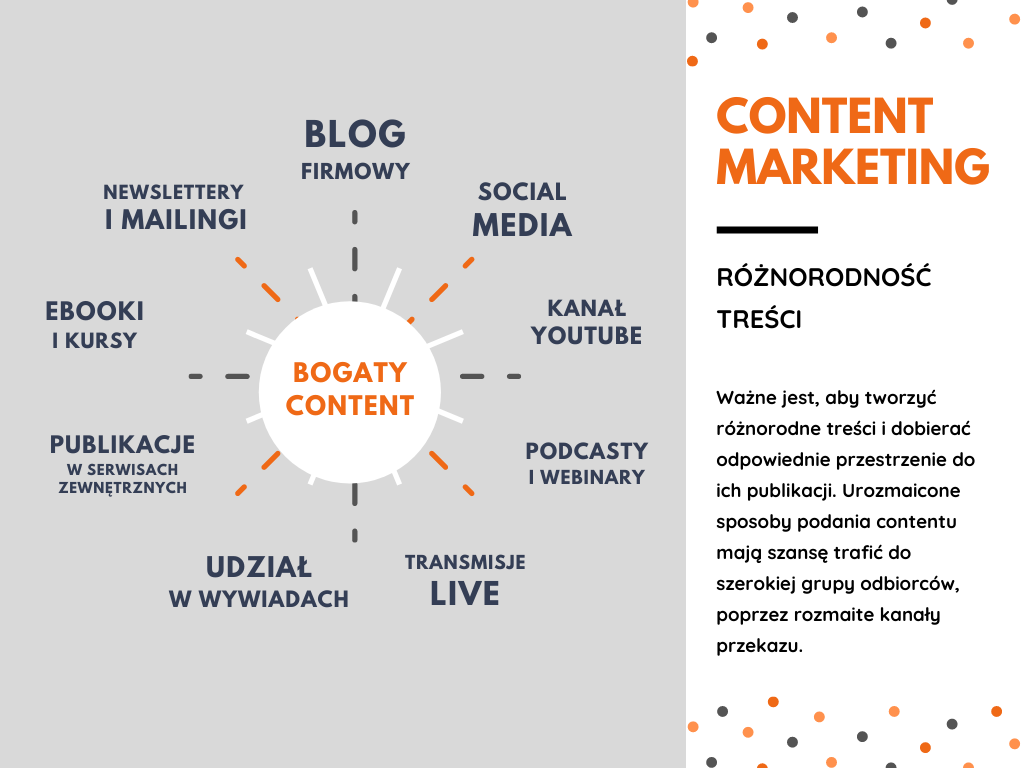
CContent marketing is the last, but no less important, way to advertise an online store. Namely, publishing valuable content on the Internet (whether on a blog or in social media) is an opportunity to educate, motivate, spark interest, and engage in building a relationship with the customer. High-quality material can make you gain new buyers who will recommend you further. In the case of content marketing, you can achieve a lot without spending any money. Of course, if you cannot write yourself and it is not your strong side, you have to hand these activities over to specialists (content managers or copywriters).
Advantages:
-
at the beginning, time and skills are enough to implement it
-
helps interest and retain the customer
-
increases the chance of acquiring new customers
-
supports store SEO
Disadvantages:
-
time-consuming
-
requires skills and creativity
-
generates additional costs if you outsource it to external entities
How to advertise an online store – analyzing results is the basis!
Advertising an online store can be carried out in many channels at the same time, supporting each other. They will not bring the desired effect without analyzing progress and results. Each of the advertising panels (Google Ads, Facebook Ads, LinkedIn Ads, etc.) has very in-depth statistics about what results a given ad unit generated. Analyzing every number, comparing it with other statistics, and drawing conclusions is the key to thoughtful advertising that generates profits. It is also worth supporting yourself with various programs that enable data analysis. These are:
Google Analytics
Google Analytics is a tool that will provide you with a lot of information necessary to analyze the effectiveness of your advertising activities, especially if you do it in multiple channels. From the Google Analytics panel you can read, among others:
- what the traffic on your website is
- how many people made a purchase
- what the users’ purchase path looked like
- where the traffic on your website comes from (e.g. from social media, from paid advertising, or from organic searches, or external links)
- what the users’ demographics look like
- what the user engagement rate is
- how much time users spend on your website
- which subpages are the most popular and much more
Google Search Console, Mobile-Friendly Test and PageSpeed Insights
These are other free tools thanks to which you will check the indexing of the website and the errors that appear on it. Besides that, you will be able to verify incoming links to the website and the phrases after typing which a specific page appears. What’s more, there is also information there about how many clicks given keywords generate. This is very important, because an efficiently operating, visible online store website is the basis for customers to willingly use it. It is also worth paying attention to how dynamic the website is both on computers and on mobile devices. You can check this using the free tools Mobile-Friendly Test and PageSpeed Insights.
Position monitoring programs
If you decide on SEO, tools that will monitor the positions of individual phrases in the search engine will also be necessary. These are, for example, SeoStation and Senuto. Both options are paid, but sometimes it is worth investing in them to know whether what you are doing makes any sense.
How to advertise an online store – on your own or through an agency?
You can promote your online store on your own or turn to specialists—an agency or a freelancer—who know the topic inside out. Where to start? In order to cooperate with an external company, you must have a budget for it. Services of this type are not the cheapest, but their price is worth what you receive. Specialists in marketing for e-commerce give their knowledge, competencies, and skills so that your store becomes willingly visited and sales keep climbing.
However, if you know that you have time, willingness, and the right level of commitment, you can try to promote your store. You must take into account that you have to constantly train, gain knowledge, and check what’s happening online, because internet marketing changes so dynamically that from year to year, and even from month to month, different activities may prove more effective.