CPL (Cost Per Lead) – how the popular online campaign billing model works
Data aktualizacji: 21.11.2025
Cost Per Lead (CPL) is one of the most common pricing models used in online promotional campaigns. The advertiser pays for each delivered lead or for a specific action taken by the user. How does it work?
What is a sales lead?
A sales lead is the contact information of a person who has submitted their data on a company’s website because they are interested in its product or service. A lead can also be any contact data provided through channels other than the website.
A lead consists of contact details that allow you to reach a specific individual or a person within a company. Typically, this includes:
-
first and last name or company name
-
phone number
-
e-mail address
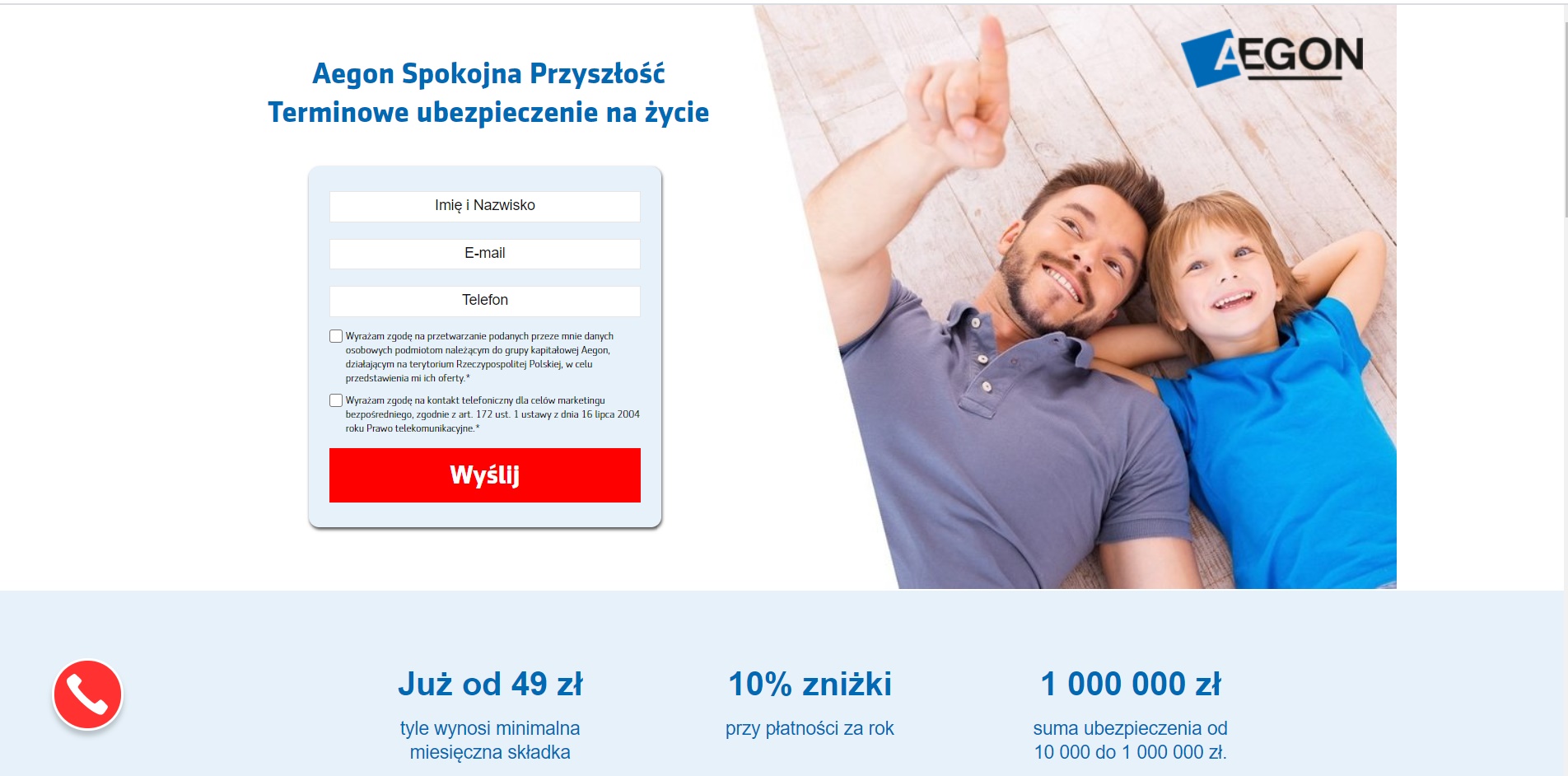
A landing page of an insurance company. As you can see, it is intuitive, simple, and visually appealing. The form is clearly highlighted and includes fields for entering the essential information needed for follow-up contact.
The type of information collected depends on the needs of the person or company gathering the leads. It is common for lead-generation forms to include additional fields with questions whose answers help tailor the offer for the company that later follows up with the prospect. The most frequent form questions include:
-
place of residence (important for local services)
-
occupation or job position
-
preferred holiday destinations (important for travel agencies)
-
requested loan amount (for financial institutions)
-
car make and model year (for insurance companies)
-
and many more.
If you want to learn more about the types of sales leads and how to acquire them, be sure to read: Sales lead – a way to gain new customers.
Cost Per Lead / CPL – what is it?
CPL (Cost Per Lead) is a billing method for online promotional campaigns in which you pay for each delivered lead (the contact details of a potential customer) or for a completed action, such as:
-
subscribing to a newsletter,
-
filling out a contact or application form,
-
registering for a training session, webinar, or live event,
-
downloading an ebook, audiobook, or app,
-
signing up for a test drive or trial lesson,
-
purchasing a service in a subscription model,
-
and others depending on the needs of the product/service owner.
Cost Per Lead / CPL – how does it work?
Let’s assume you run an interior design business and want to acquire new clients. To do that, your offer needs to reach as many people as possible who are currently arranging a home or apartment and are likely to be interested in hiring an interior designer. Your goal is to collect as many contacts as possible from potential customers through a form for a free phone consultation. During the consultation, you will have the opportunity to present the full service offering. If you want to pay only for obtained contact details and not merely for the traffic delivered to your site by promotional activities, this means you want to operate in the Cost Per Lead model.
To launch an online campaign in the Cost Per Lead model, you need to prepare:
-
create a landing page that encourages users to leave their phone number,
-
determine the maximum rate you are willing to pay for acquiring a potential customer’s contact,
-
launch a promotional campaign in systems that allow lead generation,
-
set up a partner program and encourage publishers to cooperate in the offered CPL model.
Cost Per Lead is an effective online promotion model. However, it is only one stage in acquiring a customer who will ultimately pay for your product or service. The leads you obtain do not guarantee that they will become paying customers. That is why coordination and careful analysis of every stage of the online customer journey is crucial. If it turns out that you are collecting many valid leads but the conversion to paid service is very low, then an error is occurring at some point. Perhaps the target audience was poorly selected, the offer doesn’t meet customer expectations, is too expensive, or is unclear. Thorough analysis allows you to eliminate errors and improve sales conversion.
Since the Cost Per Lead model does not deliver an action in the form of a purchase, it is not as secure as Cost Per Sale (CPS). In the CPS model, the advertiser pays a pre-determined commission for completed purchases in their store. However, this model can only be implemented by services that allow products or services to be purchased directly on the site—i.e., those with a shopping cart.
Cost Per Lead – CPL in affiliate marketing
Affiliate marketing is considered performance marketing because it ensures that the advertiser pays only for actions that deliver measurable results.
The internet is the most measurable medium. Thanks to tracking and analytics systems, you can assess the effectiveness of every action, even the smallest one. We can precisely target specific audiences, analyze and evaluate the potential and engagement of each group. Not only campaign methods are evolving, but also billing models, shifting toward performance-based CPL and CPS structures.
Affiliate marketing, i.e., Cost Per Lead in partner programs
Affiliate marketing is a performance-based approach. Advertisers work with publishers within a partner program and pay them predetermined rates for delivered actions. This makes Cost Per Lead one of the core billing models in affiliate marketing. The greatest advantage is that the advertiser defines the exact payout for each valid lead delivered by a publisher.
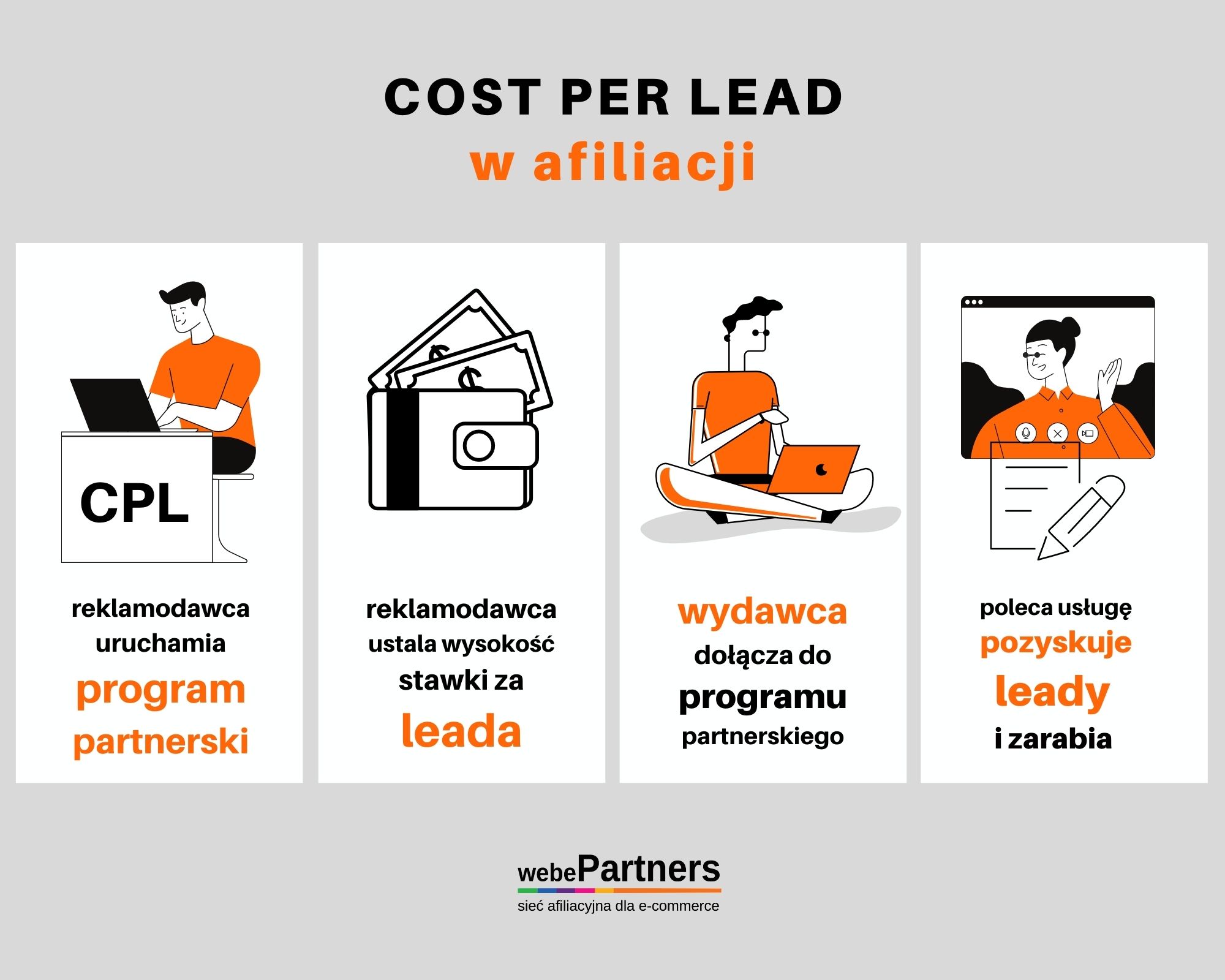
The payout for delivering a lead in the Cost Per Lead model depends on how much information the user must provide in the form. Simple forms that require only basic contact details usually cost the advertiser from a few to several dozen PLN. More extensive forms that require additional information necessary to prepare an offer can cost even several hundred PLN.
Cost Per Lead in affiliate marketing
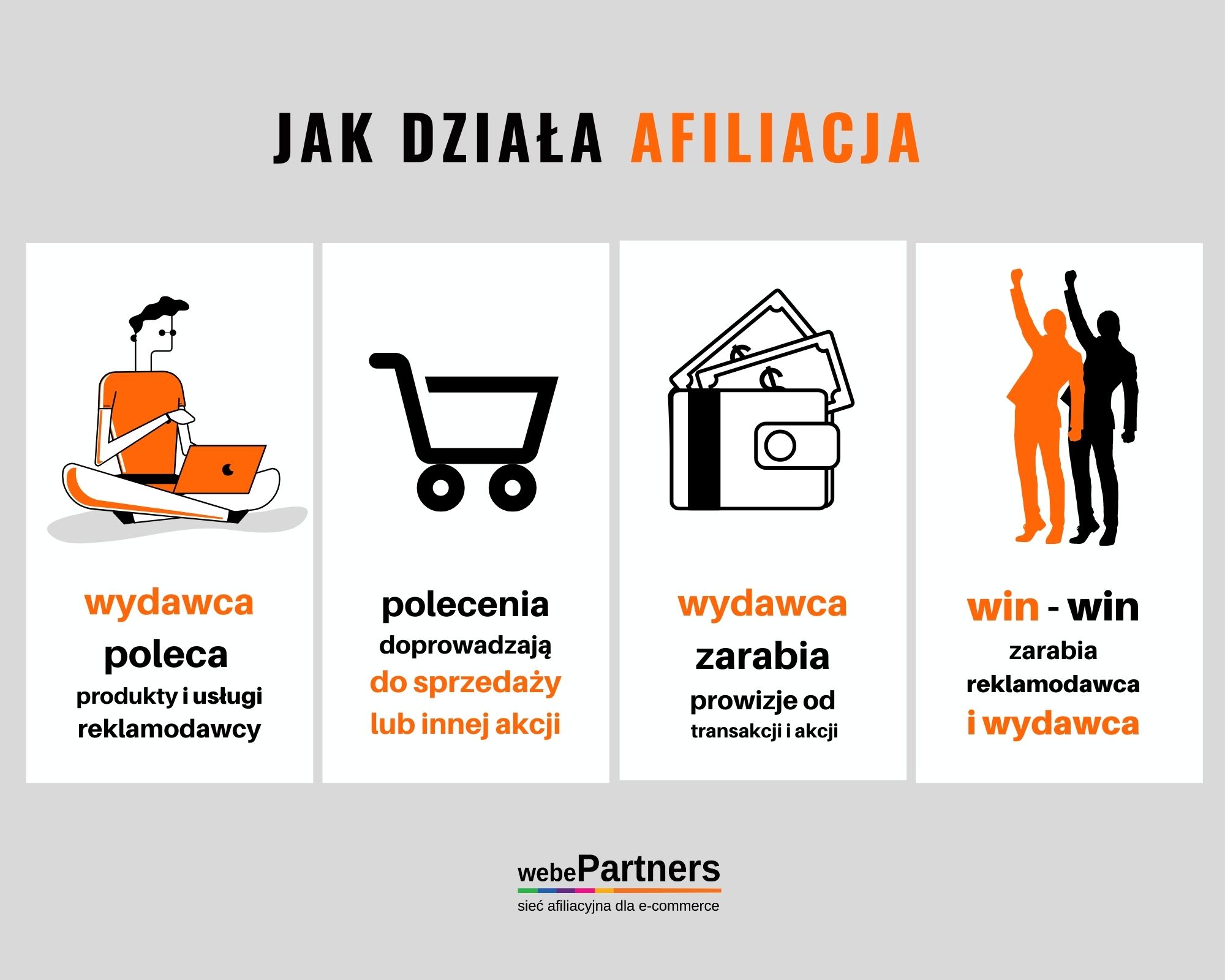
The cooperation between advertisers and publishers is very straightforward. A publisher joins the partner program launched by the advertiser. Then they promote the products or services on their online platforms and communication channels (e.g., a blog, niche website, Facebook page, Instagram profile, or YouTube channel). Publishers have access to free affiliate tools: banners, widgets, affiliate links, and XML feeds. When a user completes an action based on the publisher’s recommendation, the advertiser pays a commission according to the agreed billing model and rates.
Cost Per Lead / CPL from the publisher’s perspective
Cooperating in the Cost Per Lead model can be significantly more profitable for an affiliate publisher than other billing models. The key to success is selecting partner programs and recommended offers that match the profile of the publisher’s website, blog, or social media channel. If the publisher has a loyal audience that trusts their recommendations, they can be confident that many followers will take action based on those recommendations, such as subscribing to an interesting newsletter or downloading a valuable ebook. The rates paid for leads vary widely—from a few to several hundred PLN—so a single campaign can generate substantial profit.
One of the most spectacular examples of earning through affiliate marketing in the Cost Per Lead model is Michał Szafrański, who became widely known years ago after publicly sharing how much he earned by recommending a savings product from BGŻ. He earned tens of thousands of PLN from a single blog post! Of course, it didn’t happen overnight. Michał worked long and hard to build his position as an industry leader, which eventually allowed him to earn more from one post than the average Pole makes in a year.
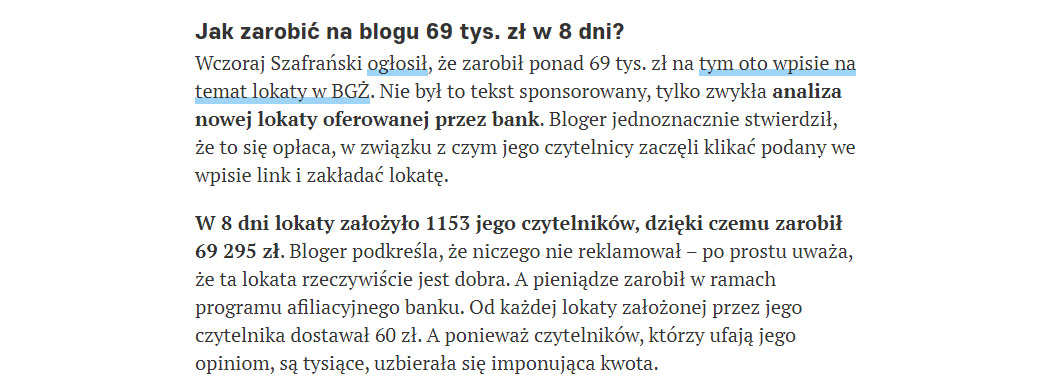
All of this happened in 2014, and you can find the link to the post recommending the above-mentioned savings product here. But this wasn’t the end of Michał Szafrański’s spectacular achievements—things only got better from there. His greatest success is arguably becoming the father of Polish self-publishing. He was the first blogger to publish and independently distribute his own book, Finansowy Ninja, which has generated millions in annual revenue. After releasing the book, he went from being a publisher to becoming an advertiser. Today, he enables his readers to earn money by recommending his books—because Finansowy Ninja is not his only publication.

Cost Per Lead / CPL in Facebook Ads
Affiliate marketing is not the only way to generate leads. Leads can also be acquired through Facebook’s advertising system—Facebook Ads. In campaigns focused on lead generation, Facebook allows you to create a form that doesn’t redirect the user outside the platform. When someone clicks the ad, the form opens directly within Facebook and is automatically pre-filled with the user’s data. As we know, Facebook stores all of this information, so all the user has to do is click “Send.”
Advantages of generating leads on Facebook:
-
you don’t need to create your own landing page
-
the user doesn’t have to fill out the form manually
-
you eliminate the risk of mistakes and typos in user-submitted data
Cost Per Lead / CPL in Google Ads
Leads can also be generated through the Google Ads system. The campaign must be set to the CPA (Cost Per Action) model, where the action is acquiring a lead. CPA is a smart bidding strategy in Google Ads in which you define the maximum cost you’re willing to pay to obtain a lead. For the strategy to work effectively, you need properly configured conversions, accurate tracking, and a sufficient amount of conversion data. The more data you have—and the more accurate it is—the better the results. However, keep in mind that if your set bid is too low compared to competitors, your ad will not be displayed, and you will not collect leads.
In Google Ads, you have three options:
-
Use your own landing page, where users are redirected after clicking the ad. This is one of the simplest options if you don’t want to dive too deep into the functionality of Google Ads. Just remember that the landing page should be dedicated to this specific ad so that its effectiveness can be properly measured.
-
Use Google Ads lead forms, which are very similar to the forms available on Facebook. Since February 2020, traditional ad extensions such as call or message extensions stopped appearing in Google ads—they were replaced by lead forms. A contact option appears under the ad; the user clicks it and sends a pre-filled form (provided their Google account contains correct information).
-
Use Google Optimize, an indirect way to support lead generation. Google Optimize allows A/B testing of different elements on a website. How does it help? In short, you can modify the site and track which variant performs best. This is extremely useful when redesigning forms and landing pages, as it helps assess how users behave and which version drives more leads.
If not Cost Per Lead, then what?
Cost Per Sale / CPS – how to sell more
CPS is the primary model used in affiliate marketing for e-commerce. Cost Per Sale means a commission paid for a completed sale. It is one of the most popular models among advertisers because it is safe and guarantees a return on marketing investment. A commission is paid to the publisher only when the user—via the publisher’s affiliate link—visits the advertiser’s website, purchases a product, pays for it, receives it, and, importantly, keeps it. Any transaction that ends in a return does not count as a successful conversion. This means the advertiser has the right to reject such a commission and not pay for it.
Cost Per Click / CPC – paying for clicks
CPL is not the only way to pay for advertising campaigns. CPC (Cost Per Click) means paying for each click on the ad. No sale or specific action (such as filling out a form) needs to occur. From the advertiser’s perspective, this model is riskier than CPL. A click is far cheaper than a lead—often just a few cents—but it does not guarantee effectiveness. For this reason, CPC is mainly used in branding campaigns where conversions are not the priority and budgets are more flexible.
Cost Per Action / CPA – performance-based models
Cost Per Action refers to an entire group of performance-based billing models where you pay for a desired action. Within this group are the familiar CPL (Cost Per Lead) and CPS (Cost Per Sale), but also:
-
CPO (Cost Per Order) – paying for each completed order
-
CPD (Cost Per Download) – paying for each download, e.g., of an app
-
CPV (Cost Per View) – paying for each view of a video
Cost Per Mille / CPM – impression-based billing
Another option is the quantitative model CPM (Cost Per Mille), sometimes called CPT (Cost Per Thousand). This involves paying for every 1,000 ad impressions. It is most commonly used in brand-awareness campaigns.
Flat Fee / FF – time-based billing
Time-based models are also sometimes used. FF (Flat Fee) is a fixed payment for advertising space used over a specific period. For example, you pay for a banner displayed on a blog for one week. Clicks or impressions do not matter.
Hybrid models
The final option is hybrid models, frequently used in SEO-related activities. For example, you can combine FF with CPS, CPC with CPS, CPC with CPL, or CPA with other models.