Your Own Online Business – The Story Behind the Creation of the WebePartners Affiliate Network
For many years, the Internet has been a vital medium and an integral part of nearly every company’s operations. When the world suddenly faced the pandemic, online business proved to be the most stable and predictable sector.
Online business isn’t just about carrying out electronic transactions — it also encompasses all the processes leading up to those transactions. Under this broader definition, any use of information technology can be considered part of e-business — from writing a document in a text editor, performing calculations in a spreadsheet, to processing digital files on a computer.
Technological advancement has fueled the developmentv of new processes and systems, enabling the creation of various online platforms and the promotion of those platforms through the rapid growth of the digital marketing industry.
Edyta Antoniewicz sits down with Ewa Dudek, the founder of webePartners, the first affiliate network in Poland dedicated exclusively to e-commerce.
Online Business – All Business Processes on the Internet
EA: Conducting an interview isn’t just about asking simple questions about a company’s history or industry experience. The true art lies in understanding why this particular person is worth listening to carefully. I believe that only a genuine story — one filled with passion and determination — has the power to truly inspire and motivate others to act.
When I first met Ewa, the founder of webePartners, I immediately realized she was someone I could learn a great deal from. I remember feeling a spark of fascination and asking myself: “Where does she find her strength and passion? How did such a sensitive woman manage to build a company from the ground up while holding a small child in her arms and facing an entirely new market in Poland?”
It’s truly remarkable when we get the chance to hear such stories — honest accounts of strength, perseverance, and the courage to pursue one’s dreams. I invite you to read this inspiring interview.
EA: You’ve been active in the e-commerce industry since 2010. Tell us about your beginnings — where did the idea for your own online business come from, and why did you choose to create an affiliate network in particular?
What Exactly Does an Affiliate Network Do?
Affiliate marketing is all about collaboration — and the affiliate network acts as the platform that enables advertisers and publishers to work together within affiliate programs, creating a system where everyone benefits: the advertiser, the publisher, and the network itself. In other words, an affiliate network is responsible for launching and managing affiliate programs professionally. It provides the tools that allow publishers to easily and automatically partner with selected advertisers, without complicated formalities. Through this partnership, publishers can help increase sales of the advertisers’ products and services — and earn commissions for their contribution. Naturally, the entire process takes place completely online.
Where Did You Find the Courage to Build an Affiliate Network and Start Your Own Business?
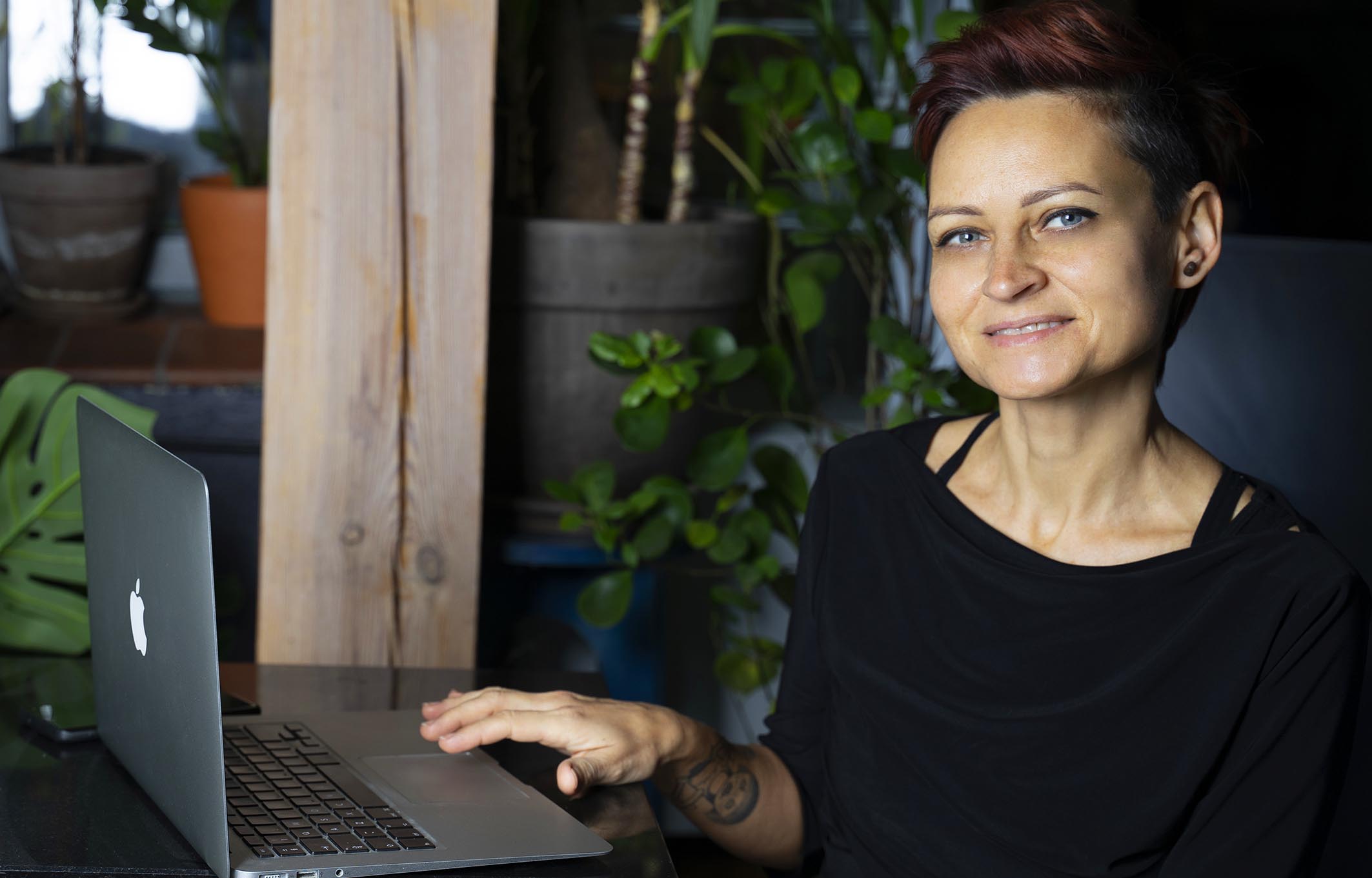
WebePartners was created with the help of an EU grant — something I’m very proud of, because I went through the entire, rather complicated process completely on my own. Thanks to those funds, I managed to build an online business that not only came to life but also became profitable — and, more importantly, allows others to earn money as well. The year 2009 was a time when the first EU programs for online entrepreneurs appeared in Poland. It was possible to obtain funding for innovative digital solutions, so without overthinking it, I decided to give it a try. I actually wrote my grant application while still living in the UK. The idea to create an affiliate network came mostly from the requirements of the grant itself. To qualify for funding, the project had to meet several conditions and be classified as an “e-service.” I had a few different ideas — I even had one application ready to send — but two nights before the deadline, I realized it wasn’t the right one. So I pivoted, chose the concept of an affiliate network, and after two sleepless nights, the final proposal was ready.
One major obstacle was that the application had to be submitted in person, on paper, at the Regional Funding Institute in Wrocław. That was only possible thanks to my brother, who supported me emotionally and technically throughout the entire process. He and a friend literally raced through the city on bicycles to deliver the documents on the very first day of the competition — arriving just five minutes before the office closed.
A few months later, when I found out that my project had been approved for funding, I immediately returned to Wrocław. I didn’t feel fear at all — just immense satisfaction. It was exactly how I had dreamed it would be. I swapped working with builders for working with programmers — and that’s how the next chapter of my life began.
You have a background in interior design. How did you translate the knowledge and experience gained at the Academy of Fine Arts into building your own online business? Those seem like two very different worlds.
Architecture is fascinating because it requires a holistic mindset — you need to bring together many different elements to create one coherent whole. And that’s essentially what running a business is all about — managing many things at once. In that sense, my background in architecture has been incredibly useful. It taught me how to visualize the final outcome while only seeing the individual components.
I believe the most valuable skills come from hands-on experience, not theory learned at university. My studies helped me grow artistically — something I truly value. I still apply many of those creative skills in my work today, especially in the marketing activities I run for webePartners. I design all the visuals myself, create branding materials, take photos, and write for our blog.
However, the most crucial experience for developing my online business came from my years in England, where I had to adapt to a completely new environment. I ran a company in London, employing numerous subcontractors and handling a wide range of projects — both small and large, for private clients and institutions alike. Often, I managed several projects simultaneously. The knowledge I gained during that time is invaluable, and I still draw on it to this day.
I remember that period as incredibly intense, and after six years, I simply felt tired. That was when I realized it was time for a change.
And that’s when you thought about starting your own online business?
Yes. Although, in a way, I was already operating online — the Internet was my main source of clients. In the early 2000s (it sounds like ages ago now!), Internet access in the UK was already widespread. The British were comfortable shopping online and even ordering services via the Internet, so acquiring clients that way was the most effective approach. That experience convinced me that the online sector was the right direction to pursue. I decided to create a website that could generate income. At the time, I was thinking quite traditionally — I planned to build a startup and eventually attract an investor to support its growth.

Fortunately, thanks to the EU grant and my own resources, I’ve been able to build and grow the platform without relying on external investors — and I still operate that way today. I say “fortunately” because it allows me to develop a fully independent, original project that I’m deeply passionate about. The decisions I make aren’t driven solely by spreadsheets or short-term financial projections — they’re based on market analysis and the real needs of users. I invest in processes that don’t necessarily bring immediate profit, because I have the luxury of time to focus on sustainable growth.
Working on webePartners has taught me patience, as the business model I offer to my users requires exactly that. But this patience pays off — in tangible, long-term results that make the effort truly worthwhile.
Your Own Online Business in Poland
You returned to Poland and started your own online business. What was the biggest challenge for you at the very beginning?
For those unfamiliar with how EU funding works in practice — the process requires you to invest your own money upfront, which is then reimbursed many months later, after the project’s formal settlement. The total value of the webePartners project was 580,100 PLN, of which 85% was supposed to be covered by the EU grant. When I realized that I wouldn’t be receiving any money from PARP (the Polish Agency for Enterprise Development) during the project implementation, I made a bold decision — I sold my apartment, which I had bought with the money I earned in London. Thanks to that, I was able to complete the project. Of course, I eventually settled the project in full, but the final installment from PARP arrived two years after the work had begun. That meant facing many additional months of self-financing my online business.
To put it into perspective — by September 2010, I had a functioning online platform that generated just a few hundred złotys in monthly revenue, while the operating costs reached around 20,000 PLN per month. That’s when the “real life” of a small entrepreneur began — and the challenging, step-by-step process of growing an online business.
For a while, I had to reduce the team to just three people: myself, a developer, and a sales representative. I also had to close the office, and we began working entirely remotely — something that’s normal today, but at the time was quite unusual.
Paweł, our sales representative, was responsible for bringing in new advertisers. I handled system operations, client relations (both advertisers and publishers), and answered every possible question and concern. Meanwhile, the developer made sure that the platform kept running smoothly.
At that time, I was working 14 to 16 hours a day, including weekends — I was basically working all the time. But it brought results. Step by step, we started attracting more and higher-quality advertisers — online stores interested in affiliate partnerships. At the same time, publishers began registering and quickly saw the benefits of cooperating with advertisers through webePartners. It’s important to note that my online business operates in the e-commerce services sector, which means our model is based entirely on sales commissions — the Cost Per Sale (CPS) model. What does that mean in practice? The earnings of publishers, advertisers, and mine as well all depend on the sales generated by publishers for advertisers.
My main task, therefore, is to:
-
develop the best possible tools for publishers,
-
attract reputable and high-performing advertisers, and
-
ensure publishers effectively promote advertisers’ products in a performance-based model.
We don’t charge fixed fees to advertisers — our revenue is directly tied to the sales volume they achieve within our network.
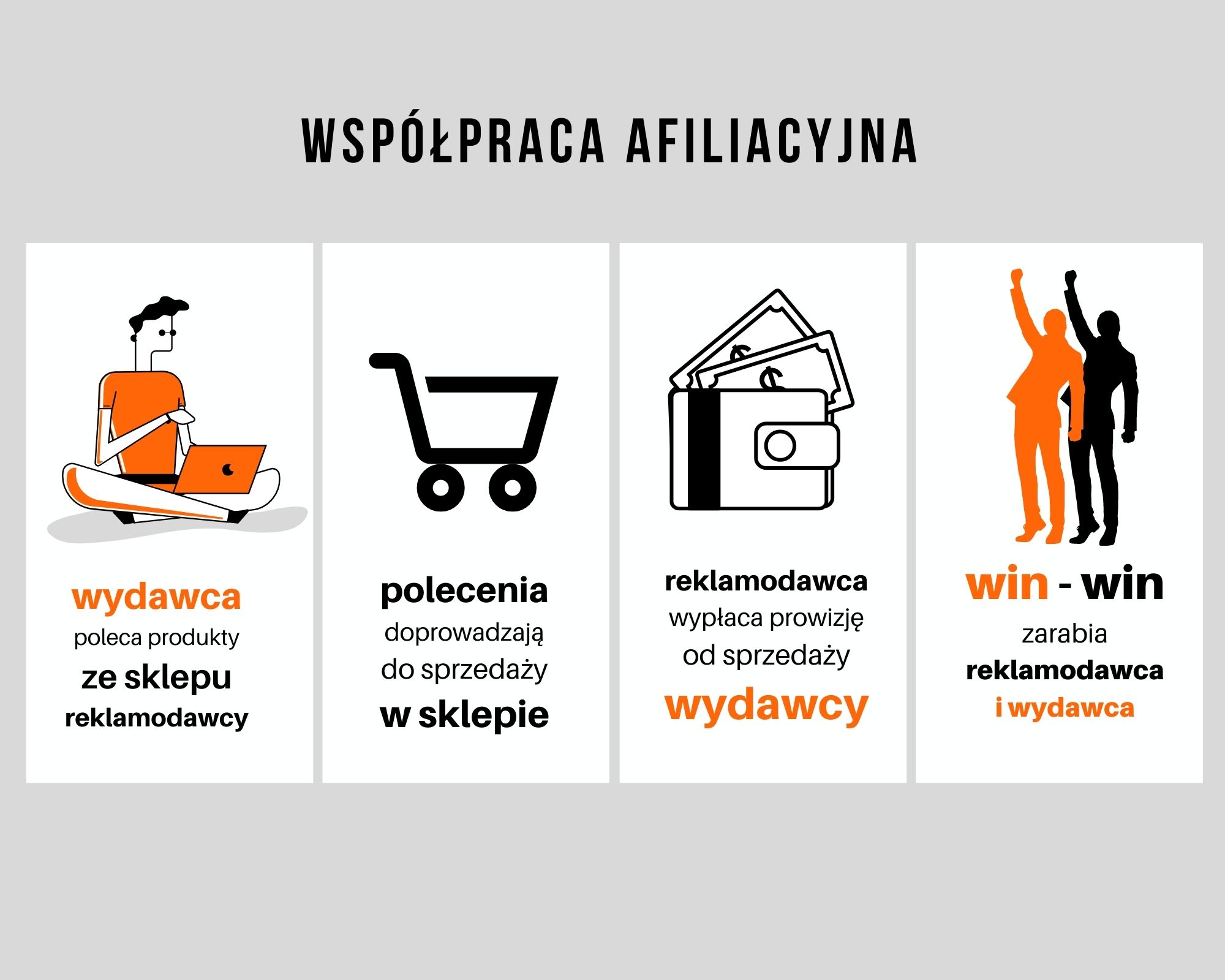
This business model is quite complex from an entrepreneur’s perspective — it’s not a straightforward product sale. That’s why the early years were challenging, but everything pointed toward gradual improvement. At first, our revenue was modest because affiliate marketing depends heavily on scale. It took three years before we finally reached the point of self-sustainability — but it was absolutely worth the wait. From that moment on, our growth metrics started rising rapidly. The real breakthrough came in 2013, when we finally became profitable. That was the moment I could pause, reflect, and decide how to further develop and expand the online business.
Since then, I’ve been steadily growing the team — although we’re still a small company, with just about 10 people. Every bit of revenue we earn is reinvested into webePartners, and I have ambitious plans for future growth. Fortunately, I’ve never been short on ideas.
Did you have a lot of competition when you started your online business?
No. I officially launched in September 2010, and at that time, there were maybe one or two other Polish affiliate networks starting up around the same period. However, we were already unique — from the very beginning, our services and tools were dedicated primarily to online stores. We also built our foundation on the CPS (Cost Per Sale) model — commission based purely on completed sales. That was something entirely new to the Polish market, and many people doubted it would work. Back then, the idea that publishers would agree to cooperate only for performance-based rewards seemed unrealistic. Fortunately, it quickly turned out that there was no shortage of interest. To me, it was obvious that if this model was successful in Western Europe, it would eventually work in Poland as well.
So yes — I entered the market at just the right time. The real challenge, however, was the low awareness among users and the limited understanding of affiliate marketing in general. Things are much better now, but there’s still a lot of work to be done when it comes to educating the market about the value of affiliate partnerships.
I believe it’s the only fair and truly effective model. We experimented with running programs based on the CPC model (Cost Per Click), but advertisers were often dissatisfied with the quality of the traffic they received. They would file complaints because they were paying for campaigns that didn’t translate into actual sales.
The truth is, when publishers are paid per click, their focus naturally shifts to generating as much traffic as possible, not on delivering valuable, converting traffic that leads to sales. That changes completely with the CPS model (Cost Per Sale). In my opinion, CPS is the fairest model for everyone involved — advertisers, publishers, and the affiliate network alike. And I have solid proof of that: satisfied clients on both sides who are successfully earning money within this model. Personally, I’m proud that we’ve been able to achieve such consistent success using it. For anyone interested in this approach, I warmly encourage you to listen to my interview on the “Przygody Przedsiębiorców” (Entrepreneurs’ Adventures) YouTube channel, where I share not only how my online business developed, but also how affiliate programs work and why every company — regardless of industry — should consider implementing affiliate marketing as part of its online strategy.
What advice would you give to people who are just thinking about starting their own online business? Would you encourage them — or discourage them?
Of course, I encourage it! The online world has been evolving rapidly for many years now — technology keeps surprising us with new solutions almost every single day. The pandemic clearly showed how quickly people can adapt to new realities thanks to the Internet. Practically overnight, most activities moved online — work, shopping, education, entertainment. That’s why it’s absolutely worth giving it a try. However, as in any business — and perhaps even more so in the online world — you shouldn’t act impulsively. You need to thoroughly think through your business idea, analyze the market, estimate your costs and capabilities, and plan carefully before you start. And above all — be persistent. Don’t give up when challenges appear. The online space may seem increasingly crowded, but there’s still plenty of room for new businesses and creative minds with strong ideas.