Performance marketing in e-commerce – results-oriented affiliate marketing
Performance marketing in e-commerce is another term for results-based marketing – where the advertiser pays only for measurable outcomes, usually in the form of sales.
Performance marketing – Cost Per Sale model in affiliate marketing, where you pay only for results
Performance marketing is an advertising model that differs from other forms of online marketing in how campaigns are billed. Its hallmark is the so-called performance-based billing model, which in e-commerce means paying only for completed actions that result from clicking on an ad (logo, graphic, active link, etc.). If a user clicks on an ad but does not perform the defined action, the advertiser does not incur any cost for that marketing activity.

The essence of performance marketing lies in long-term activities, especially when it comes to selling products (Cost Per Sale model), which – over many years of cooperation – result in steadily growing revenues. The best tool for running long-term campaigns in the performance model is an affiliate (partner) program.
When launching an affiliate program, the goal is to build and continuously develop your own loyal network of publishers, who invest their time and resources into achieving predefined goals. In the Cost Per Sale model, publishers are paid a commission for successfully completed sales that were generated through their efforts.
An effective publisher network in performance marketing
Performance directly contributes to increasing online sales. This is a value in itself. But without publishers, there is no advertising or sales in affiliate marketing.

Publishers generate sales results based on their own specializations and business models. The most effective impact on sales is achieved by those publishers who skillfully present products and seamlessly weave advertising into the valuable content they publish on their channels.
Performance marketing – billing models
-
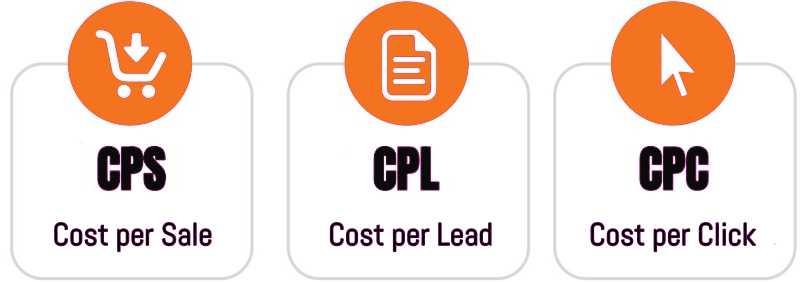
CPS (Cost Per Sale) – commission for the sale of products in an online store.
-
CPL (Cost Per Lead) – a fixed fee for acquiring contact details of potential customers.
-
CPA (Cost Per Action) – a fixed fee for any defined action: signing up for a newsletter, registering on a website, completing a survey, etc.
-
CPO (Cost Per Order) – a fixed fee for placing an order in an online store.
-
Hybrid model – e.g. CPC+CPO, CPC+CPL and other combinations of performance-based models with the Cost Per Click model (payment for a unique click on an ad).
Case study of affiliate activities in the performance model
Affiliate marketing not only allows you to monitor the effects of advertising in real time, but also to reduce its costs.
Case Study – performance marketing for the cosmetics industry – see more HERE
The challenge of an online drugstore
Dynamic growth in the number of online drugstores meant that the advertiser from the cosmetics industry had to face competition not only from bigger and large brands, but also from small stores offering a very diverse range of cosmetics for women.
The key challenges faced by this e-commerce business included:
-
increasing online sales
-
improving brand recognition
Performance marketing goal in the Cost Per Sale model for the first 12 months
-
Increase monthly traffic to the store by 10,000 visits
-
Increase sales value by 20%
-
Advertising exclusively in the commission-based Cost Per Sale model
Performance marketing results in the affiliate program after two years
-
300 transactions per month – on average, publishers generated 300 successfully completed transactions monthly
-
Total sales value: 450,000 PLN – a significant increase in online sales in 2024
-
ROI at the level of 1,500% – an exceptionally high return on investment, proving the effectiveness of the affiliate model
-
50 active publishers – a broad partner network was built, covering diverse promotional channels, which made it possible to reach many new customers
Key success factors
-
Attractive commission for publishers – competitive remuneration that effectively motivated partners to take action
-
Professional support from the affiliate network – assistance from the webePartners team in optimizing the affiliate program and ongoing consulting
-
Diverse promotional channels – cooperation with bloggers, influencers and niche websites made it possible to reach a wide audience.
Performance marketing – ad formats
There are no limitations on ad formats when you settle campaigns based on performance. Any promotional activity, regardless of how it’s advertised, can be billed on results. The key measure of success in performance-based models is the conversion rate (i.e. the ratio of completed actions to the number of clicks on the ad placement). It shows how many users actually performed the desired action.
To be able to provide concrete data that includes the conversion rate, it is essential to implement a tracking system that monitors traffic and the actions generated from that traffic. Once tracking codes are implemented on any advertising placements, every campaign and promotional activity can be settled based on specific results, such as:
-
banner campaigns
-
blog posts and articles on other websites containing affiliate links
-
social media campaigns: Facebook, Instagram, YouTube
-
integrating the offer with product search engines or price comparison sites
-
offers on coupon/discount websites
-
emailing campaigns
-
retargeting
-
and any other activity that can be measured using tracking codes
Performance marketing – become an advertiser in an affiliate network
The best option for an advertiser is to use as many tools as possible and pay only for results. In practice, this means working with a large and diverse group of affiliate publishers in a performance model, thanks to which the advertiser not only increases sales, but also brand awareness. The fastest way to achieve this is to join an affiliate network, which gives access to a broad base of publishers and a variety of tools that support performance (affiliate) marketing activities.

An affiliate network makes it possible to grow sales thanks to a wide base of publishers who are eager to work in performance-based models. Through affiliate marketing, the advertiser can run effective campaigns by cooperating with selected publishers offering various advertising formats. The advertiser’s offer appears on hundreds of websites at the same time. The advertiser does not have to acquire publishers on their own, which is one of the biggest advantages of working with an affiliate network.
Biggest advantages of performance marketing
-
Measurable results – the effects of all activities can be easily defined using clear numerical indicators.
-
Diversification of activities – you can use multiple performance marketing channels at the same time to acquire leads or generate sales.
-
Lower advertising costs – the ability to choose performance marketing channels in a way that ensures the highest possible return on investment.
-
Instant results – in many cases, you can see the effects of your efforts as early as the first day of launching a performance marketing campaign.
-
Effective planning and optimisation – campaign results are available to the advertiser at any time, allowing them to adjust specific activities based on concrete metrics.
Performance marketing – how to become an advertiser and pay only for results
An affiliate program is a part of the marketing strategy that plays an increasingly important role each year in growing the revenue of an online store.

By launching a partner program on an affiliate platform, the advertiser is immediately connected with suitable publishers. In addition, affiliate networks continuously acquire new publishers and websites, which enables constant growth of the partner program.
As part of the cooperation with the network, the advertiser is assigned a dedicated account manager, who handles potential issues and questions from publishers and advises which tools to use in order to grow sales through publisher cooperation.
When it comes to settlements, the advertiser receives a single collective invoice once a month and doesn’t have to worry about paying each publisher individually.