Affiliate network — how to become an advertiser and pay only for results
For online store owners, working with an affiliate network as an advertiser means gains in the form of increased sales. Check how to become an advertiser and launch your first affiliate program!
Affiliate Network: What Is Performance Marketing?
Affiliate marketing is a cooperation model in which a publisher (affiliate) promotes an advertiser’s products or services by placing special affiliate links in their channels. When a user clicks such a link and makes a purchase or completes a specific action, the affiliate receives a commission agreed in advance with the advertiser. This way, both sides benefit—the advertiser pays only for results, and the affiliate monetizes their reach and engaged community without having to create their own products.
Affiliate marketing is settled based on delivered sales results. That’s why affiliate cooperation is so popular in e-commerce. It is one of the most effective ways to promote online stores and increase sales.
Affiliate Network – Parties in Affiliate Cooperation

Advertisers in the affiliate network — owners of online stores who want to increase sales through promotion on various websites, in exchange for a commission on sales that they pay to publishers.
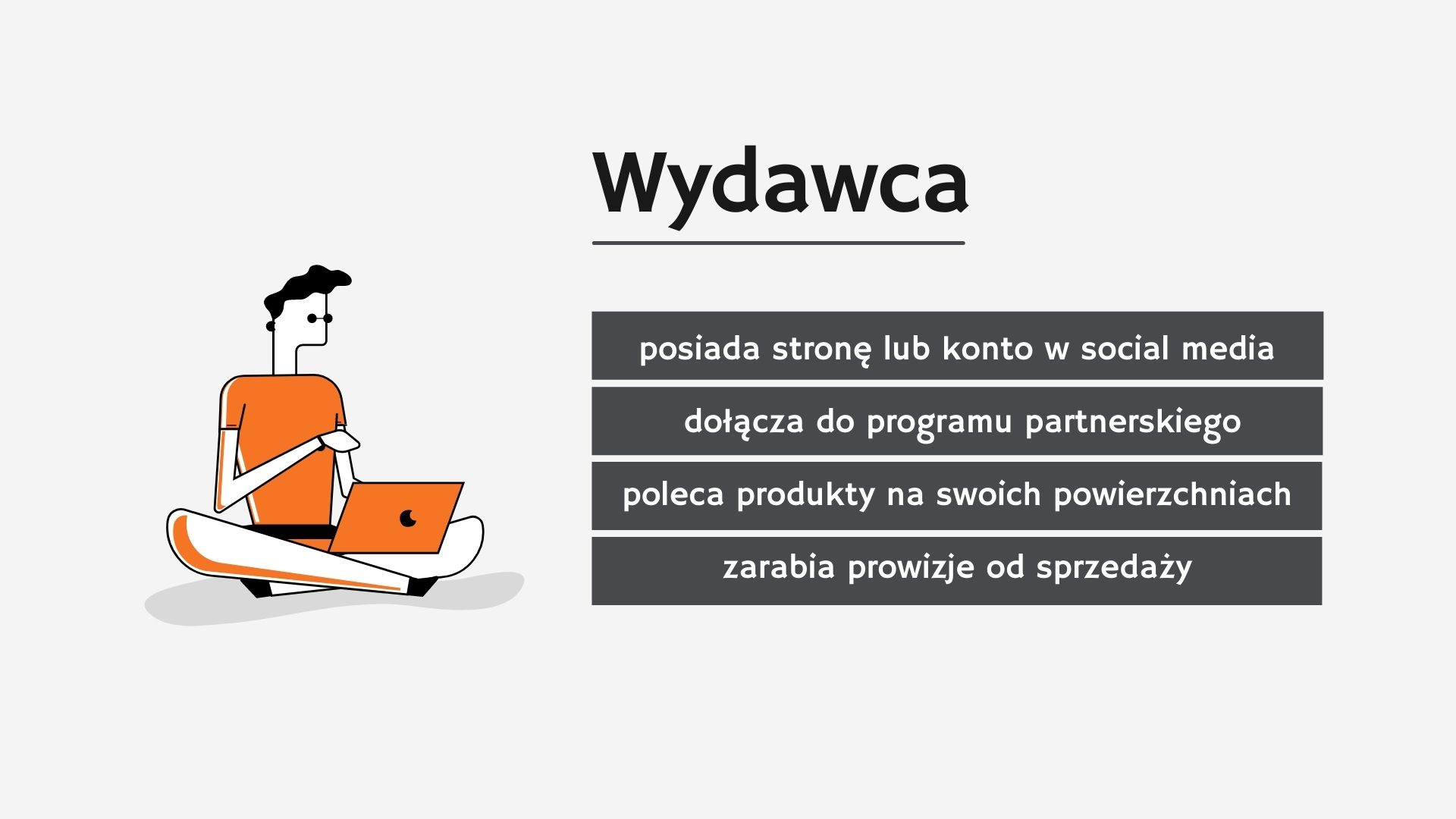
An affiliate network is an online system that enables immediate cooperation between advertisers and publishers, using performance-based settlement models.
If you want to learn more about the roles in affiliate cooperation, be sure to check the post: publisher or advertiser?
How to become an advertiser in an affiliate network and pay only for results

To become an advertiser in an affiliate network, you need to:
1. Sign a cooperation agreement
The advertiser signs a cooperation agreement with the affiliate network, which describes in detail the rules of cooperation with publishers and with the network, as well as the settlement terms. It is very important for the advertiser to thoroughly understand the possibilities offered by running an affiliate program, as well as the obligations that result from it.
2. Define the terms of your affiliate program
The advertiser independently determines the commission rate that the publisher will receive for delivered actions. It is worth carefully considering the terms, as they are set with a long-term cooperation perspective. Reducing the commission rate always has a very negative impact on the development of the program and causes some publishers to leave it. Therefore, it is always better to leave room for increasing commissions and improving cooperation conditions rather than the other way around.
3. Integrate your store/service with the sales tracking system and provide an XML file
In order for cooperation with publishers to be tracked by the affiliate network and for commissions to be calculated correctly, the advertiser integrates their store/service with the sales tracking system according to the specification provided by the network. The next step is to provide a dynamically generated XML file with the online store’s offer. Thanks to this, publishers can use affiliate tools to which they have free access within the affiliate system. These tools enable and support publishers in the effective promotion of the advertiser’s products.
That’s all when it comes to the requirements for the advertiser before launching the affiliate program. Once the program is launched, publishers are informed about it and invited to join. Next, the advertiser works closely with the affiliate network in the process of building their publisher network.
Cost Per Sale Model in an Affiliate Network
When it comes to settlements, the most popular affiliate model for e-commerce is CPS (Cost Per Sale). What does it mean? The publisher receives a commission for every sale that happens thanks to their recommendation via any affiliate tool, such as an affiliate link or a product widget.
The CPS model is the basic settlement model for advertisers who run an online store. To cooperate under this model, you simply need a shopping cart in the store, based on whose value the publisher’s commission is calculated. The key factor distinguishing CPS from other models is that the advertiser pays only when a sale occurs. Costs are incurred only when there is certainty that the campaign delivered the expected results.

More about this settlement model can be found in our article: “What are settlement models – CPS, CPL, CPC?”
Another popular settlement model in affiliate activities is CPL (Cost Per Lead). Under its rules, the publisher does not receive a commission from a sale but a fixed fee for delivering a specific action — i.e., generating a sales lead, such as a phone number of a customer interested in a particular service. In the CPL model, the most common actions are: filling out a contact form, registering on a website, subscribing to a newsletter, downloading an ebook, signing up for training, etc. The CPL model is most often used by financial institutions, insurance companies, and training providers. You can read more about CPL here: CPL (Cost Per Lead) – how a popular online campaign settlement model works.
Why it’s worth becoming an advertiser in an affiliate network
Thanks to an affiliate network, an advertiser can start cooperating with publishers without the need to have their own technical infrastructure. The affiliate network provides everything that is necessary from the technical side, as well as a database of publishers willing to undertake cooperation settled for performance.
Support from the partner (affiliate) network in developing cooperation with publishers allows increasing the number of sales even by 30–40%. Affiliate marketing is for the advertiser one of the safest ways of promotion, because it eliminates the risk of losses. Unlike other ways of online marketing for online stores, in affiliate marketing the advertiser incurs costs only after receiving results in the form of sales.
The biggest advantages of an affiliate network
-
a fast process of launching a partner program
-
access to a database of many thousands of publishers, which is constantly growing
-
complete technical infrastructure enabling cooperation with publishers settled in performance-based models
-
a system for tracking traffic and sales generated by publishers
-
consolidated settlements with publishers
-
help from affiliate managers in the process of building a network of publishers
-
detailed statistics enabling optimization of campaigns run by publishers

The advertiser must be aware, however, that affiliate cooperation is not a quick campaign, but a long-term partnership. Sales results do not appear immediately, as they do with Facebook campaigns or Google Ads, but it is worth waiting for them.
An effective partner program is built through systematic work on developing a network of publishers who—when properly motivated and fairly compensated—repay it with active promotion and initiating transactions in exchange for a sales commission. The most important issue for the advertiser is therefore building a network of publishers, and this is a process that can take from a few weeks to a few years. As an added value of affiliate cooperation, the advertiser gains brand-building activities carried out by publishers alongside product promotion.
When is a good time to start cooperating with an affiliate network?
The key benefit of working with an affiliate network is opening up new channels for promoting and selling products online. Through cooperation, the advertiser gains new promotional opportunities that would not be possible in a cooperation model carried out directly with a given publisher—especially if bloggers and influencers join the partner program, as they very often appear on the customer’s purchase path and influence purchasing decisions.
So the earlier you decide to become an advertiser, the better. An affiliate network is also an ideal solution for small stores. In practice, however, the fastest results are usually achieved by advertisers whose stores already have sufficient traffic volume and confirmed credibility online. Publishers who make their advertising space available are more likely to prefer recommending products from an advertiser who has larger reach and is more recognized in the market—especially in the Cost Per Sale model, where the publisher’s only compensation is a commission on generated sales. Cooperation with brands that operate across multiple marketing areas at once and build a large community around themselves is also more attractive from the publishers’ perspective. Popular topics, visibility, and online recognition make it easier to convert interest into engagement.
Low traffic in an online store does not rule out cooperation with publishers within an affiliate network—everyone has to start somewhere. You should keep in mind, however, that building a publisher network for a small e-commerce business requires more time and greater involvement from the advertiser.
Publishers are also attracted to affiliate programs that offer innovative ideas, unique assortments, or niche products. In such cases, despite low store traffic, building a publisher network happens relatively quickly.
How to become an advertiser publishers want to work with
Once the affiliate program is live, it’s time to grow cooperation with publishers. Paying commissions on time and quickly is one of the most important factors affecting the overall evaluation of an advertiser by publishers. But it’s not the only activity you need to run if you want your affiliate program to actively develop.
1. Promote your affiliate program
The first thing you should do after launching your program is to inform potential publishers about it, so they know they can earn money by cooperating with you.
First of all, it is worth placing information about the program on your website. Ideally, you should create a dedicated subpage for this purpose, where you describe your affiliate program, its terms, and explain where and how one can sign up. A website / online store is visited every day by users interested in the products offered by the store, and they can effectively recommend them to other people.
2. Invite potential publishers to the program
Affiliate marketing is about building your own network of publishers. Affiliate Managers work to increase the number of publishers every day, but the advertiser also has a task to fulfill. Owners of online stores know their own competition and potential audience best. You can therefore independently invite websites operating in or related to your store’s industry to your program. You can also provide a list of such websites to the Affiliate Manager, so they can send invitations on your behalf. If both sides work toward the success of the program, the effect is doubled!
3. Systematically verify publishers
Long waiting times for program approval can discourage publishers from active cooperation. Therefore, it is worth verifying potential participants of the affiliate program on an ongoing basis, so their enthusiasm for cooperation is not cooled down. 🙂 There are two approval options:
-
Automatic – every publisher who applies to the program is automatically approved, without waiting.
-
Manual – the advertiser has full control over who joins the program, manually approving or rejecting each publisher individually.
4. Do not delay order approvals
Fast approval of commissions best motivates publishers to act. According to the agreement, the advertiser has 30 days to verify orders in the system. This time allows checking that the transaction was completed and the product was not returned. The more frequently and regularly you verify orders, the greater the trust and willingness to cooperate you will gain from publishers.
5. Pay commissions on time
As a rule, publishers receive payments with a significant delay. First, the publisher must generate traffic, then transactions appear, next comes the verification stage, and only then is the commission credited. From the moment a sale is generated, publishers usually wait one and a half to two months for the possibility of withdrawing funds. If the advertiser delays this process even further, they discourage publishers from engaged cooperation.
6. Take care of up-to-date data in the XML file
Running a program for a store that does not have correct data or products in the XML file simply makes no sense. Only correct files give a chance to cooperate with price comparison sites and product search engines. It is therefore worth taking care of this aspect of your affiliate program.
7. Provide discount codes
Internet users actively search for special discounts and promo codes. Providing discounts therefore has a positive effect on stimulating the affiliate program, just like informing about all campaigns and promotions. They encourage publishers to share such information on their online channels.
8. Remember about banners
Attractive creatives supporting promotional campaigns are still popular. There do not have to be many of them, but a few aesthetic banners can have a significant impact on the success of the program and its promotion.
9. Respond to publishers’ requests
Sensitivity and quick responses to publishers’ requests or questions result in long-term and loyal cooperation. Publishers often want to organize non-standard campaigns or need specific data. A quick response to such suggestions is a signal to them that the advertiser cares about the success of the program and is trustworthy and worth engaging with.
10. Cooperate
Affiliate marketing is cooperation. The advertiser is 1/3 responsible for the success of the affiliate program, alongside the publisher and the affiliate network. The greater the involvement of each party, the greater the success of the program—and that is what we all aim for 🙂
How to profit from affiliate marketing – analyze and optimize
In affiliate marketing, publishers join partner programs they want to work with. Remember, however, that you do not have to agree to cooperate with every one of them. Before you decide to invest time and resources in activities with a given publisher, it is worth checking how much they can offer you.
Analyze statistics
Statistics will certainly be useful when deciding whether to accept publishers into a partner program. In the case of blogs or thematic websites, statistics related to unique visits to the website or demographic data about users will be helpful. In the case of Instagram profiles, for example, the number of people viewing InstaStories is currently an extremely important factor.
Assess the consistency of your industry with the nature of the publisher’s website
When choosing publishers to cooperate with, you must also pay attention to what topics they cover and whether this is consistent with the profile of your store. In the case of cashback websites or price comparison engines, it usually does not matter which industry you operate in, because there are stores from various sectors there. However, this is of great importance in the case of bloggers, influencers, YouTubers, or thematic portals. Why? If, for example, an automotive blogger starts showing cosmetic, culinary, or children’s products, they will lose credibility with their users, and as a result, users will not follow their recommendations. Recommending items completely unrelated to the theme of a given channel causes users to treat it as intrusive advertising rather than a reliable recommendation from someone they trust.
Assess engagement in cooperation with other advertisers
How can you become an advertiser whose partner programs generate the expected results? By observing others! When choosing publishers to cooperate with, it is worth taking an interest in how they carry out affiliate cooperation with other advertisers. If you know the mechanisms of affiliate marketing, you know perfectly well which actions result from it, so it will be easy for you to assess the engagement of a given YouTuber or blogger.
Affiliate network – use the support of affiliate managers
Remember also to take advantage of affiliate managers’ recommendations. Employees of the affiliate network want your partner programs to deliver satisfactory results both for you and for publishers. That is why they help you find partners who will actually generate sales at the right level.