Affiliate programs – how to boost e-commerce sales in exchange for a commission
Why, when you’re in e-commerce, should you rely on affiliate programs? As an advertiser, you build a network of publishers and increase sales. As a publisher, you earn money by recommending products, using simple tools and without unnecessary formalities.
Who’s who in affiliate programs
A publisher is a person who owns any online space – e.g. a niche website, blog, YouTube channel or Instagram profile – and promotes advertisers’ offers there in exchange for a sales commission.
An advertiser is the owner of a website or online store who wants to sell more thanks to publishers’ promotion.

Affiliate programs – what are they?
An affiliate program is a virtual space that enables partnership-based cooperation between advertisers and publishers in the Cost Per Sale (CPS) model (commission per sale) or Cost Per Lead (CPL) model (fixed rate for delivering a specified action). It is a tool of affiliate marketing, where performance-based billing models are the key factor that distinguishes affiliate marketing from other forms of online marketing.

In an e-commerce affiliate program, the advertisers are online stores, the publishers are any websites or online services that want to promote those stores in exchange for a sales commission, and the affiliate network, through its tracking platform, enables every party involved to earn from this collaboration.
In the United States, affiliate marketing has been around for over 40 years – the first affiliate programs appeared there in the late 1980s. In Poland, affiliate programs for e-commerce started to be launched around 2010, which is also when the webePartners affiliate network was created.
Amazon – the largest affiliate program
Amazon’s affiliate program was launched in July 1996 and is still running today. Anyone who recommends Amazon products using affiliate links receives a commission on the sales generated from those referrals.

Jeff Bezos, the founder and CEO of Amazon, decided to test a new marketing strategy based on rewarding sales generated through referrals. At the time it was still a novelty, so many people were sceptical about Amazon’s idea. However, it quickly turned out to be a very simple and effective solution. Affiliates (virtual publishers) didn’t have to do anything more than place affiliate links to products on their websites, and the commissions motivated them to keep going. In this way, affiliate marketing became one of the pillars of online marketing in the US.
Check the ranking of affiliate programs in webePartners.
What is the goal of affiliate programs?
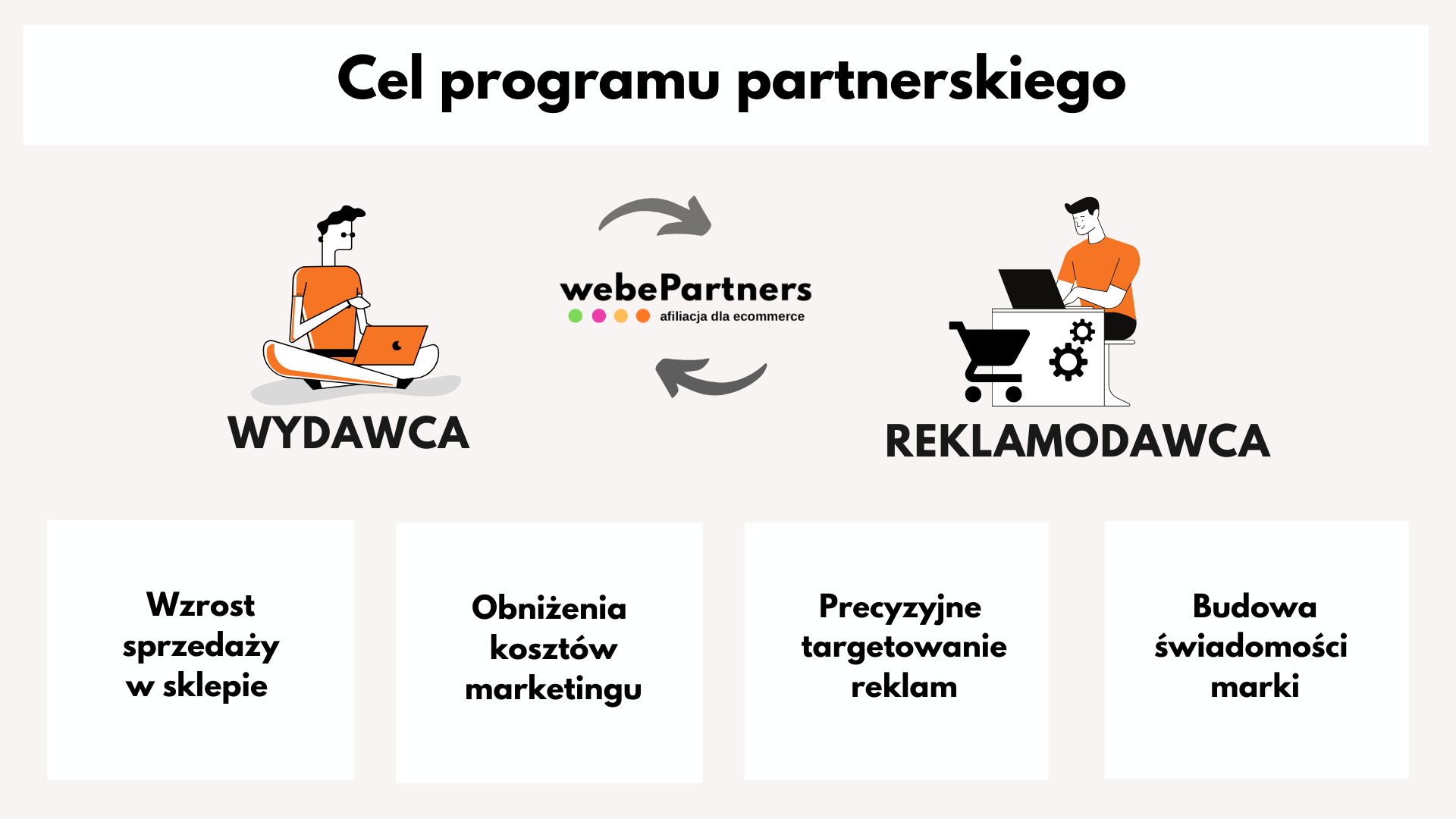
The goal of an affiliate program (affiliate marketing) for an advertiser is, above all, to increase sales, acquire new customers and promote the brand in a cost-effective way. More specifically, the advertiser aims to:
-
Increase sales – publishers actively promote the product or service and receive a commission for the results, which directly translates into higher revenue.
-
Reduce marketing costs and minimise risk – the advertiser pays only for specific, measurable results (performance marketing model). This means no spending on ineffective advertising.
-
Expand market reach – by working with numerous publishers, the advertiser reaches new, often niche audience segments that would be harder or more expensive to access using traditional advertising methods.
-
Build brand awareness – even if the user doesn’t buy immediately, affiliate partners’ activity can significantly increase brand visibility, positively influencing recognition and customer trust.
-
Improve market segmentation and precise targeting – affiliate programs allow the advertiser to leverage partners’ knowledge and experience in reaching specific target groups, which boosts the effectiveness of marketing campaigns.
-
Obtain valuable marketing data – affiliate programs generate detailed data on consumer preferences and behaviour, which the advertiser can use to further optimise sales and advertising strategies.
To sum up, the goal of an affiliate program for the advertiser is primarily to increase business efficiency by using partners as engaged and motivated promoters of products or services, paying them only for the results they actually deliver.
The promotion of the advertiser’s offer on publishers’ online properties is meant to reach potential buyers. The better the publisher matches promoted products to their audience, the higher the profits for both the publisher and the advertiser. Through affiliate tools such as product widgets, affiliate links or banners, users click through to the advertiser’s website/store and make a purchase there. As a result, the user buys the product they were looking for, the publisher earns by receiving a commission on that purchase, and the advertiser earns more by increasing sales.

How to become an advertiser and launch an affiliate program
To become an advertiser in an affiliate network, you need to sign a cooperation agreement. The contract between the network and the advertiser defines mutual obligations and the terms of publisher remuneration: the commission rate in affiliate programs (always set independently by the advertiser) and the cookie lifetime. After signing the agreement, the advertiser implements the sales tracking code in their online store, provides a dynamically generated XML feed, and the affiliate program is ready to launch.
Own affiliate program – when should you start?
The answer is simple: the earlier, the better. It’s worth thinking about an affiliate program already at the stage of creating your own store or website. Affiliate marketing and affiliate programs are a long-term element of your marketing strategy, so launching them quickly is a very good move. Again: the answer is simple – the earlier, the better. You should consider an affiliate program already while building your online store or service. Affiliate marketing and partner programs are a long-term part of your marketing strategy, which is why it’s smart to launch them as soon as possible.


Affiliate program – how to become a publisher?
To become a publisher, all you need to do is register in an affiliate network.
Affiliate programs – how can publishers promote advertisers’ offers?
This is one of the most frequently asked questions from publishers. Publishers can promote products from affiliate programs using affiliate tools provided by the advertiser and the affiliate network. The most popular ones are affiliate links, product widgets and banners.

While banners and widgets are limited in terms of where they can be published (they can only be placed on your own websites), affiliate links can be published anywhere. They work effectively in external services and systems such as social media or other people’s blogs (in the form of comments). Affiliate links can also be shared via messengers like Messenger or WhatsApp, as well as in emails.
Affiliate programs – Case Study
Affiliate programs are a way to increase online sales and build a network of virtual salespeople (publishers) in exchange for a commission on sales. It’s one of the most effective promotion methods. It’s also safe, because the advertiser only incurs costs when they actually earn money, which makes them more willing to share profits with publishers. Cooperation between advertisers and publishers in an affiliate program is beneficial for every party involved. Advertisers generate higher sales, and publishers earn money online without having to invest in their own store or production.
Case Study – affiliate program for the cosmetics industry – see more HERE
Promoting affiliate programs in practice
An affiliate program is, in practice, a network of virtual publishers who promote the advertiser across various online spaces using affiliate tools.
Affiliate programs on blogs
People who run blogs and build their personal brands often become influencers. By maintaining their audience’s loyalty and sympathy, they can achieve significant success. Blog authors typically have a highly focused group of readers who trust the creator. Wanting to take care of their audience and avoid losing that trust, bloggers carefully analyse the content they publish so it responds to the needs of their target group. They pay particular attention to the quality of their posts. This focus on quality fits perfectly with the essence of the Cost Per Sale model. Products recommended from affiliate programs are precisely matched to the audience, which translates into high engagement and strong sales conversion in the advertiser’s store thanks to affiliate links.
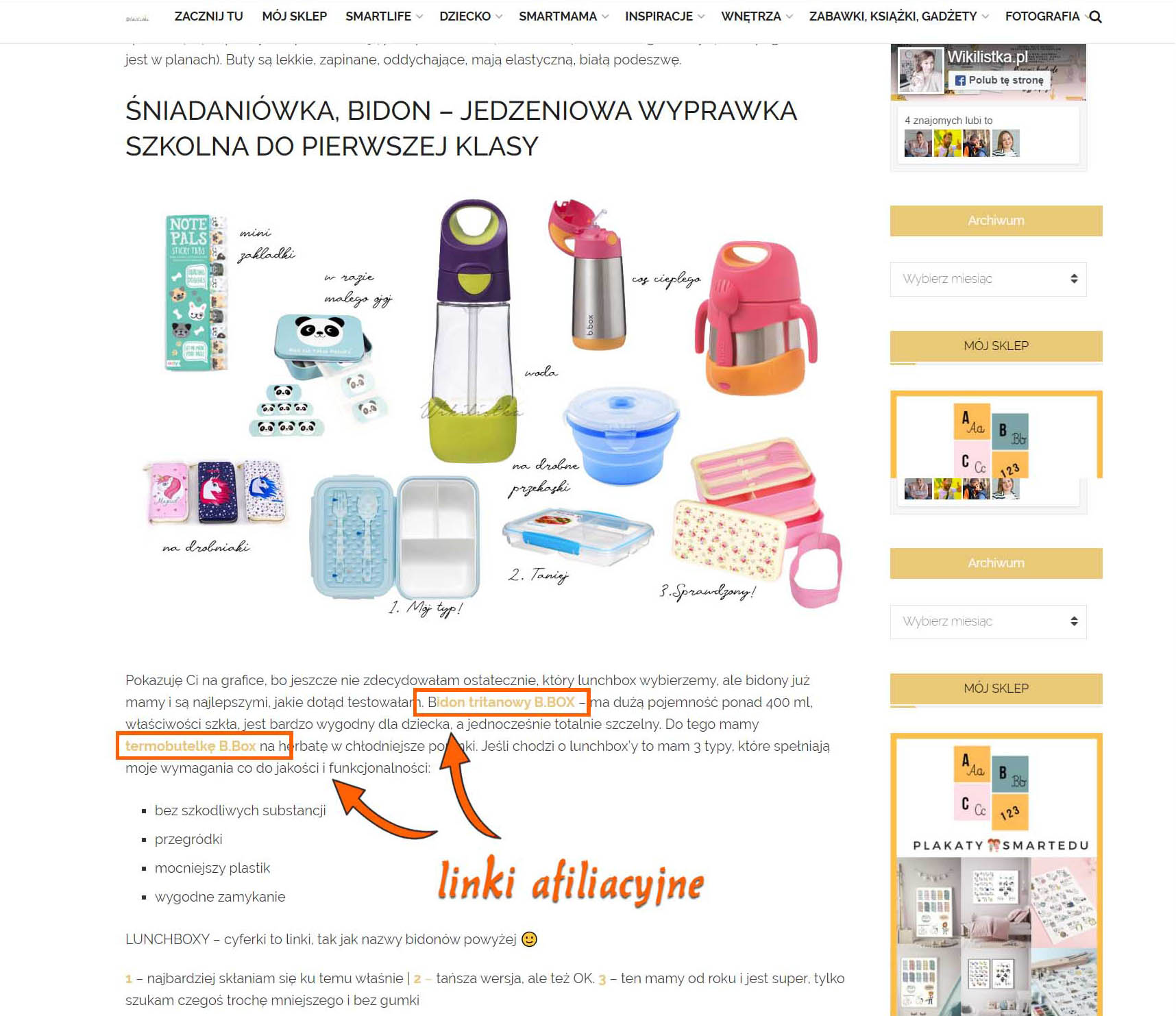
Depending on the publisher, everyone finds their own way to achieve the best results when promoting products from affiliate programs. Bloggers most often prepare posts about selected products and then add affiliate links. As a result, when a reader clicks an affiliate link, goes to the store and buys any product, the transaction is tracked by the affiliate system and the appropriate commission is assigned to the blogger. For the advertiser this is a double benefit: on one hand, it increases sales in the store, and on the other, their products are promoted on popular blogs and websites, which also boosts brand image!
Affiliate programs on Facebook
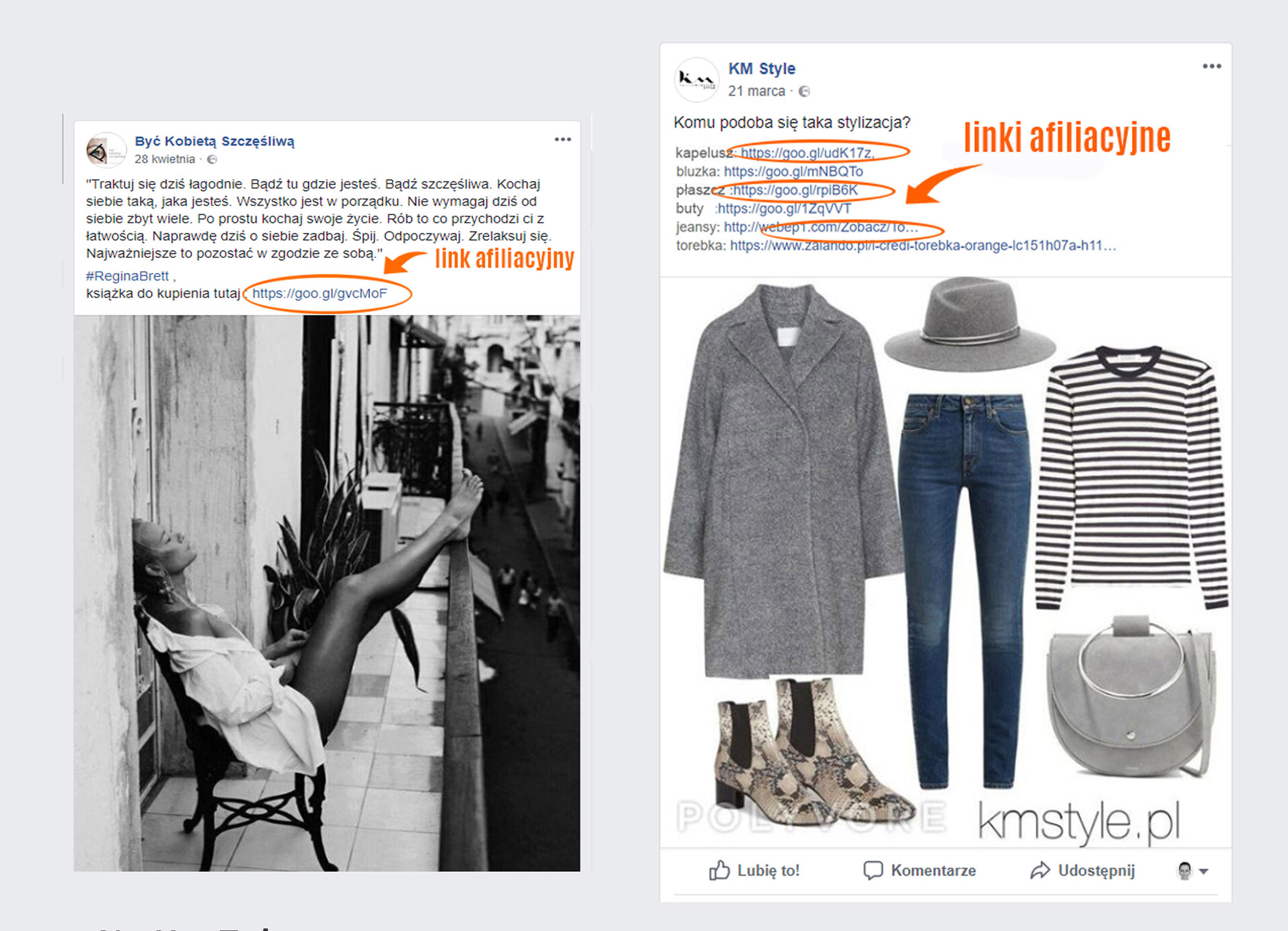
Facebook offers many options for placing active links that lead outside the platform to other websites, including affiliate links. That’s why making money on Facebook is so effective. Active affiliate links can be pasted directly into the post content, into the description of an image, a video or a photo album.
Affiliate programs on YouTube
The YouTube Partner Program gives earning opportunities mainly to large channels that generate high or very high view counts under their videos. Smaller profiles usually don’t make enough from the YouTube program alone to live off it. Affiliate programs in affiliate networks eliminate this problem. Both YouTubers with large reach and small, emerging or niche channels can earn money with them.

Affiliate programs give YouTubers a lot of freedom – they can recommend products and encourage purchases in a way that matches their own style and aesthetics. The YouTuber decides what to recommend and why. They can openly encourage viewers to buy selected products, clearly stating that each purchase generates a commission for them. They can also recommend products in a very subtle way, highlighting only their advantages without directly pushing for a purchase. In that case, most users may not even realise they’ve clicked an affiliate link that will generate a commission for the YouTuber.
Affiliate programs on niche websites
The topics covered by websites and their visual design are extremely diverse, so it’s impossible to list all examples. Thematic websites can contain serious, in-depth articles and be highly opinion-forming, but they can also publish light, entertaining content. These sites have a clearly defined audience to whom they address their content. Niche or thematic sites are very eager to join affiliate programs, selecting products that match their readers’ interests. The better the selection of products for a given audience, the greater the success.
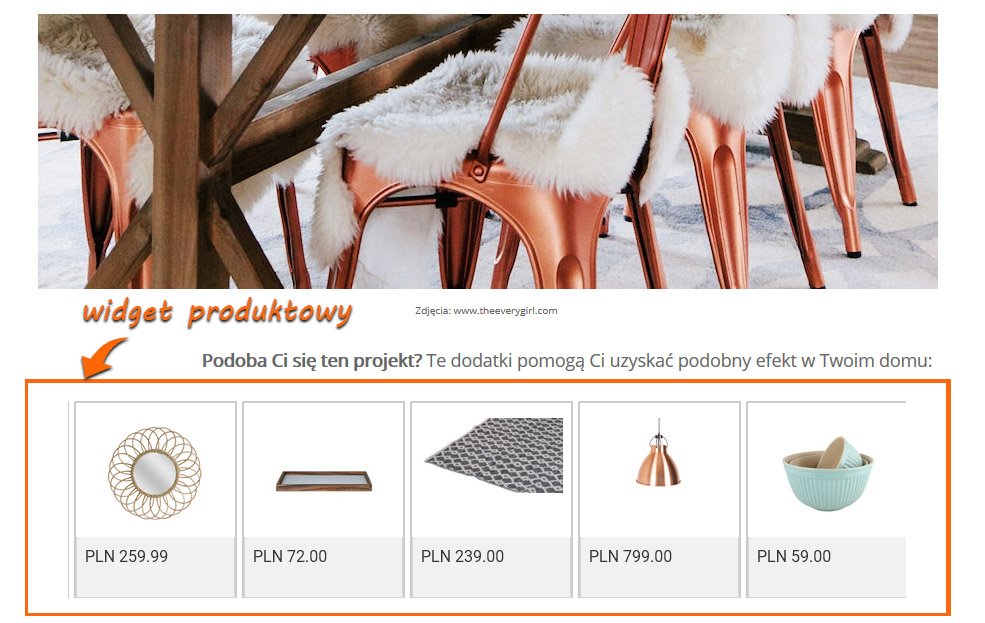
When a website covers many topics and can’t easily be put into a single niche, it can still successfully take part in affiliate programs. Thanks to the diversity of its content, it can present products from many categories at once and reach many different audiences. In such cases, rotating product widgets are an excellent solution, because a single creative can display multiple products.
Affiliate programs in product search engines and comparison sites
Thanks to product search engines and comparison sites, the huge number of offers available online can finally be organised and made manageable. Comparison tools allow users to sort products in many ways: by price, popularity, manufacturer, brand, and even colour or size. Product comparison engines are becoming increasingly precise and compare more and more parameters, so that shopping is more enjoyable and users are relieved of the effort that manual searching would require.
Thanks to XML feeds, which contain full offers from online stores and are available to publishers in the affiliate network, product comparison and search engines can also work effectively with affiliate programs. For the advertiser, displaying their offer in such places is nothing but beneficial – the store’s assortment reaches a very wide audience, because product comparison sites, due to their popularity among internet users, achieve very high traffic. The number of page views per day can reach into the millions.
Thanks to an affiliate program in the Cost Per Sale model, the advertiser doesn’t pay for browsing the offer – only for actual sales!
Affiliate programs on coupon sites
Discount codes are definitely one of the most important elements of online marketing in e-commerce. Paper coupons once cut out from newspapers have smoothly moved into the online world. They create value both for publishers and for their users. Discount codes gain particular popularity before key moments in the year, such as Christmas, Black Friday or Back to School. During these periods, it’s worth planning your publications in advance so you can include codes in blog posts or social media content. Discount codes strongly support the growth of affiliate programs. Every publisher is very eager to share them with their audience, but coupon sites undoubtedly make the most effective use of them. Coupon and deal websites are visited by customers who are already interested in buying, but are still looking for a better price offer on the online market.
Affiliate programs in an affiliate network – benefits for the advertiser
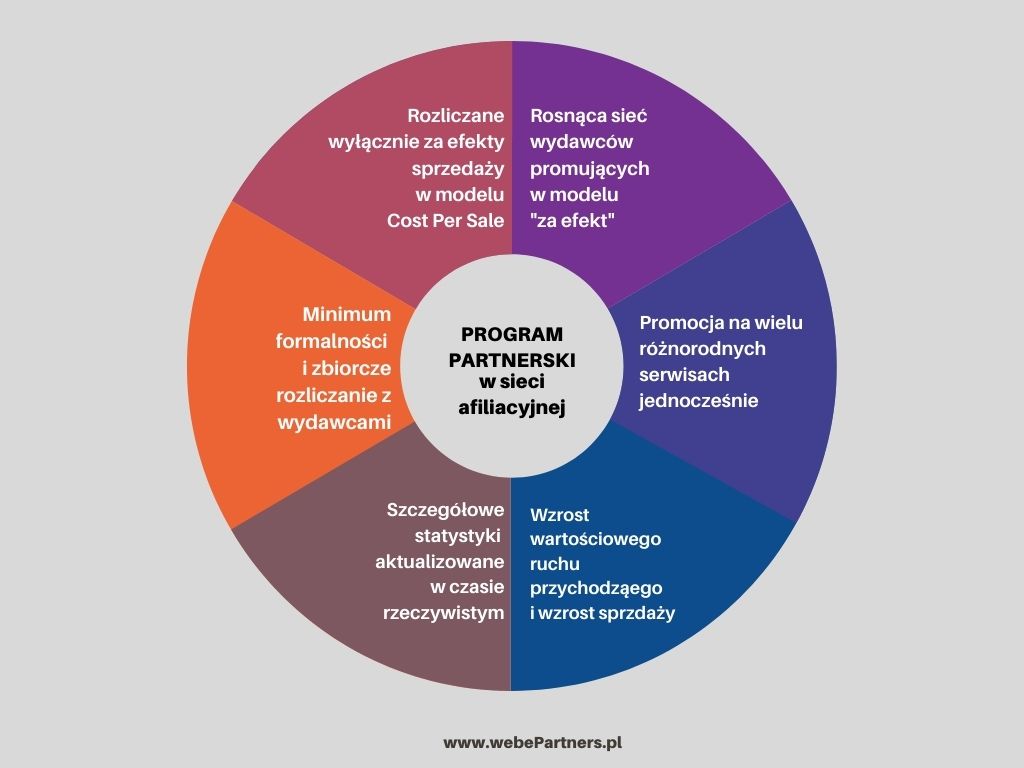
1. Promotion costs charged only for actual sales
The biggest advantage of having your own affiliate program is that there are no campaign costs when no sale occurs. The advertiser can act without the stress of spending money on activities that don’t translate into revenue. An affiliate program in the Cost Per Sale model is a guarantee that marketing investment pays off.
2. A large number of publishers in one place – a constantly growing network working “for performance”
Bloggers, niche websites, coupon portals, price comparison sites… there are thousands of them, new ones sign up every day, and they’re all available in one place, ready to promote your online store. By launching an affiliate program, the advertiser gains access to a network of virtual publishers who, once approved for the program, will start actively promoting it.
3. Promotion on many websites at the same time
Virtual salespeople – the publishers – promote products and services using various tools available in the affiliate network. As a result, the store’s offer appears simultaneously in product search engines, on blogs, in social media, and any shared discount code shows up on major coupon sites.
4. Increased inbound traffic and higher sales, with stats and billing in one place
Campaign statistics for all publishers are constantly available in the advertiser’s panel. It contains detailed data on the traffic generated by publishers and the transactions that result from it. You can analyse publisher performance both in aggregate and individually, for each publisher. Campaigns can be optimised at any point during their runtime.
5. Ongoing contact and support from an Affiliate Manager – help in developing the affiliate program
If the advertiser wants to invite a publisher who is not yet registered in the affiliate network, they can count on the Affiliate Manager’s help in acquiring that publisher for the program. The Affiliate Manager also makes sure that publishers are carefully matched to the affiliate program, because this is the key factor that determines the success of the cooperation.
6. Minimal formalities and consolidated settlements with publishers (one invoice)
When working with many publishers, the advertiser doesn’t need to sign a separate contract and negotiate terms every time. Everything happens within the affiliate system provided by the affiliate network. Formalities are reduced to a minimum so the process runs quickly and smoothly.
At the end of the billing period, the advertiser receives a single collective invoice for all approved commissions for all their publishers, so there’s no need to settle payments with each publisher individually.
Affiliate programs in an affiliate network – benefits for the publisher
-
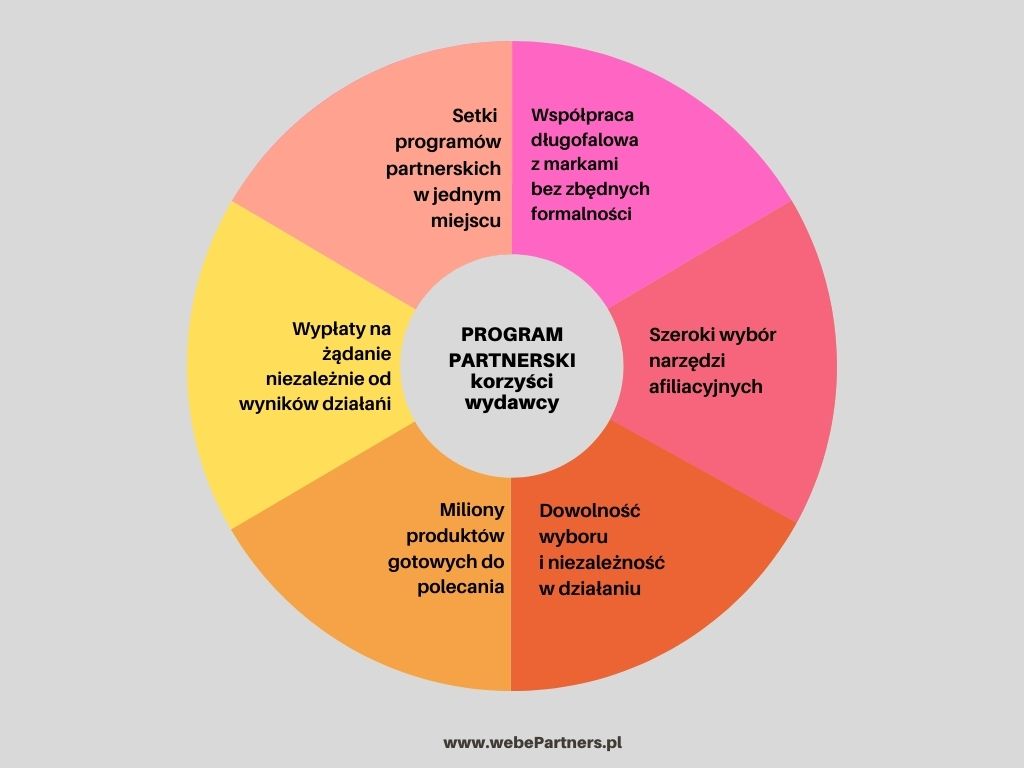
Wide selection of affiliate programs
An affiliate network brings together many affiliate programs from specific industries, so every publisher can easily choose the ones that are right for them. Most affiliate networks systematically expand their advertiser portfolio, which allows publishers to regularly join new programs. -
Long-term cooperation with top brands, without unnecessary formalities
To join selected affiliate programs in a network, it’s enough to create a publisher account. The publisher does not need to sign any additional direct contracts with advertisers – formalities are reduced to a minimum. Immediately after registration, the publisher can start working. -
Free affiliate tools that support sales
Publishers are guaranteed free tools that let them effectively promote products from affiliate programs. Thanks to affiliate links, product widgets, banners and XML feeds, all the traffic they generate is precisely tracked, counted, and commissions are calculated on all generated actions. -
Freedom and independence in promotional activities
When working in affiliate programs, publishers have full freedom in how they promote products. The advertiser cannot and does not impose a specific way of running campaigns. This allows publishers to freely test different approaches and focus only on those that are most effective and consistent with their image. -
Millions of products to recommend
Because affiliate networks group together hundreds of programs, the publisher has access to an almost unlimited product base to earn from. It’s easy to find products they are confident are worth recommending and that are aligned with the niche or industry they operate in. -
On-demand payouts
Commissions in the publisher’s account are aggregated from all affiliate programs they participate in. The publisher can withdraw them at any time, at any frequency.
Profit for every party involved in affiliate programs
The key point is that everyone earns from affiliate programs and that participation creates a true win–win relationship for all parties. The publisher receives a commission for every sale generated from their recommendation, the advertiser records more successful transactions and thus higher revenue, the affiliate network also earns a commission for brokering the cooperation, and the user/customer buys the product they need, recommended by someone they trust. This is why performance marketing delivers such good results.
Voluntary cooperation and good relationships
A well-run affiliate program means a constantly growing number of publishers, which translates into an ever-larger audience. The advertiser can work with many different partners, and at the same time almost any internet user can become a publisher. Thanks to this, products from affiliate programs appear in YouTube videos, Instagram posts, in-depth blog reviews, or product comparison lists in search engines. That’s what makes the audience so broad and diverse.
Long-term cooperation in affiliate programs helps build strong relationships between publishers and advertisers, which makes the collaboration increasingly effective. After a few campaigns together, publishers know how to act to achieve high conversion rates. As a result, the advertiser saves time otherwise spent on very detailed briefings and can start new collaborations with fresh publishers who are continually joining the affiliate network.
Performance-based billing as a guarantee of long-term cooperation
In an affiliate program where the advertiser shares their sales profit with the publisher, the risk of overinvesting in this form of promotion disappears. That’s why affiliate programs often run for many years. The best example is Amazon’s affiliate program, which has been operating continuously since 1996.
This long-term model gives publishers time to find their own way of working with the advertiser, without the risk that the cooperation will end before their efforts start translating into real profits.
Free and diverse affiliate tools
Publishers have unlimited access to free affiliate tools that allow them to promote the advertiser’s products. With the right match between the advertiser’s products and the publisher’s audience, and with subtle affiliate tools (such as product widgets or affiliate links), advertising can be conducted in a very discreet and at the same time highly effective way.
The publisher network as the greatest asset of an affiliate program
An affiliate program is created to drive sales and increase the advertiser’s profits with the help of publishers. These are the primary goals, but at every stage of cooperation it’s important to remember that they depend heavily on the relationship the advertiser builds with their publishers.
Affiliate cooperation is based on mutual trust. The advertiser trusts that their publishers will act in their best interest – not only boosting sales, but also supporting a positive brand image. Publishers, on the other hand, trust that they will be fairly rewarded for the results they deliver, according to the rules clearly defined in the affiliate program’s terms and conditions. This close cooperation and reciprocity leads to strong engagement and high sales performance.
Growing a strong publisher network – key to effectiveness
For an affiliate program to be effective, a sufficient number of publishers must join. Building a publisher network is often a long-term process. It’s not easy to attract publishers who are willing to take on the risk of running all promotional activities and be paid only for delivering clearly defined results.
That’s why an already established publisher network is an enormous asset for the advertiser. It’s a group of trusted websites and creators who understand the advertiser’s needs and expectations, and who can therefore provide effective, long-term promotion of the affiliate program.
Increasing audience reach from multiple sources
The wide range of publisher activities and the diversity of their website topics are a major advantage for the advertiser. In addition to sites directly related to the store’s industry, it’s worth inviting publishers who cover topics only loosely connected to the main category of the affiliate program.
With a bit of creativity and imagination, an online creator (publisher) can skillfully weave the advertiser’s products into their content. Thanks to the diversity of publishers, the affiliate offer reaches a broad audience of potential customers through different channels, tools and formats.
Brand awareness and image-building
Building and reinforcing a positive brand image is an added value of working with publishers – and the advertiser doesn’t pay for it directly. The larger the publisher network, the greater the advertising reach for which the advertiser pays only when their products or services are actually sold, not for ad impressions alone.
Some of the people who see the ads – potential customers – will visit the advertiser’s website or store but won’t complete a purchase. In traditional online campaigns, the advertiser would pay for every such visit or, on some platforms, even just for the ad being displayed.
Not so in an affiliate program. Here, branding campaigns are a kind of “side effect” that don’t generate costs if they don’t translate into sales.